

More news on this day
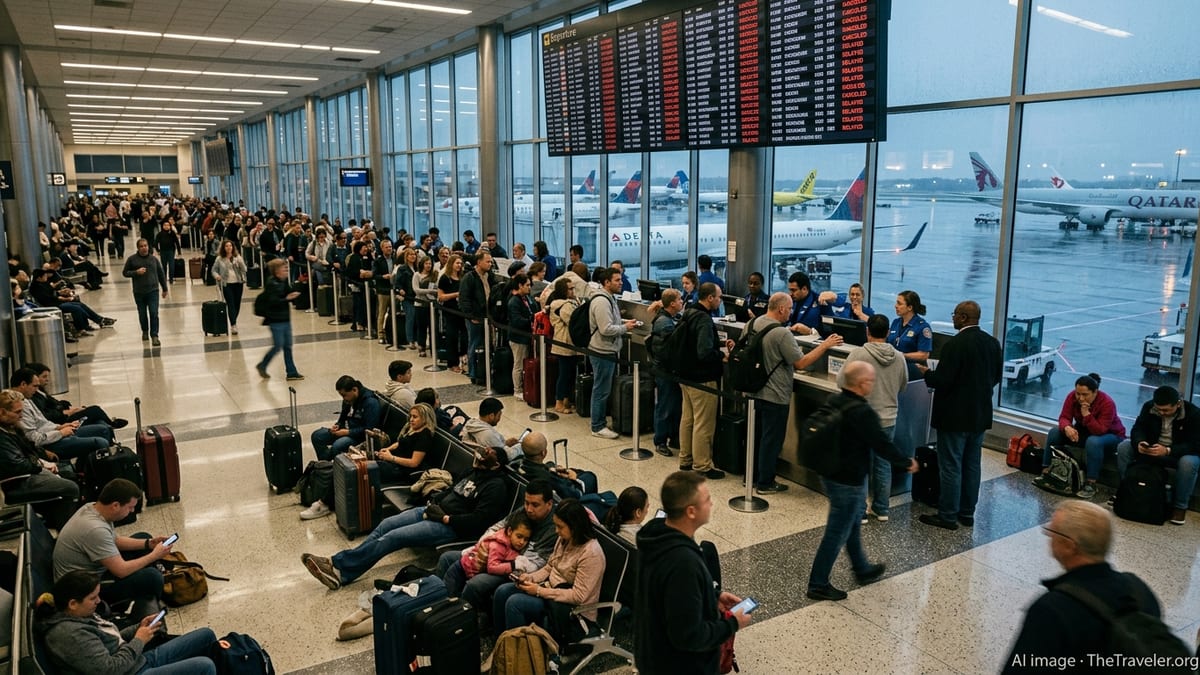
Travelers across the United States faced a fresh wave of air travel disruption this week as a combination of severe March weather and an ongoing partial federal government shutdown triggered dozens of cancellations and delays on routes operated by Delta Air Lines, United Airlines, Spirit Airlines, Qatar Airways and other carriers into major hubs including Atlanta, Dallas, Denver, New York JFK, Miami, Las Vegas and San Francisco.
Get the latest news straight to your inbox!
Storm System and Shutdown Combine to Snarl Flight Networks
Publicly available data from flight-tracking platforms and recent news coverage indicate that a sprawling storm system moving from the Midwest into the eastern United States in mid-March 2026 has been a primary driver of the latest disruptions. Heavy snow, strong winds and thunderstorms have affected a broad corridor of airspace, forcing carriers to trim schedules and cancel selected departures as conditions deteriorated.
Published reports show that the storms arrived on top of already strained airport operations linked to a partial federal government shutdown that began in mid-February. With security staffing under pressure and passenger volumes rising for spring break and college basketball tournaments, even modest schedule changes have had an outsized effect on queues, gate operations and crew positioning.
While carriers collectively canceled far more than 40 flights nationwide over several days, the latest wave of adjustments involved a cluster of more than 40 specific flights operated by Delta, United, Spirit, Qatar and other airlines, primarily on routes feeding major domestic hubs. These targeted cancellations were described in operational updates as necessary to preserve safety margins while giving airlines room to recover schedules later in the week.
Industry data suggests that storms of this scale typically produce cascading effects, with aircraft and crews ending up out of position across the network. In this instance, that pattern appears to have repeated, with knock-on cancellations extending into the day after the worst of the weather passed.
Key Hubs Hit: Atlanta, Dallas, Denver and New York JFK
The impact has been most visible at the country’s busiest hubs. Recent coverage notes that Atlanta’s Hartsfield Jackson International Airport has recorded hundreds of cancellations and delays over multiple days, reflecting its role as a central hub for Delta and a key transit point for other carriers. Even a limited number of additional cancellations on specific routes into Atlanta can ripple outward, affecting onward connections throughout the domestic network.
Dallas Fort Worth and Denver International have also seen sustained disruption as storms and strong winds moved across the central United States. Both airports function as critical junctions for coast to coast itineraries, meaning that cancellations there have been felt by travelers who never intended to connect through the storm affected regions. Short-haul segments into these hubs were among those trimmed by carriers seeking to preserve long haul services.
On the East Coast, New York’s John F. Kennedy International Airport has experienced a mix of weather related ground delays and schedule cuts in recent days. Publicly available flight boards show that several transcontinental and short haul services into JFK were canceled or significantly delayed, affecting links from major cities such as Miami, Atlanta and Denver. These adjustments have been compounded by flow control measures in the busy Northeast airspace.
Aviation analysts note that when hubs like Atlanta, Dallas, Denver and JFK are simultaneously under weather or operational constraints, options for rebooking shrink quickly. This has been reflected in social media posts from travelers describing crowded customer service lines, limited same day alternatives and long rebooking windows.
Las Vegas, Miami and San Francisco See Knock On Disruptions
Published airport operations summaries and tracking data point to significant secondary effects in leisure focused markets such as Las Vegas and Miami, as well as in long haul gateway airports like San Francisco. These cities rely heavily on inbound traffic from the major hubs now under pressure, and many of the more than 40 recently canceled flights were feeder services into or out of these destinations.
In Las Vegas, travelers reported extended delays on services connecting to the Midwest and East Coast, along with selected outright cancellations as airlines reassigned aircraft to cover higher priority hub to hub segments. With Las Vegas heavily dependent on weekend and event travel, even a short burst of cancellations can leave visitors with limited options to return home on their scheduled dates.
Miami has experienced similar turbulence, particularly on routes linking the city to northeastern and Midwestern hubs. According to public flight data, some carriers chose to preemptively cancel or consolidate flights into Miami when crosswinds and thunderstorms along the eastern seaboard complicated approach and departure patterns. This has been especially disruptive for travelers connecting in Miami to Caribbean and Latin American destinations.
On the West Coast, San Francisco International Airport has dealt with a blend of local low cloud and inbound disruptions from storm affected hubs. Several United and partner services into San Francisco from Denver, Dallas and East Coast cities were among those removed from schedules in recent days. With San Francisco serving as an important transpacific gateway, missed connections there can translate into multi day delays for long haul passengers.
Delta, United, Spirit and Qatar Adjust Schedules
The latest schedules published online show that major airlines have continued to proactively adjust their operations in response to the evolving conditions. Delta has concentrated many of its cuts on flights touching Atlanta and other key hubs such as Detroit and Minneapolis, while attempting to maintain core trunk routes. This approach is consistent with strategies used during previous large scale disruptions, where carriers prioritize routes with the highest volumes and connectivity.
United has likewise trimmed a cross section of domestic flights, including services into Denver, San Francisco and East Coast hubs, in order to manage aircraft rotations and crew duty limits. Historic data from earlier disruptions shows that United often consolidates multiple low demand flights into fewer departures during prolonged weather events, a pattern that appears to be recurring.
Spirit Airlines, which relies on dense point to point operations and often flies to secondary airports, has been exposed to both weather and airspace flow restrictions. Publicly available Spirit schedules indicate cancellations on some routes into Florida, Las Vegas and major hubs, reflecting the challenges of operating a tightly timed network through constrained airspace.
Qatar Airways and other long haul international carriers have been indirectly affected where their US bound services rely on connections from domestic partners. In some cases, passengers arriving on Qatar flights into major US gateways have found onward domestic segments canceled or significantly delayed, leaving them to seek alternative routings or overnight accommodation while airlines work through the backlog.
What Travelers Are Experiencing and How Airlines Are Responding
Accounts shared on social platforms and in local media describe a familiar pattern for travelers caught in the disruption. Passengers have reported multi hour ground delays, last minute gate changes and, in some cases, same day cancellations after boarding had already begun. For those with tight connections through hubs like Atlanta, Dallas or Denver, even relatively short delays have been enough to trigger missed onward flights.
In response, airlines have been publicizing flexible travel policies, allowing date and route changes without standard change fees for affected itineraries. These accommodations vary by carrier and by route, but recent advisories indicate that many customers traveling through storm affected hubs during the worst days of the system have been eligible to rebook without additional charges, subject to seat availability.
Operationally, publicly accessible airline updates show efforts to add extra flights or upgauge aircraft on certain routes once weather improves, in order to clear backlogs. However, crew duty time rules and the continued impact of the partial government shutdown on airport throughput have limited how quickly schedules can return to normal. Industry commentators caution that residual delays and sporadic cancellations are likely to persist for several days beyond the initial storm impacts.
For now, the combination of severe March weather, infrastructure strain from the federal shutdown and high seasonal demand has created another reminder of how quickly conditions can unravel across interconnected airline networks. With key hubs from Atlanta and Dallas to New York JFK, Miami, Las Vegas, Denver and San Francisco all affected to varying degrees, travelers are facing another challenging week in the sky.