

More news on this day
Thousands of air travelers across the United States faced mass cancellations and cascading delays today as a mix of severe winter weather and airline staffing strains disrupted operations at major hubs including Dallas, New York, Boston, Miami, Houston and Tampa, with Spirit, Delta, SkyWest, Air Canada, PSA and other carriers collectively canceling around 140 flights and delaying more than 2,500 nationwide.
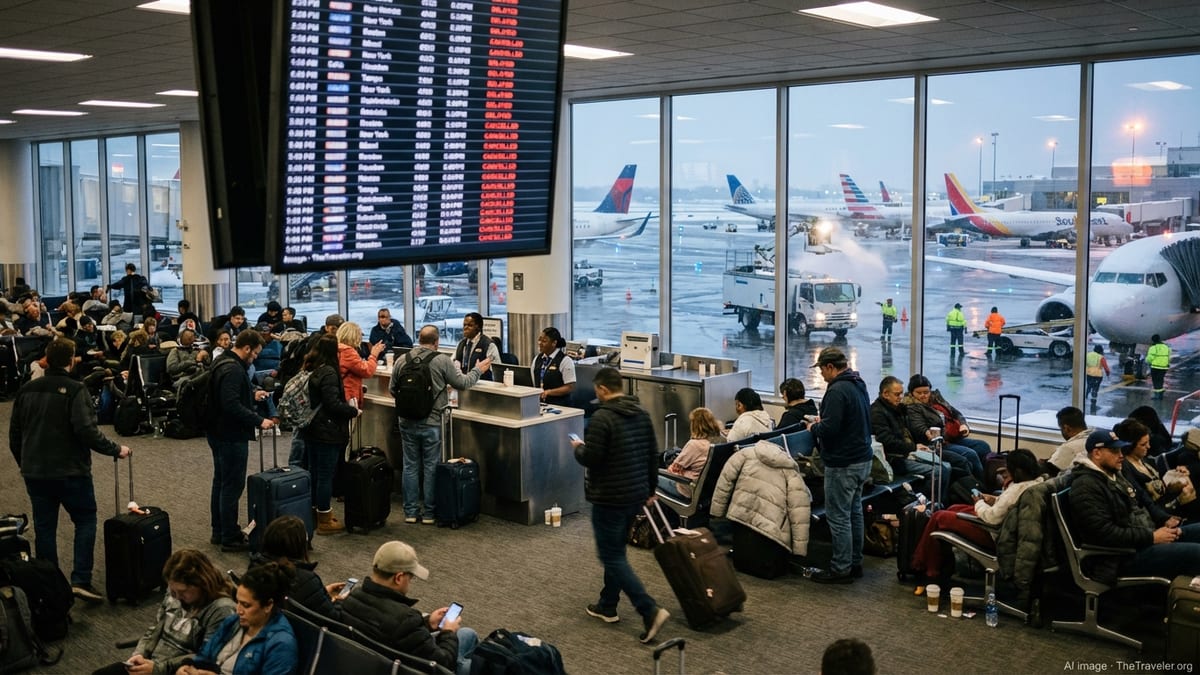
Heavy Winter Weather Batters Key U.S. Hubs
Saturday air travel in the United States was again at the mercy of winter weather, with a sprawling storm system bringing snow, freezing rain and low visibility to parts of Texas, the Northeast and Atlantic Canada. Flight-tracking data showed disruption radiating outward from airports serving Dallas, New York and Boston, where crews grappled with de-icing backlogs, runway contamination and crosswinds that forced traffic slowdowns.
At Dallas–Fort Worth International and Dallas Love Field, intermittent sleet and low clouds forced ground stops and metered arrivals at several points in the day. That triggered a domino effect on departures, as incoming aircraft arrived late or were diverted, leaving outbound passengers facing rolling delay estimates on departure boards.
In the Northeast, Boston Logan International and the New York area’s three main airports saw waves of cancellations tied to snow bands sweeping in from the Atlantic. Airlines scaled back schedules into the region, citing safety concerns and the need to avoid stranding aircraft and crews overnight in vulnerable locations. Airlines said they were prioritizing mainline and long-haul operations while trimming shorter regional hops that are easier to consolidate onto fewer flights.
Farther south, Miami and Tampa dealt more with capacity constraints than direct wintry conditions, serving as alternates and connection points for flights rerouted away from storm-hit airports to the north. That added pressure to Florida’s already busy holiday-period traffic and lengthened the operational recovery time for airlines trying to reconnect passengers with disrupted itineraries.
Spirit, Delta, SkyWest, Air Canada and PSA Among Hardest Hit
The brunt of today’s cancellations and delays fell across a mix of ultra-low-cost, legacy and regional carriers. Spirit Airlines, already under scrutiny following a run of staffing-related disruptions in recent weeks, scrubbed multiple rotations to and from Florida, Texas and the Mid-Atlantic, compounding frustration for leisure travelers using its network of low-fare routes.
Delta Air Lines reported clusters of cancellations and extended delays across its domestic system as it adjusted schedules around weather and crew-availability limits. While the Atlanta hub remained relatively resilient, Delta’s operations in New York, Boston and several Midwest cities showed the strain of tight turn times and aircraft repositioning, with some flights pushed back by several hours as the airline worked to stay within federal crew-duty rules.
Regional operator SkyWest, which flies under the brands of several major airlines, canceled and delayed a significant number of shorter routes linking large hubs with mid-sized and smaller cities. Because those flights often serve as critical feeder connections, missed SkyWest departures left many passengers stranded far from the larger airports where rebooking options are more plentiful.
Air Canada and PSA Airlines, the latter a key regional affiliate for American Airlines, also registered notable disruption on cross-border and East Coast services. Flights linking Toronto and Montreal with Boston, New York and Northeast U.S. secondary markets experienced tight connection windows and missed curfews as crews and ground teams coped with snow and ice at both ends of the route.
Dallas, New York, Boston, Miami, Houston and Tampa Feel the Squeeze
Dallas emerged as one of the focal points of today’s disruption, with weather impacting both departures and key inbound flows from the Midwest and Northeast. Long lines built up at rebooking counters as passengers tried to salvage same-day connections to cities including Los Angeles, Denver, Chicago and smaller regional destinations that rely heavily on Dallas as a transfer hub.
In New York, travelers at John F. Kennedy International, LaGuardia and Newark Liberty reported a patchwork of operations, with some flights boarding almost on time while others were repeatedly pushed back or ultimately canceled as conditions worsened. Many transcontinental and transatlantic flights were still operating, but domestic connections feeding those services were trimmed, forcing passengers to overnight in the region or accept reroutes through other hubs.
Boston Logan again became a choke point, as airport operators slowed operations for plowing and de-icing during heavier snow bands. Airlines consolidated frequencies on some high-demand routes such as New York, Washington and Chicago, while cutting back on thinner regional links to protect fleet and crew positioning for the following day.
Houston and Tampa played dual roles as both origin–destination markets and ad hoc relief valves. Carriers used available gate and runway capacity there to house aircraft and reroute passengers away from more heavily impacted cities. That, however, meant longer-than-usual queues at security, crowded gate areas and, in some cases, aircraft waiting on the tarmac for their new time slots in the national airspace system.
Weather Chaos Meets Ongoing Staffing and Fleet Pressures
Today’s operational chaos highlighted how vulnerable the U.S. airline system remains when weather shocks intersect with lean staffing and tightly scheduled fleets. Several carriers, notably Spirit, entered the winter season with limited spare crews after furloughs, resignations and protracted labor tensions in 2025, leaving them little cushion when storm-driven delays pushed pilots and flight attendants up against their duty-time limits.
Industry analysts have warned that even modest schedule disruptions can quickly spiral when airlines lack reserve crews and backup aircraft. Once a single early-morning flight is delayed or canceled, it can ripple throughout the day across multiple segments, particularly for low-cost carriers that depend on rapid turnarounds and high aircraft utilization to keep fares low.
Legacy and network carriers such as Delta and Air Canada are also walking a tightrope as they rebuild capacity to meet strong demand while juggling aircraft deliveries, maintenance backlogs and competitive pressure on fares. That balancing act leaves network planners hesitant to build in too much slack, increasing the risk that storms like today’s will again trigger widespread delays and missed connections.
Regional airlines including SkyWest and PSA operate under capacity-purchase agreements with the majors, flying tightly choreographed schedules that link smaller communities to large hubs. When weather or staffing breaks that choreography, they often lack the flexibility to easily substitute aircraft or crews, leaving entire spokes of the network temporarily without service.
Passengers Face Long Lines, Limited Options and Patchy Communication
Across affected airports, passengers confronted familiar scenes of long customer-service queues, packed help desks and gate areas overflowing with travelers seeking updates. With so many flights either canceled outright or delayed beyond practical connection windows, same-day alternatives were often scarce, especially on popular routes into and out of sun destinations in Florida and the Caribbean.
Many stranded passengers turned to airline apps and chatbots to rebook, with mixed results. While some were able to secure new itineraries digitally, others reported confusing notifications, last-minute schedule changes and difficulty reaching human agents. At several airports, travelers waited in line for hours only to learn that their best available option was to depart a day or more later than originally planned.
The uneven quality of communication further fueled frustration. In some cases, gate agents announced weather-related delays even as flight-tracking tools showed aircraft held for crew or maintenance reasons, complicating passengers’ ability to claim compensation or request hotel vouchers. Airlines typically are not required to provide lodging or meals for weather disruptions, but may owe additional support when delays are within their control.
Families traveling with children and elderly passengers were particularly hard hit, as extended waits in crowded terminals made it difficult to rest or safely store luggage. Some travelers described cobbling together alternative plans, including renting cars for long overnight drives between major cities when it became clear they would not be rebooked until well into the next day.
Flight Data Shows 140 Cancellations and Over 2,500 Delays
By late afternoon, national flight-tracking tallies indicated roughly 140 U.S.-related cancellations and nearly 2,600 delays tied to the evolving weather system and operational challenges. While that total was lower than the most severe days of last month’s sprawling winter storm, it was still enough to make today one of the most difficult travel days of the season for many affected airports.
Delays were particularly concentrated at Dallas–Fort Worth, Boston Logan, New York’s LaGuardia and Miami International, where average departure holds at times exceeded an hour. Secondary airports including Houston Hobby, Tampa, Fort Lauderdale and several Midwestern and Mid-Atlantic fields also recorded elevated delay metrics as disrupted flights were rerouted or consolidated there.
Analysts noted that the relatively modest number of outright cancellations versus delays reflects an industry still trying to keep aircraft moving, even if well behind schedule. Airlines appear wary of large-scale preemptive cancellations that can strand aircraft in the wrong locations, instead betting that they can work through the backlog as conditions gradually improve.
For passengers, however, a delayed flight can feel little different from a cancellation when it leads to missed connections and overnight disruptions. Travelers whose itineraries included multiple stops today often saw early segments delayed just long enough to make onward flights impossible, forcing full rebookings even when each individual flight technically operated.
Operational Recovery Could Stretch Into Tomorrow
With the storm system still in motion and airline networks badly out of rhythm, carriers warned that disruptions could linger into Sunday, even if weather conditions ease in some regions. Aircraft and crews remain scattered across the country, and it will take time to reposition planes and staff to the cities where they are needed most.
Airlines typically prioritize rebuilding mainline connections between their largest hubs first, then restoring thinner regional routes as capacity allows. That means passengers traveling to or from smaller markets may face longer waits for normal schedules to resume, especially if their routes rely on aircraft that must first complete several legs through larger hubs.
Airport officials in Dallas, New York, Boston and Florida urged passengers with upcoming travel to monitor airline apps and status alerts closely, arrive early at the airport and be prepared for evolving conditions. They also advised keeping carry-on essentials including medications, chargers and basic toiletries readily accessible in case flights are rerouted or baggage is delayed.
While forecasters expect the worst of today’s wintry conditions to move offshore or weaken over the next 24 hours, temperatures behind the storm could still create icy patches on runways and taxiways, requiring continued de-icing and safety checks that may slow early-morning operations at some northern airports.
What Today’s Meltdown Signals for the Remainder of Winter
Today’s wave of cancellations and delays underscores the fragility of the current U.S. air travel system as it enters the final weeks of the winter season. With leisure and visiting-friends-and-relatives demand still running high and business travel slowly recovering, load factors on many routes leave little flexibility to absorb unexpected disruption without displacing significant numbers of passengers.
For carriers such as Spirit that are still stabilizing their finances and staffing after a tumultuous 2025, further weather shocks could prove especially challenging. Prolonged operational woes risk eroding customer confidence and pushing price-sensitive travelers to competing airlines, even if that entails paying more for tickets.
Network airlines and their regional partners are under pressure, too, as they try to balance reliability, capacity growth and cost discipline. Today’s events will likely accelerate internal debates about how much reserve capacity and staffing to maintain, and whether to preemptively scale back schedules on vulnerable days rather than risk large-scale day-of chaos.
For travelers, the lessons are increasingly clear. Building extra time into itineraries, avoiding the last flight of the day where possible, and packing for the possibility of an unexpected overnight can make the difference between an inconvenient delay and a full-blown travel crisis when storms like today’s collide with a tightly stretched airline system.