

More news on this day
Air travelers across the United States faced another day of mounting disruption on Friday as flight-tracking data showed 66 flights canceled and 294 delayed at major airports from Boston and Chicago to Atlanta and San Francisco, stranding passengers and rippling delays throughout the national network.
Get the latest news straight to your inbox!
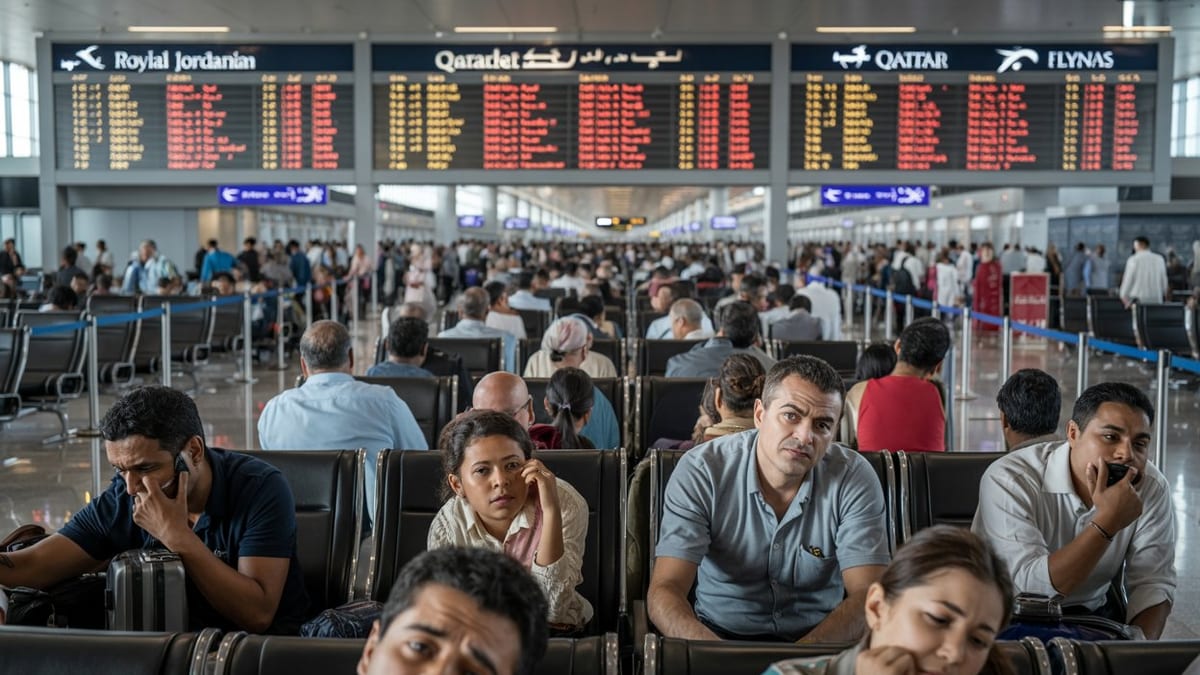
Weather Systems And Airspace Constraints Collide
Preliminary tallies compiled from publicly available flight-tracking dashboards and aviation operations updates indicate that the cancellations and delays were concentrated at Boston Logan, Chicago Midway, Philadelphia, Nashville, Reagan National, Hartsfield-Jackson Atlanta and San Francisco International. The pattern aligns with weeks of unsettled weather across the Northeast, Mid Atlantic and Southeast, together with ongoing airspace capacity limits around Washington and key Southern hubs.
Recent storm systems in late February and March have already pushed U.S. operations to the brink, with blizzards in the Northeast and severe weather in the Midwest and South producing days when thousands of flights were canceled or delayed nationwide. Those shocks left aircraft and crew placements out of position, and industry coverage notes that carriers can need several days to fully restore schedules even after skies clear. Against that backdrop, a fresh round of localized storms and low ceilings around coastal and Mid Atlantic airports further constrained already tight operations.
In Washington, Reagan National continues to operate under heightened airspace sensitivity and tighter arrival rates following earlier traffic-management adjustments. Aviation-focused reporting has described how even short-lived ground stops or spacing restrictions at the airport quickly back up departures along the East Coast and down the spine of business routes into Atlanta and Nashville. With multiple carriers relying on those cities as key connecting nodes, a modest number of cancellations in one window can cascade into missed connections across the day.
On the West Coast, San Francisco International has also been vulnerable to low cloud ceilings and wind shifts that reduce the number of arrivals and departures that can safely be handled per hour. Historical data compiled by transportation analysts consistently ranks San Francisco among U.S. airports with elevated delay percentages in poor weather conditions, and the latest disruption appears to follow that familiar pattern.
Major Hubs Amplify The Impact On Travelers
Although 66 cancellations and 294 delays represent only a fraction of daily U.S. flight activity, the airports affected on Friday serve as critical transfer points in multiple airline networks. Boston Logan links the Northeast to transatlantic routes and key domestic corridors, Chicago Midway connects a dense web of Midwest and Sun Belt cities, while Hartsfield-Jackson Atlanta and San Francisco International are among the country’s most important hub gateways. As a result, even a limited number of canceled or late departures at these locations can strand travelers hundreds or thousands of miles from their final destinations.
Industry reports highlight that the disruption has been most acute for passengers traveling on multi-leg itineraries or through late-evening connections. When irregular operations hit during peak “bank” periods, tight turn times leave little slack for re-accommodation, and many passengers find that alternative same-day options are scarce, especially on heavily traveled business and leisure routes. Missed onward flights can force unplanned overnight stays in hub cities, stretching the impact of a single cancellation far beyond the initial departure.
Regional travelers have also been affected. Feeder flights into the larger hubs, particularly from smaller cities that see only a handful of frequencies each day, are especially vulnerable when schedules are compressed. If a Boston or Atlanta-bound regional service is canceled, travelers may have to wait many hours, or in some cases until the following day, for the next available seat, complicating plans for onward international or cross-country connections.
For some passengers, the disruption compounds earlier travel challenges in a winter and early spring marked by multiple large-scale storms. March alone saw days when several thousand flights across the country were canceled or delayed as severe weather swept from the Plains to the Eastern Seaboard, and consumer advocates note growing frustration among travelers who feel they have faced repeated interruptions in a relatively short span.
Persistent Structural Pressures On The US Flight Network
The latest wave of cancellations and delays has unfolded against a backdrop of structural strain in the U.S. air travel system. Analyses from government committees and transportation researchers show that major hubs such as Hartsfield-Jackson Atlanta, Boston Logan, Chicago Midway, Reagan National, Philadelphia, Nashville and San Francisco have all recorded significant shares of late arrivals in recent years, reflecting congested airspace, tight scheduling and sensitive weather conditions.
Staffing levels in air traffic control and ground operations remain a concern raised in multiple public forums. Where facilities operate near capacity, even minor disruptions can trigger mandated arrival and departure rate reductions for safety reasons, leading to ground delays, airborne holding and, in some cases, preemptive cancellations. These protective measures, while aimed at maintaining safety margins, contribute directly to the statistics now frustrating passengers on the concourses.
Airline scheduling practices also play a role. Carriers have rebuilt networks to match strong demand for leisure and visiting-friends-and-relatives travel, particularly through hub-and-spoke systems that channel large numbers of connections through a limited set of airports. This approach can be efficient in normal conditions but leaves limited resilience when storms, equipment issues or airspace constraints hit those hubs simultaneously, as is occurring today in Boston, Chicago, Washington, Atlanta and San Francisco.
Travel analysts point out that the industry is still balancing the rebound in demand with the lingering effects of earlier disruptions. Aircraft maintenance backlogs, training pipelines for new pilots and controllers, and evolving patterns of business travel all influence how much slack airlines and infrastructure operators can build into the system. Until those factors stabilize, days with relatively modest raw numbers of cancellations and delays can still feel highly disruptive to travelers, particularly when concentrated at high-traffic airports.
What Passengers Can Expect And How To Navigate Disruptions
Consumer agencies and travel experts consistently advise passengers to monitor flight status closely on days when the network is under stress, as appears to be the case with the current cluster of cancellations and delays. Many airlines now push real-time updates through mobile apps and text alerts, often flagging anticipated schedule changes before they appear on physical departure boards in the terminal.
Public guidance from transportation regulators notes that when a flight is canceled and a passenger chooses not to travel, they are generally entitled to a refund of the unused portion of the ticket, regardless of the cause of the cancellation. Separate from refunds, carriers publish their own policies on meal vouchers, hotel accommodation and rebooking options during irregular operations, and travelers are encouraged to review those rules so they understand what forms of assistance may be available when they face extended waits.
At airports currently experiencing the heaviest disruption, including Boston, Chicago Midway, Philadelphia, Nashville, Reagan National, Atlanta and San Francisco, same-day rebooking may be challenging on busy routes. Travel advisors suggest that passengers consider flexibility in routing, such as accepting connections through alternative hubs or nearby airports, when those options are presented in airline apps or by airport customer-service channels.
With spring and summer travel periods approaching, analysts expect that similar pockets of disruption may recur when severe weather intersects with already-busy schedules. For now, the latest count of 66 canceled flights and 294 delays serves as another reminder of the fragility of tightly timed airline networks and the importance for travelers of building in extra time, monitoring conditions and understanding their rights when plans are upended.