

More news on this day
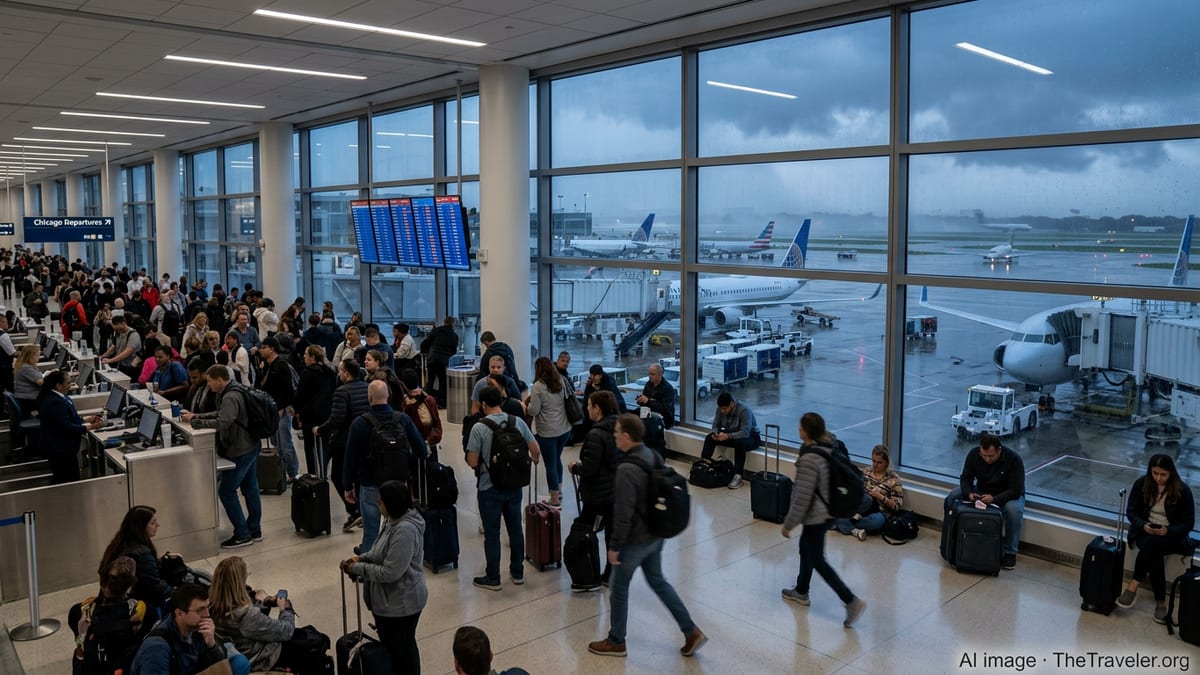
Travelers moving through Chicago O’Hare International Airport on March 16 faced widespread disruption, with more than 500 flight cancellations and over 700 delays reported as severe weather and ongoing staffing pressures rippled through one of the nation’s busiest hubs.
Get the latest news straight to your inbox!
Hundreds of Flights Disrupted at a Key National Hub
Publicly available tracking data for March 16 indicates that Chicago O’Hare recorded roughly 504 cancellations and about 750 delayed flights, placing the airport among the most severely affected in the United States. The figures reflect a convergence of strong storms across the eastern half of the country and persistent operational strain within the air travel system.
The disruption at O’Hare quickly reverberated across the national and international network. Major carriers using the airport as a hub, including United Airlines, American Airlines and regional operator SkyWest, saw schedules compressed, aircraft and crews out of position, and passengers struggling to rebook as available seats filled rapidly.
With O’Hare routinely ranking near the top of U.S. airports for daily operations, any large-scale disruption tends to cascade beyond Chicago. On March 16, delays and cancellations originating at the hub affected flights throughout the day, complicating connections for travelers on multi-leg itineraries and extending wait times well into the evening.
Weather and a Strained System Drive Widespread Delays
According to published coverage, a powerful storm system sweeping across the Midwest and toward the East Coast played a central role in Monday’s disruption. Heavy precipitation, strong winds and the risk of severe thunderstorms prompted air traffic control programs that reduced arrival and departure rates at several major airports, including Chicago O’Hare.
Weather-related slowdowns hit at an already fragile moment for the air travel system. National reports point to a partial federal government shutdown that has stretched into its second month, contributing to staffing challenges at security checkpoints and other critical functions. These pressures have added to existing concerns about congestion and capacity at high-volume hubs such as O’Hare.
Separate recent reporting has highlighted federal regulators’ worries about O’Hare’s ability to handle aggressive summer schedules proposed by its largest airlines. Discussions between aviation authorities and carriers about trimming flight volumes underscore how quickly severe weather, infrastructure work and staffing shortages can combine to overwhelm even the most sophisticated hub operations.
Impact on United, American, SkyWest and Their Networks
United Airlines and American Airlines, the two dominant carriers at O’Hare, were among those most affected by Monday’s problems. Publicly accessible schedules show both airlines rely heavily on the airport as a central connecting point for domestic and international traffic, meaning a day of widespread disruption there can interfere with operations across their networks.
SkyWest, which operates numerous regional flights under the United and American brands, also experienced significant operational strain. When storms and air traffic control restrictions force delays at O’Hare, regional routes often bear a substantial share of the impact, with shorter-haul flights delayed or canceled to free capacity for longer segments.
These disruptions echo broader patterns identified in federal air travel consumer reports, which have documented how closely regional operations are tied to the performance of large hub airports. When a major node like O’Hare slows, regional partners can struggle to reposition aircraft and crews, resulting in longer recovery times and knock-on cancellations.
Ripple Effects for New York, Los Angeles, London and Other Cities
The disruptions at O’Hare on March 16 extended well beyond Illinois. Flight status boards for major airports showed delays and cancellations on routes linking Chicago with New York area airports, Los Angeles and other key U.S. destinations, as well as transatlantic services.
New York’s major airports experienced heavier-than-normal congestion as the same storm system moved east, compounding delays for flights arriving from and departing to Chicago. Some Chicago–New York services were canceled outright, while others operated with significant delays, complicating onward travel for passengers with tight connections.
On the West Coast, Los Angeles-bound flights from O’Hare faced rolling delays as aircraft and crews arrived late from earlier disrupted segments. Where possible, airlines re-timed departures or consolidated services, but reports from travelers indicated crowded gate areas and limited same-day rebooking options on popular routes.
Transatlantic operations, including flights linking Chicago with London, also felt the strain. Weather and flow-control measures in both North America and Europe can magnify the impact of a major Midwestern storm, and even modest schedule adjustments at O’Hare can translate into missed connections for passengers continuing beyond London to other European destinations.
What Travelers Encountered and How Airlines Responded
Passengers moving through O’Hare on March 16 encountered familiar signs of a system under pressure: long security lines, crowded concourses and departure boards dominated by red and amber status updates. Social media posts and traveler accounts described wait times stretching for hours as people sought new itineraries or overnight accommodation.
Airlines responded with a range of measures commonly used during major disruption events. According to publicly available information, carriers issued weather-related travel waivers that allowed eligible customers to change flights within defined date and routing windows without additional change fees. Some travelers were able to reroute through alternative hubs or secondary airports to complete their journeys.
Despite these steps, the sheer scale of Monday’s cancellations and delays limited the number of immediate options. With spring travel demand building and flights running close to capacity on many routes, rebooking often meant accepting next-day departures or altered routings, especially for those heading to or from heavily affected destinations like New York, Los Angeles and London.
Travel industry analysts note that the situation at O’Hare illustrates how quickly a combination of severe weather, infrastructure constraints and staffing pressures can disrupt air travel across multiple regions. For passengers, the events of March 16 serve as a reminder of the value of flexible itineraries, built-in connection time and preparedness for last-minute changes when flying through major hubs during volatile seasons.