

More news on this day
Thousands of air travelers across Canada faced hours-long waits and unexpected overnight stays on Saturday as nearly 100 flight cancellations and about 500 delays rippled through major hubs in Vancouver, Toronto, Edmonton and Halifax, as well as smaller regional airports served by carriers including Air Canada, WestJet, Delta and Inuit Airways.
Widespread Disruption Hits Major Canadian Hubs
Operational data from aviation tracking services on March 7 point to a fresh wave of disruption, with dozens of flights scrubbed and hundreds running late across the country. The worst bottlenecks were recorded at Toronto Pearson, Vancouver International and Montreal–Trudeau, while Edmonton, Halifax and a string of northern and Atlantic outposts grappled with knock-on delays.
The pattern follows two days of mounting problems. Industry monitors reported more than 50 cancellations and over 400 delays involving Canadian carriers on Saturday alone, on top of dozens of cancellations and nearly 300 delays on Friday affecting routes through Toronto, Vancouver, Montreal, Ottawa, Kelowna and remote communities such as Nain.
Passengers flying with Air Canada, WestJet and regional affiliates such as Jazz, PAL Airlines, Air Borealis and Inuit-branded services bore the brunt of the disruption. Several US and international airlines, including Delta, were also affected on cross-border routes into Canada’s busiest gateways, compounding congestion in already stretched terminals.
Air Canada and WestJet have both issued periodic travel advisories in recent weeks warning of potential disruptions tied to volatile winter weather and system congestion. While both carriers say the majority of their schedules are operating, repeated pockets of cancellations and delays have left terminals crowded and gate areas packed with frustrated travelers.
Winter Weather, Knock-On Delays and Staffing Strains
Airline and airport officials pointed to a mix of stubborn late-winter weather and operational ripple effects as the main drivers of Saturday’s chaos. A series of powerful storms over January and February disrupted tens of thousands of flights across North America, leaving carriers with little slack in their networks as they moved aircraft and crews back into position.
Recent storms and cold snaps have hit Canadian hubs hard, with Toronto Pearson seeing hundreds of cancellations in single days during severe winter outbreaks. Those events, combined with the lingering effects of a major North American blizzard in February and a deep freeze earlier in the year, have left many airlines operating on thin margins when it comes to spare aircraft and rested crews.
At the same time, staffing challenges in ground handling, de-icing operations and regional flying continue to limit how quickly airlines can recover when weather or airspace constraints force schedule changes. Even when conditions improve at one airport, aircraft and crew shortages can keep flights grounded at another, leading to what operational planners describe as cascading disruptions.
Regulators and airline executives have repeatedly stressed that safety remains paramount and that flights will be cancelled or delayed whenever weather, runway conditions or crew duty limits raise concerns. For travelers caught in the middle, however, the result is often long lines at customer-service counters and hours of uncertainty in crowded departure halls.
Regional and Northern Communities Hit Hard
While Canada’s big-city hubs draw the most attention, regional and northern airports have endured some of the most acute pain from this latest wave of disruptions. Smaller carriers serving remote communities in Labrador, northern Quebec and Atlantic Canada reported high cancellation rates, particularly on turboprop routes exposed to icing, strong crosswinds and limited runway infrastructure.
Operational data over the past 48 hours show that some regional airlines have cancelled well over a dozen departures in a single day, representing a large share of their scheduled services. In practical terms, that can mean an entire community losing air links for 24 hours or more, cutting off access to medical appointments, connecting flights and essential supplies.
Inuit and other northern-focused carriers have been forced to prioritize safety on routes into remote airfields, where fast-changing conditions can make operations particularly challenging. When weather or runway conditions fall outside strict safety limits, flights are postponed or cancelled outright, leaving passengers stranded at transit hubs like Montreal, Halifax, Deer Lake or Goose Bay.
Local officials and passenger advocates warn that recurrent disruptions on regional routes pose outsized risks for communities that rely on aviation as a lifeline. Unlike in major cities, alternative travel options are often limited or non-existent, magnifying the impact of each cancelled or heavily delayed flight.
Scenes of Frustration at Terminals Nationwide
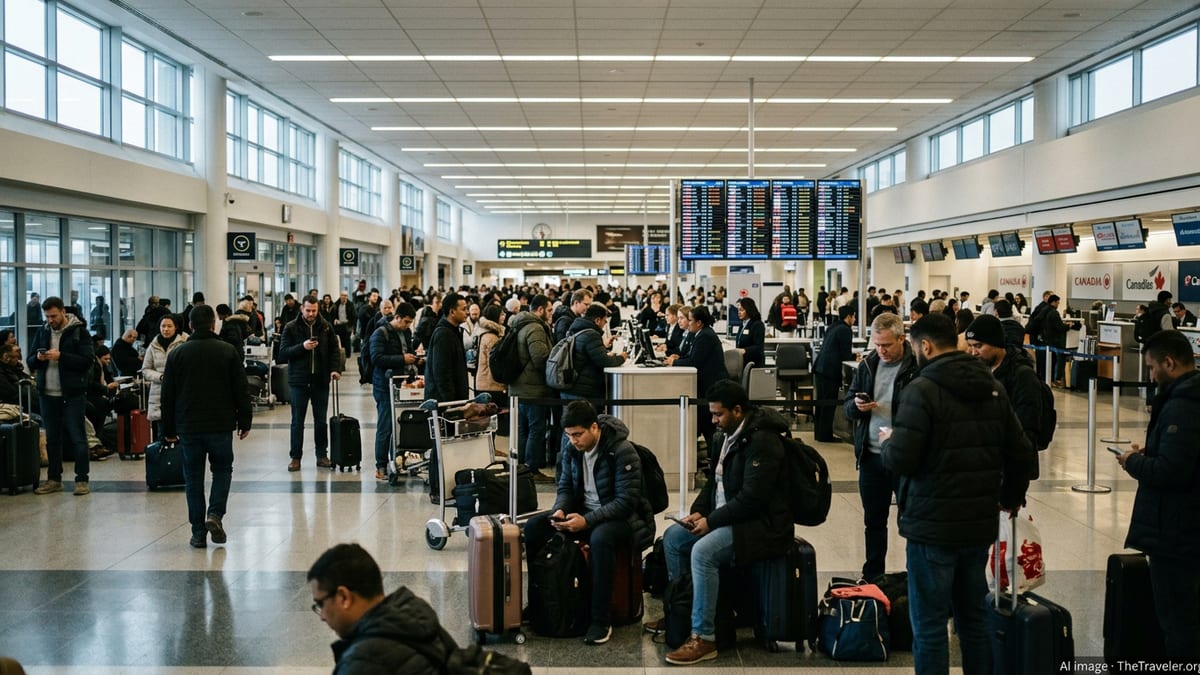
Across Canada’s largest airports on Saturday, scenes were familiar: long check-in lines snaking through departure halls, departure boards speckled with red and orange status alerts, and families stretched out on terminal floors and benches after missing onward connections.
At Toronto Pearson and Vancouver International, many travelers reported spending hours in queues to rebook flights or obtain hotel and meal vouchers. Some described confusion over whether disruptions were categorized as weather related or within the carrier’s control, a distinction that determines compensation rules under Canada’s air passenger protection regulations.
In Halifax and Edmonton, travelers arriving from delayed inbound flights found their onward connections already gone, with the next available seats sometimes more than a day away. Stranded passengers described scrambling to secure last-minute hotel rooms or sleeping in terminal seating areas amid shortages of nearby accommodation.
Social media posts showed crowded gate areas and luggage halls at several airports, as well as impromptu lines at customer-service kiosks. Airline staff, themselves stretched by high passenger volumes and complex rebooking tasks, were seen working through backlogs into the night as schedules shifted repeatedly in response to changing conditions.
What Stranded Travelers Can Do Now
With flight disruptions likely to continue in bursts as winter weather lingers and airlines rebuild resilience into their systems, travel experts are urging Canadian passengers to prepare for potential delays. They recommend checking flight status frequently before leaving for the airport, using airline apps or text alerts, and considering earlier departures or longer connection windows when traveling through weather-prone hubs.
Under federal rules, airlines must offer rebooking or refunds when flights are cancelled, and in many cases they are also required to provide meal vouchers, hotel accommodation and ground transportation when disruptions are within the carrier’s control. For weather-related events, carriers must still rebook passengers, but compensation obligations may be more limited.
Consumer advocates advise stranded travelers to keep receipts for meals, transportation and lodging, document all communications with their airline and, where applicable, file formal compensation claims through carrier portals. They also suggest that passengers ask directly about available seats on partner airlines, as interline agreements can sometimes unlock alternatives that do not appear in basic rebooking tools.
As airlines, airports and regulators dissect this latest round of chaos, travelers across Canada remain focused on a more immediate goal: simply getting where they need to go. For many, that will mean navigating a patchwork of delays, cancellations and rerouted itineraries for at least a few more days.