

More news on this day
Thousands of passengers were left stranded or facing long waits on March 7 and 8 as a fresh wave of delays and cancellations rippled through the U.S. air network, with Delta Air Lines, regional affiliate Endeavor Air, Lufthansa and other major carriers reporting 465 delayed flights and 22 cancellations across hubs including Atlanta, New York, Los Angeles and Chicago.
Get the latest news straight to your inbox!
Thunderstorms Over Atlanta Spark Nationwide Ripple Effect
The latest disruption began in the skies over Georgia, where an intense band of thunderstorms and reports of hail passed over Hartsfield-Jackson Atlanta International Airport on the evening of March 7. Pilots and ground crews were forced to halt departures while aircraft on the ground were inspected for possible hail damage, immediately slowing operations at the world’s busiest airport.
With Atlanta serving as the primary hub for Delta Air Lines and its regional partner Endeavor Air, the localized weather quickly cascaded into national disruption. Aircraft and crews that should have moved on to later flights were held in place, leading to rolling delays that carried into March 8 across routes linking Atlanta with New York, Los Angeles, Chicago and other major cities.
By mid-morning on March 8, roughly 465 flights operated by Delta, Endeavor, Lufthansa and several other international and domestic carriers had been delayed, while at least 22 were canceled outright, according to aggregated data from airline and tracking services. The majority of those flights were either bound for or departing from the busiest hubs, where tight schedules leave little room to absorb sudden shocks to the system.
Passengers described hours-long waits on aircraft parked at gates or on taxiways as airline operations teams waited for maintenance clearances and new routing instructions. Some flights that had already boarded were ultimately canceled, forcing travelers to disembark and scramble for scarce rebooking options.
Travelers Stranded as Maintenance Backlogs Grow
Once the storms cleared, the focus shifted from weather to logistics. Aircraft that had been caught under the hail cells in Atlanta required detailed inspections before they could be released back into service. With maintenance crews already working close to capacity at the sprawling hub, the sudden need to check multiple jets in a short window created a significant backlog.
Delta and Endeavor flights were affected most severely, but the impact spread to other airlines that rely on coordinated schedules through Atlanta and other East Coast hubs. International carriers, including Lufthansa, reported knock-on delays to transatlantic departures as connecting passengers and crew members missed inbound flights, prompting schedule shuffles on both sides of the Atlantic.
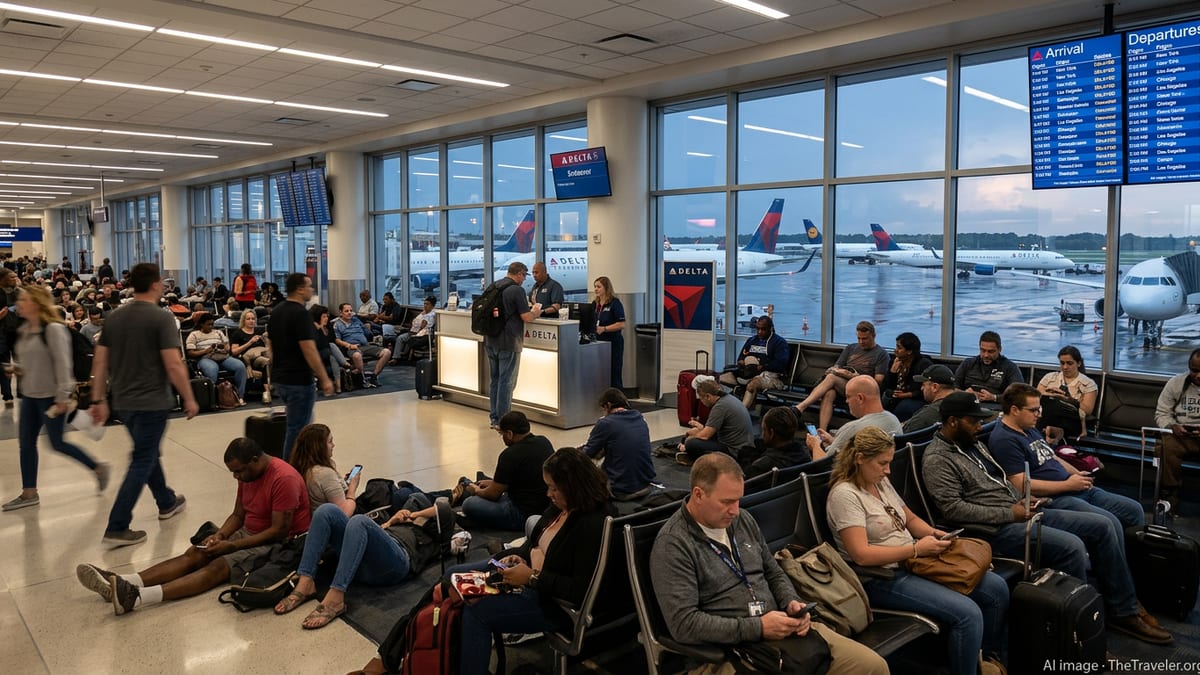
Inside terminals, the strain showed quickly. Long lines formed at service counters as passengers sought rebooking options, meal vouchers or hotel rooms. In Atlanta, some travelers arriving late at night reported being unable to secure nearby hotel accommodation as rooms filled, leaving them to sleep in gate areas or baggage halls while they waited for morning departures.
Airline call centers and digital channels were similarly stretched. Customers attempting to change flights via mobile apps and websites encountered slow response times as thousands tried to rebook at once, while social media feeds filled with complaints and calls for clearer, more frequent updates from carriers.
Major Hubs From New York to Los Angeles Feel the Strain
While the initial trigger occurred in Atlanta, the interconnected nature of the U.S. air network ensured that the disruption was quickly felt nationwide. New York-area airports, including LaGuardia and John F. Kennedy, saw departure boards fill with late departures and rolling gate changes as aircraft and crews arrived well behind schedule from the Southeast.
In Chicago, delays mounted through the afternoon and evening of March 7 as flights from Atlanta and other storm-affected regions landed out of sequence. Connections to smaller Midwestern cities were particularly vulnerable, with regional jets arriving late and sometimes too late to complete final legs before nighttime operating restrictions took effect.
Los Angeles and other West Coast gateways also experienced secondary impacts. Long-haul services that rely on inbound aircraft from the East and South faced crew timing issues, with some pilots and cabin crew reaching maximum duty hours before being able to complete scheduled rotations. This forced operations teams to reshuffle pairings, sometimes choosing to cancel shorter domestic segments to protect long-haul routes.
Smaller but strategically important airports, including Dallas-Fort Worth, Denver and Boston, reported elevated levels of delays as they absorbed rerouted aircraft and repositioning flights. With gate space and runway capacity already tight during peak hours, even minor schedule deviations contributed to longer taxi times and missed connection windows.
Airlines Balance Safety, Schedules and Customer Frustration
Airline executives and operations managers stressed that safety considerations, particularly around hail inspections and adverse weather, must take precedence over schedule reliability. They noted that any suspected structural or engine damage requires thorough checks, even if that means passengers face extensive delays.
However, the latest episode has intensified scrutiny of how quickly carriers can mobilize maintenance crews and recovery plans when storms or other external shocks hit major hubs. Aviation analysts point to the high utilization of both aircraft and staff as a key vulnerability, leaving little slack to absorb sudden downtime without triggering widespread disruption.
Delta and its regional partners have faced heightened attention in recent months as several weather systems and technical issues have combined to produce clusters of delays and cancellations. The inclusion of Lufthansa and other international airlines in the latest disruption shows how fragile the broader transatlantic network can be when key U.S. hubs are forced into extended slowdowns.
For travelers, the experience once again underscored the importance of contingency planning. Those with flexible itineraries and direct flights generally fared better than passengers relying on tight connections through congested hubs, especially in the evening hours when schedule buffers are already thin.
Know Your Rights When Flights Are Delayed or Canceled
The ongoing pattern of disruption has renewed calls from consumer advocates for clearer, more uniform protections for U.S. air passengers. While federal rules require airlines to provide refunds when a flight is canceled and a traveler chooses not to be rebooked, compensation for delays remains largely at the discretion of the carrier in domestic markets.
Travel experts advise passengers to document all communications with airlines, retain boarding passes and confirmation emails, and keep receipts for meals, transportation and accommodation in case goodwill reimbursements are offered. Those flying on itineraries that touch Europe may have additional rights under European regulations if a disruption is deemed within the airline’s control.
In the meantime, airlines are urging customers to regularly check flight status before leaving for the airport and to enable mobile notifications for real-time updates. On days with active weather systems near major hubs, carriers often issue travel waivers that allow free changes to itineraries, a tool that can help passengers move trips away from peak disruption windows.
With the spring and summer storm season approaching, both airlines and travelers are bracing for the likelihood that further episodes of widespread disruption will occur. The latest wave of delays and cancellations serves as an early reminder of how quickly U.S. air travel can grind to a halt when severe weather, staffing constraints and tightly packed schedules collide.