

More news on this day
Thousands of travelers across the United States faced another day of air travel disruption on March 19, as publicly available data from flight-tracking services showed at least 101 cancellations and 2,951 delays affecting major hubs including Chicago, Orlando, Denver, Washington D.C., Detroit and Dallas, with large carriers such as Spirit, Southwest, United and Delta among those heavily impacted.
Get the latest news straight to your inbox!
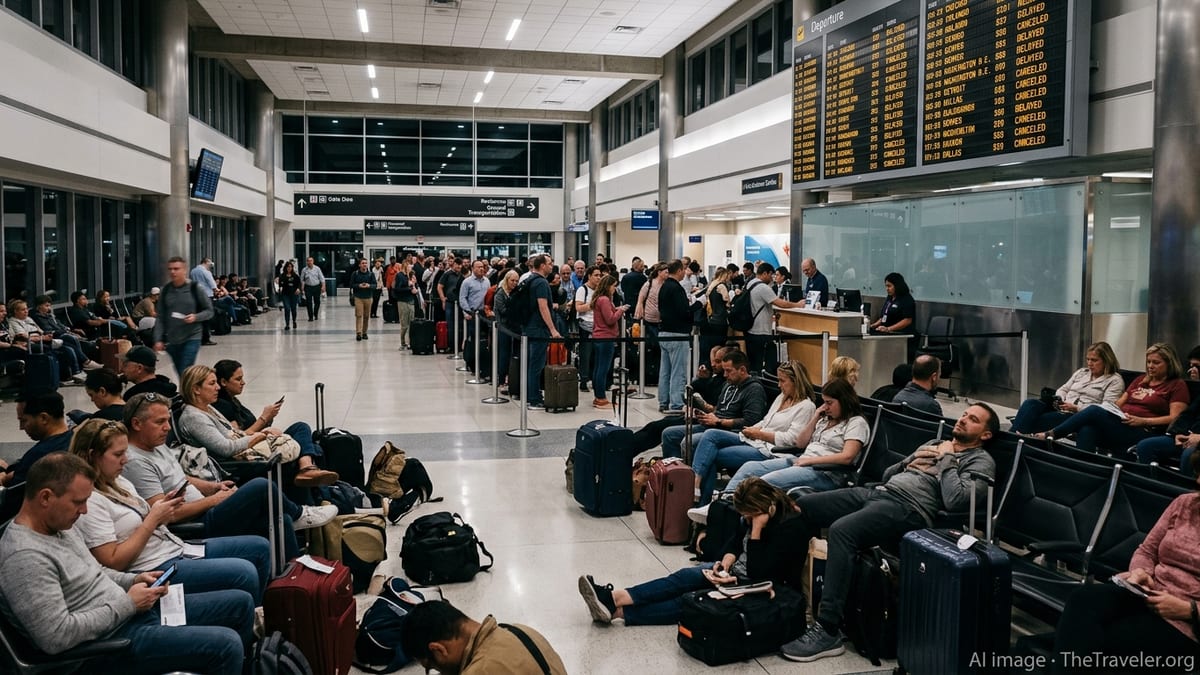
Major Hubs Buckle Under Fresh Wave of Disruptions
The latest round of cancellations and delays comes as airlines continue to work through the fallout of a powerful March storm system that swept across large parts of the country between March 13 and March 17, bringing heavy snow, high winds and hazardous conditions to the Midwest and Northeast. Publicly available flight-tracking information on March 19 indicates that airports in Chicago, Orlando, Denver, Washington D.C., Detroit and Dallas have been among the hardest hit, with schedules still struggling to recover even as the system weakens.
Chicago, a critical connecting point for both United and American, has again emerged as a focal point of disruption. Reports from travelers and aviation observers describe crowded terminals at O’Hare, long lines at customer service counters and a large share of departures marked delayed on information boards. With Chicago serving as a primary hub that feeds routes across the country, delays there have rippled into secondary markets, stranding passengers far from the main storm track.
In Florida, Orlando International Airport has also seen significant disruption, a notable setback in the middle of the busy spring break period. Flight-tracking data shows a high volume of late departures and extended ground holds, with knock-on effects for travelers bound for family vacations, cruises and theme parks. Similar patterns are visible at Denver International Airport and at major airports in the Washington D.C. region, where waves of delays have stacked up throughout the day as carriers attempt to reposition aircraft and crews.
Detroit and Dallas, both critical hubs for large domestic carriers, are also experiencing elevated disruption levels relative to a typical March weekday, according to widely available operations dashboards. While the raw number of cancellations remains lower than during the height of recent winter storms, the combination of scattered cancellations and thousands of delayed flights has left many travelers facing missed connections, overnight stays and last-minute itinerary changes.
Spirit, Southwest, United and Delta Grapple With Cascading Effects
The disruption has been widely distributed across the U.S. airline industry, with major carriers all contending with the operational aftershocks of the March storm complex. Publicly available data and traveler reports point to Spirit, Southwest, United and Delta among the most visible players in the latest wave of delays, largely because of their strong presence at the affected hubs and the volume of connecting traffic that flows through those airports.
Southwest, with a heavy footprint at Denver, Chicago Midway and Dallas Love Field, has faced particular scrutiny from passengers after several years in which winter weather and operational strain have periodically exposed weaknesses in its highly scheduled, point-to-point network. While the current disruption is smaller in scale than the airline’s December 2022 meltdown, posts from passengers indicate recurring frustrations such as rolling departure times and limited same-day rebooking options at already congested airports.
United, anchored at Chicago O’Hare and with a substantial presence in Denver and Washington Dulles, has also experienced a dense cluster of delayed flights. Publicly accessible airline performance data and anecdotal reports suggest that gate availability and crew scheduling remain pressure points, especially in Chicago where arriving aircraft have at times been held on taxiways waiting for open gates in the days since the worst of the storm.
Delta, while somewhat less exposed at the specific airports highlighted in the latest figures, is nevertheless contending with widespread network knock-on effects due to its role in connecting travelers through multiple hubs, including Detroit. Spirit’s performance has drawn attention as well, particularly at leisure-focused markets like Orlando, where the combination of weather, high seasonal demand and tight aircraft utilization leaves relatively little slack for recovery when early-morning flights depart late or are canceled outright.
Storm Legacy, Staffing Strains and Tight Schedules Converge
The convergence of severe weather, tight staffing and high seasonal demand has intensified the impact of what might otherwise have been a more limited disruption. Meteorological summaries of the March 13 to March 17 storm complex describe an expansive system that generated blizzard conditions across parts of the Upper Midwest and heavy rain and wind farther east, affecting airports from the Pacific Northwest to New England. Even after skies began to clear, the volume of displaced aircraft and crews left airlines with a challenging multi-day recovery effort.
Airline operations analysts note that many carriers are still operating with lean staffing levels and tight schedules in the wake of pandemic-era changes and subsequent demand surges. Publicly available policy documents and recent industry data show that airlines have sought to maximize aircraft utilization to meet strong demand, particularly around popular travel windows such as spring break. That approach can leave limited room for error when substantial weather disruptions force widespread cancellations or lengthy ground stops at key hubs.
At the same time, ongoing pressure on air traffic control staffing and ground operations at some major airports has added to the complexity of the recovery. Previous government and industry reports have highlighted chronic congestion at large hubs such as Chicago O’Hare, Dallas-Fort Worth and Orlando International, where delays compound quickly during periods of high demand or when weather forces runway configuration changes. The current pattern of scattered cancellations combined with thousands of delays illustrates how even modest disruptions can escalate when they intersect with already stretched infrastructure and personnel.
Travelers caught in the latest wave of disruptions are also encountering the cumulative effect of earlier winter storms that have repeatedly stressed airline networks in 2026. Public overviews of recent weather events point to multiple major systems in January and February that resulted in tens of thousands of cancellations and delays across North America, leaving little sustained downtime for carriers to rebuild buffers and refine schedules before the spring travel surge.
Travelers Face Long Lines, Missed Connections and Limited Options
For passengers on the ground, the statistics translate into long waits, changing itineraries and in some cases unplanned overnight stays. Reports from airports in Chicago, Denver and Orlando describe lengthy lines at ticket counters and service desks as travelers attempt to rebook around cancellations or secure earlier options after prolonged delays. With hotels near major hubs often filling quickly during disruption events, some passengers are resorting to sleeping in terminals while waiting for morning departures.
At connecting hubs such as Chicago and Dallas, even relatively short initial delays have proved enough to cause missed connections for travelers on multi-leg itineraries. Passenger accounts from recent days describe scenarios in which a 45-minute hold for deicing or crew arrival cascaded into lost seats on onward flights, leaving travelers rebooked on departures many hours or even a full day later, particularly on heavily traveled routes.
Families and leisure travelers headed to or from Orlando appear to be feeling the brunt of the disruption during a peak period for theme park and cruise vacations. With many itineraries tied to fixed cruise embarkation times or nonrefundable resort reservations, delays of several hours can have outsized financial and emotional consequences. Public travel forums and social media posts are filled with questions about compensation, meal vouchers and overnight accommodations as passengers seek to understand their rights.
Business travelers connecting through Denver, Washington D.C. and Detroit are also reporting missed meetings and disrupted itineraries. For those with time-sensitive commitments, even a successful same-day rebooking can mean arriving too late to make originally scheduled events. In some cases, travelers are opting to abandon same-day flights altogether and rebook for later in the week once operations show clearer signs of stability.
What Disrupted Passengers Can Do Right Now
Consumer advocates and travel specialists generally recommend that passengers caught in large-scale disruption events take a proactive approach to managing their options. Publicly available guidance suggests that travelers monitor their flight status directly through airline apps or official channels, as these sources typically update more quickly and more accurately than airport departure boards or third-party aggregators during fast-moving events.
When cancellations occur, travelers often have the best chance of securing alternative arrangements by acting quickly, particularly on days when large numbers of flights are affected and seat inventory on remaining services is tight. Industry observers note that using multiple channels, such as mobile apps, websites and call centers, can sometimes produce faster results than waiting in a single long line at the airport. In some cases, passengers have reported success requesting reroutes through alternative hubs that are less affected by weather or congestion.
Publicly accessible airline policies indicate that options after a cancellation or significant delay can vary widely depending on the cause of the disruption and the carrier involved. While severe weather is typically categorized as outside an airline’s control, airlines often still provide rebooking at no additional fare and may offer meal vouchers or hotel discounts in certain circumstances. Passengers are being encouraged by travel rights organizations to document expenses, save boarding passes and keep detailed records of communications with airlines to support potential reimbursement requests or complaints.
With more unsettled late-winter weather possible in the coming days and continued high demand around spring break travel, observers suggest that passengers build additional buffer time into their plans where possible, favor earlier departures and consider nonstop flights to reduce the risk of missed connections. The latest figures of 101 cancellations and 2,951 delays highlight how quickly conditions can deteriorate across a wide swath of the U.S. network when storms, staffing constraints and peak-season demand converge.