

More news on this day
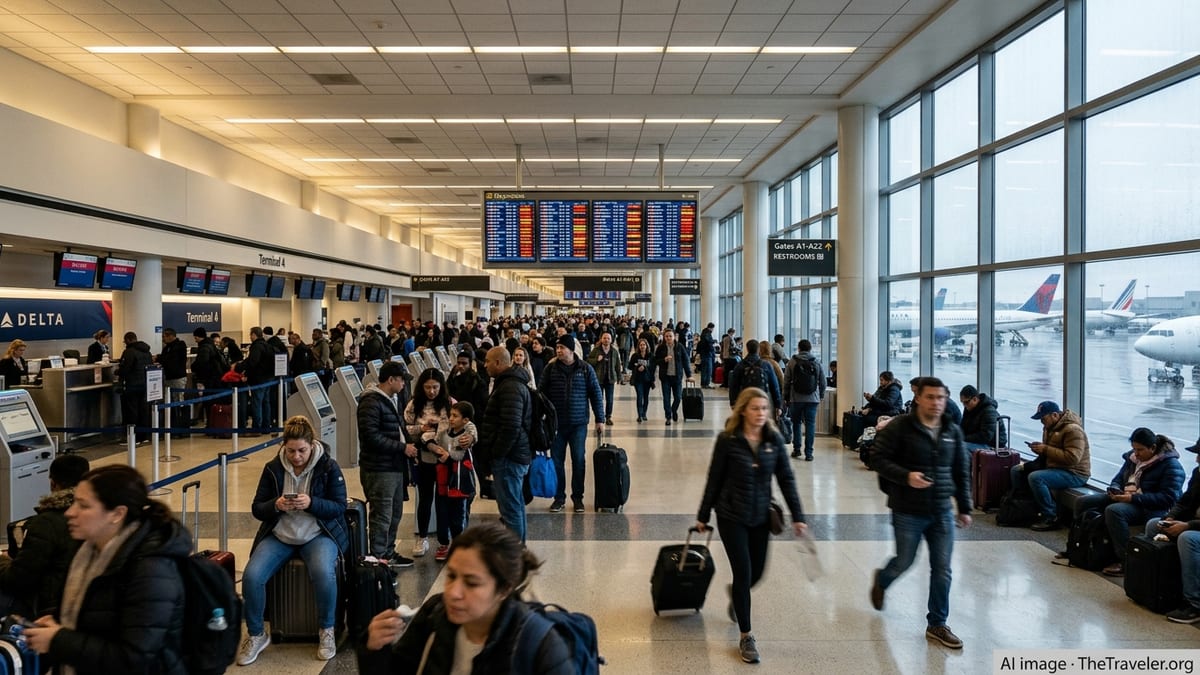
John F. Kennedy International Airport is facing another day of travel turmoil, with publicly available flight-tracking data on Monday showing 14 cancellations and hundreds of delays across Delta Air Lines, American Airlines, JetBlue and other carriers, disrupting links between the United States and key destinations in Europe and the Middle East.
Get the latest news straight to your inbox!
Storm Systems and Tight Schedules Converge Over New York
The latest disruptions at JFK come on the heels of a series of powerful late winter and early spring storms that have swept across large parts of the United States in recent weeks, repeatedly straining airline operations and airport infrastructure. While conditions at New York’s primary international gateway were relatively calm for parts of the morning, rolling weather impacts elsewhere in the network fed into bottlenecks at JFK throughout the day.
According to published coverage of recent storm systems, thousands of flights nationwide have been canceled or delayed since mid March as snow, high winds and thunderstorms moved from the Midwest toward the East Coast, triggering ground stops and overnight crew displacements at multiple hubs. Those compounding effects were still rippling through schedules as travelers filtered into JFK for transatlantic and long haul departures.
Operational data reviewed from flight tracking services shows that the 14 cancellations recorded at JFK on Monday represented only a fraction of the disruption; far more common were extended departure and arrival delays that pushed turn times and strained gate availability. Even flights that ultimately departed often did so hours late, forcing missed connections in both directions on routes linking New York with major European capitals and Gulf hubs.
Airlines continue to characterize many of the schedule changes as weather related, but independent analyses of recent storms highlight how vulnerable high volume airports like JFK remain to any disturbance once aircraft and crews are out of position for more than a single rotation.
Delta, American and JetBlue Struggle to Keep Long Haul Networks Moving
Delta Air Lines, American Airlines and JetBlue all maintain significant operations at JFK, using the airport as a launch point for transatlantic services to Europe and long haul routes to the Middle East and South Asia. Publicly available timetables show that even a small number of cancellations on those sectors can have outsized consequences, as each widebody aircraft typically operates just one or two long legs per day.
On Monday, flight tracking boards indicated that Delta and American each logged a mix of delayed and canceled departures on routes connecting New York with European gateways such as London, Paris and Rome. For passengers bound for the Middle East, extended delays on evening departures had potential knock on effects for onward connectivity at partner hubs, particularly when missed arrivals could not be accommodated until the following day.
JetBlue, which uses JFK as a primary base for both domestic and international operations, also saw dozens of flights pushed back. Recent public reports on the airline’s performance during weather events note that once delays accumulate across its narrow body fleet at JFK, the carrier can run short on both aircraft and crew hours, forcing late day cancellations even after local weather improves.
Smaller U.S. and foreign carriers operating from JFK were not immune. While many reported fewer outright cancellations, the same aircraft and crew rotation challenges led to a pattern of rolling delays that left some departures waiting on inbound planes that had been held at other airports earlier in the day.
Knock On Effects for Europe and the Middle East
Because JFK is a major connecting point for transatlantic and transcontinental travel, operational problems in New York can reverberate quickly through networks across the Atlantic and into the Middle East. Industry schedule data shows that many flights between JFK and cities such as London, Dublin, Madrid, Doha and Dubai are timed to feed early morning or late night banks of onward services.
When those departures leave hours behind schedule or are canceled outright, passengers may reach European and Middle Eastern hubs after connecting banks have closed, triggering the need for hotel accommodations and next day rebooking. In some cases, travelers arriving from Europe or the Gulf region into JFK also missed domestic connections onward to other U.S. cities, further amplifying the disruption beyond New York.
According to publicly available information from recent weather related disruptions, airlines have been prioritizing the operation of long haul flights wherever possible, but have often faced tough choices when crew duty time limits intersect with air traffic control restrictions and deicing delays. The result, visible on arrival and departure boards at JFK, has been a mix of preserved flagship transatlantic services and more frequent cancellations on shorter regional legs that feed those routes.
Travelers heading to or from the Middle East have faced added complexity because many services operate only once daily. When such a flight is canceled at short notice, there may be limited alternative options that avoid lengthy detours or overnight layovers at intermediate hubs.
Passengers Face Long Waits and Complex Rebookings
For passengers caught up in Monday’s disruption, the experience was often marked by uncertainty and long waits in crowded terminals. Posts shared on public forums over recent weeks describing similar events at JFK detail long lines at airline counters and customer service desks as travelers tried to secure new itineraries or overnight arrangements after missed connections.
Travel advice documents circulated by airlines and consumer advocates in the wake of recent storms emphasize the importance of using mobile apps and online tools to rebook as soon as an initial delay appears likely to jeopardize onward travel. However, when hundreds of passengers on a widebody flight all attempt to change plans at once, available seats on alternative services can be exhausted within minutes, especially on peak routes between the United States and Europe.
Publicly available guidance also notes that U.S. Department of Transportation rules and individual airline policies determine what compensation or assistance may be offered to affected travelers. Weather related disruptions typically limit the obligation to provide hotel rooms or meal vouchers, while cancellations that stem from crew or operational issues can trigger more generous rebooking and care commitments. The mixed causes behind the latest JFK turmoil left many passengers navigating a complex patchwork of policies.
Some travelers reported on social platforms that they opted to reroute through alternative airports in the region, such as Newark or Boston, when no timely seats remained from JFK. Others chose to delay their trips entirely rather than risk being stranded mid journey during a period of repeated weather and staffing shocks across airline networks.
What Travelers Can Expect in the Days Ahead
Operational patterns from earlier disruption events in 2026 suggest that it can take several days for schedules at a busy hub like JFK to fully stabilize after major storms and widespread delays. Aircraft and crews must be repositioned, maintenance windows rescheduled and backlogs of displaced passengers cleared, even as regular demand continues.
Flight tracking trends indicate that airlines are already trimming some frequencies and upgauging aircraft on key routes in an effort to move more passengers with fewer departures while the system resets. Travelers booked to or from JFK over the coming days may see schedule changes or equipment swaps as carriers adjust their plans.
Industry analysts observing recent performance data recommend that passengers build extra buffer time into itineraries that rely on JFK for connections, particularly for trips involving Europe or the Middle East where missed links can be harder to recover. Early morning departures, which are often less exposed to knock on delays from earlier flights, may offer a slightly more reliable option than late day services during periods of instability.
While airlines have been adding staffing and refining recovery playbooks since the severe disruptions of recent years, publicly available research on delay propagation across the U.S. aviation network suggests that densely scheduled hubs like JFK remain highly sensitive to storms, ground stops and security slowdowns. For now, travelers passing through New York’s primary international gateway face another period of heightened uncertainty as carriers work to absorb the latest wave of cancellations and delays.