

More news on this day
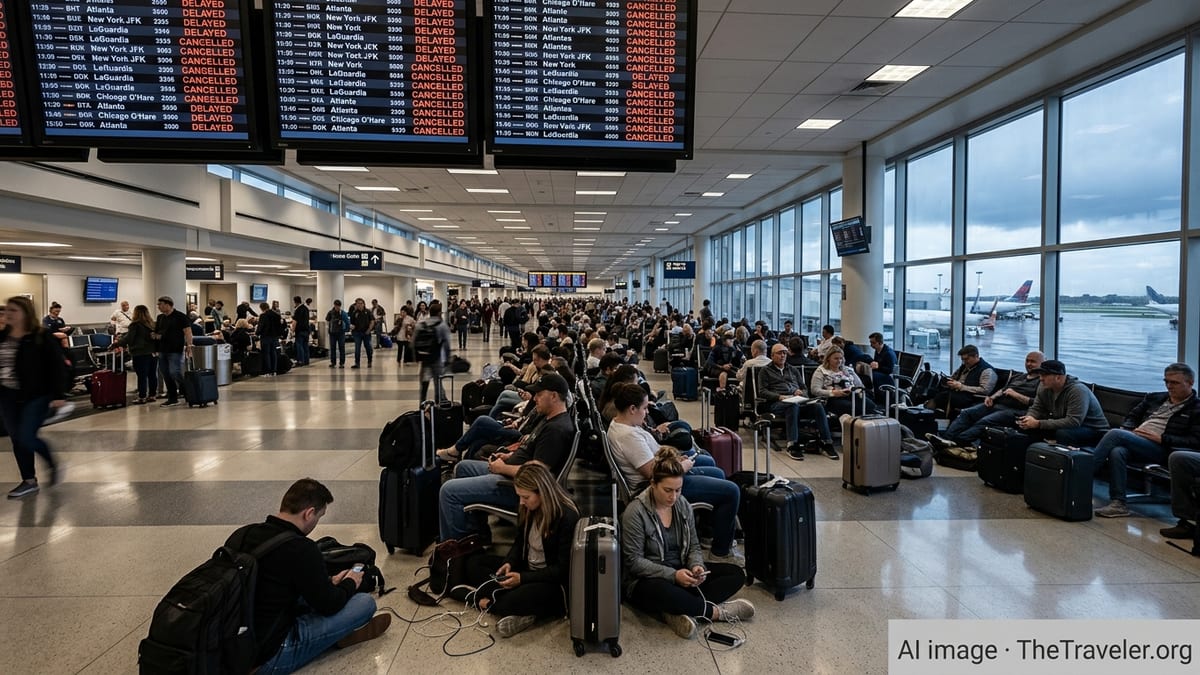
Hundreds of travelers were left stranded and thousands more faced hours-long delays this week as flight disruptions rippled through Hartsfield-Jackson Atlanta International Airport, John F. Kennedy International Airport, LaGuardia Airport, and Chicago O’Hare International Airport, with dozens of cancellations and hundreds of delayed flights complicating already busy spring travel.
Get the latest news straight to your inbox!
Storm System and Shutdown Combine to Disrupt Travel
Publicly available flight-tracking data and news coverage indicate that a powerful storm system sweeping across the Midwest and East Coast has been a primary driver of the latest wave of flight disruptions. Heavy snow, strong crosswinds, and thunderstorms have reduced visibility and forced air-traffic managers to slow arrivals and departures at several of the country’s busiest hubs.
The weather-related bottlenecks have coincided with ongoing impacts from a partial federal government shutdown that began in mid-February, which has strained airport security staffing and contributed to longer processing times at checkpoints. Reports indicate that some Transportation Security Administration workers have quit or taken unscheduled leave, further tightening resources at peak hours.
This combination of adverse weather and staffing pressure has produced rolling delays and cancellations since early in the week, with Monday and Tuesday emerging as particularly difficult days for travelers attempting to move through Atlanta, New York, and Chicago.
Industry analyses of recent disruption patterns suggest that when major hubs slow down, delays cascade nationwide as aircraft and crews struggle to return to their scheduled rotations, often leaving passengers stuck far from the cities actually experiencing severe weather.
Atlanta, New York, and Chicago Hubs Under Strain
At Hartsfield-Jackson Atlanta International Airport, one of the world’s busiest hubs, carriers have been working through a backlog after hundreds of flights were disrupted at the height of the storm system. Recent coverage cites hundreds of cancellations and delays there over a single 24-hour period, with additional knock-on delays as airlines attempt to reposition aircraft and crews.
In the New York area, both John F. Kennedy International Airport and LaGuardia Airport have faced periodic ground stops and flow restrictions as high winds and thunderstorms pushed through the region. Publicly available data show that LaGuardia, which has less runway capacity than JFK, has been especially vulnerable to weather-related slowdowns, with a large share of its schedule arriving late or departing behind plan.
Chicago O’Hare International Airport, a key connecting point for domestic and international routes, has also recorded significant disruptions, with reports of hundreds of delayed flights and scores of cancellations on some of the busiest days of the storm. Crosswinds and low ceilings have led to reduced arrival rates, forcing airlines to trim schedules and hold flights on the ground.
Taken together, the four airports serve well over 100 million passengers annually and function as central nodes in airline route networks. Even a moderate reduction in their operating capacity can rapidly translate into missed connections and extended wait times for travelers across the United States.
Hundreds Stranded as Delays Ripple Nationwide
Travelers passing through these hubs have reported overnight stays on terminal floors, lines stretching through concourses, and missed onward connections as delays compounded over multiple days. Social media posts and local accounts from Atlanta, New York, and Chicago describe passengers camping near gates, scrambling to rebook, and searching for scarce hotel rooms when flights were canceled late in the day.
Because many of the affected flights serve as critical connectors in cross-country itineraries, disruptions at Atlanta, JFK, LaGuardia, and O’Hare have translated into missed departures hours and even days later in cities with clear skies. Aviation analysts note that a single weather-related delay early in the day can leave an aircraft and crew out of position for multiple subsequent legs, amplifying the impact on passengers who may be traveling between entirely different regions.
The latest disruption comes during a busy stretch for spring break travel and the early rounds of major college basketball tournaments, when planes and airports are already near capacity. With fewer empty seats available, rebooking stranded passengers has taken longer, increasing the number of travelers stuck in terminals overnight or forced to stay an extra day in connecting cities.
While the headline figures at any given moment may show fewer than 100 cancellations at a particular airport, the cumulative effect across several days and multiple hubs has left large numbers of travelers contending with crowded terminals, extended layovers, and changing itineraries.
Why the Numbers Look Smaller Than the Impact
Current tallies from flight-tracking services typically show a snapshot of cancellations and delays in a single day, such as a few dozen cancellations and several hundred delayed departures and arrivals at a major hub. Travel experts emphasize that these figures understate the real-world experience for passengers, because they do not capture missed connections, rolling delays, or flights that depart hours late but still count as completed rather than canceled.
Data from recent seasons underline how even a modest percentage of disrupted flights can translate into tens of thousands of affected passengers at airports the size of Hartsfield-Jackson or O’Hare. Once delays begin to accumulate, tightly scheduled turnarounds leave little slack for airlines to absorb additional shocks, and minor mechanical issues or crew time limits can then push more flights into cancellation.
Regulatory filings and policy analyses also show that large airports with complex schedules tend to experience concentrated “waves” of passenger delay hours during major weather events. Under such conditions, a cancellation at a hub can strand an entire planeload of passengers while also disrupting downstream flights that were depending on that aircraft and crew.
As a result, reports of dozens of cancellations and several hundred delays at the four key hubs this week may translate into far more widespread disruption for individual travelers, especially those making tight connections or flying on heavily booked routes.
What Travelers Can Expect in the Coming Days
Public forecasts indicate that the most intense phase of the recent storm system is now moving away from the central United States, but lingering wind and rain in the Northeast and Midwest could continue to affect operations, particularly during peak morning and evening traffic periods. Airlines are expected to keep adjusting schedules to manage crew availability and aircraft positioning.
Travel industry guidance suggests that passengers with itineraries through Atlanta, JFK, LaGuardia, or O’Hare over the next several days should monitor their flight status frequently, allow additional time for security screening, and be prepared for potential gate or schedule changes. Many carriers offer same-day change options or travel alerts during large-scale disruptions, sometimes allowing rebooking to alternative hubs when seats are available.
Analysts note that high passenger volumes during the spring travel season mean that recovery from a multi-day disruption can take time, even after skies clear. Flights may operate with residual delays as airlines work through maintenance checks delayed by weather and rotate aircraft back into their planned positions.
For now, the experience of hundreds of stranded travelers at the four major hubs underscores how closely interconnected the nation’s air network has become: a storm over one region, combined with staffing strains and tight schedules, can quickly send shockwaves through airports thousands of miles away.