

More news on this day
Hundreds of air passengers have been left stranded across Europe as a combination of fierce winter storms and mounting industrial action delayed 936 flights and forced the cancellation of at least 82 services, disrupting operations at key hubs in Sweden, the United Kingdom, Austria and beyond and hitting low cost carriers Wizz Air and Ryanair as well as Finnair and other major airlines.
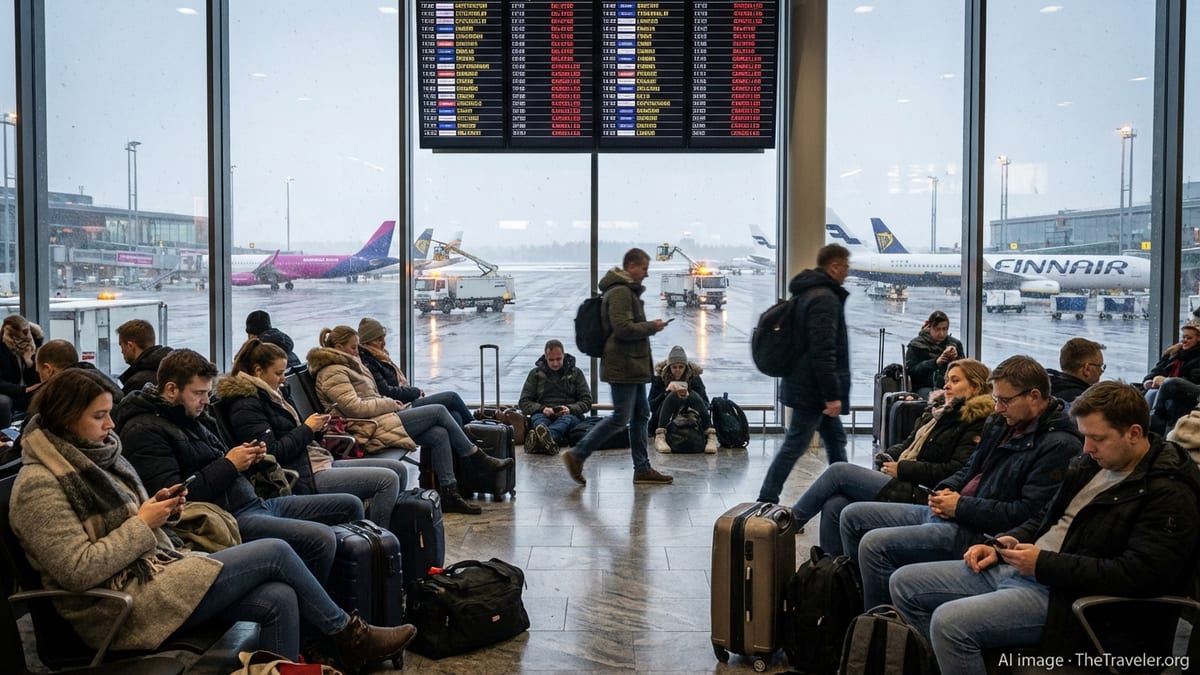
Weather Chaos Grips Major European Hubs
Airports from Amsterdam to Stockholm have been battling heavy snow, freezing rain and strong winds that pushed Europe’s already stretched winter operations to the brink. Amsterdam Schiphol, one of the continent’s busiest hubs, has reported some of the worst disruption, with runways and taxiways repeatedly slowed by de-icing backlogs and reduced visibility as winter storms swept across the Low Countries and into northern Germany and Scandinavia.
In Sweden, conditions at Stockholm Arlanda and other regional airports have led to rolling delays and missed connections, with aircraft and crews frequently out of position for subsequent rotations. Similar scenes have been reported in Austria and the UK, where wintry outbreaks linked to the current European windstorm season have brought intermittent ground stops and tighter spacing between departures and arrivals for safety reasons.
Aviation analysts say the combination of intense, fast-moving storm systems and already saturated winter schedules has created a fragile environment in which a single burst of snow or ice can cascade into hundreds of delayed flights across the network. With aircraft struggling to meet turnaround targets in such conditions, even modest weather events are resulting in widespread knock-on disruption.
Low Cost Carriers Among Hardest Hit
Low cost airlines operating dense, back-to-back schedules have been particularly exposed. Wizz Air and Ryanair, which both rely on quick turnarounds and high aircraft utilisation, have seen their operations snarled by ground-handling slowdowns, de-icing queues and air traffic control flow restrictions at multiple airports, including Amsterdam, Stockholm and several UK and Austrian gateways.
Passengers on point to point routes have reported aircraft remaining on stands for hours while crews awaited updated departure slots or replacement staff, with some services ultimately cancelled once crew duty limits were reached. The disruption has spilled across entire daily rotations, leaving aircraft and cabin crews stranded far from their home bases and forcing airlines to trim schedules to restore some stability.
Finnair and other network carriers have also felt the strain, particularly on short haul intra-European sectors that link into long haul banks in Helsinki, Amsterdam and London. When early morning feeder flights are delayed or cancelled, onward connections are missed, leading to rebookings, overnight accommodation costs and added pressure on already busy later departures.
Passengers Stranded Overnight as Operations Buckle
The operational stress has translated into long hours of uncertainty for travellers. At several airports, including hubs in northern and central Europe, passengers have faced the prospect of spending the night in terminals after late night cancellations left hotel capacity overwhelmed and ground transport options limited by icy roads and curtailed train services.
Some travellers reported lengthy queues at airline service desks as staff attempted to rebook hundreds of disrupted passengers while systems were under heavy load and seat availability dwindled. Families with children and elderly passengers were among those most affected, with cots and blankets laid out in gate areas as airport authorities activated contingency plans for mass disruption events.
The recovery has been complicated by the tightly packed nature of winter timetables and the continuing risk of fresh weather fronts sweeping in. Even as conditions improve temporarily, crews and aircraft often remain out of position, forcing airlines to prioritise certain routes and cancel others in order to rebuild their networks over several days.
Industrial Action Adds a New Layer of Disruption
Compounding the weather related problems, industrial tensions in parts of Europe are threatening further travel chaos. Civil aviation unions in Italy have called a 24 hour strike affecting ground staff, cabin crew and pilots at several carriers, part of a broader wave of labour disputes over pay, rosters and staffing levels that has echoed through the sector since traffic rebounded strongly after the pandemic.
While most of the current delays and cancellations are tied to adverse weather, airlines and passenger rights groups warn that the overlap with strike action risks amplifying the impact on travellers. Protected minimum-service rules in some countries ensure that a skeleton schedule must operate during certain peak hours, but off-peak periods are vulnerable to last minute cancellations and extended delays.
For carriers such as Ryanair and Wizz Air, which have previously faced high-profile showdowns with unions and regulators, the prospect of simultaneous operational and industrial pressures raises questions about the resilience of ultra-lean business models in an era of more frequent extreme weather events and tighter labour markets.
Know Your Rights and What Travellers Can Do
Consumer advocates are urging passengers caught up in the latest wave of disruption to familiarise themselves with their rights under European air passenger protection rules. Depending on the cause of a delay or cancellation, travellers on flights to, from or within the European Union may be entitled to meals, hotel accommodation, rebooking and in some cases financial compensation, although bad weather and air traffic control restrictions are often treated as extraordinary circumstances that exempt airlines from cash payouts.
Experts recommend that passengers monitor airline apps and airport information channels closely on the day of travel, complete online check in as early as possible, and avoid tight self-made connections between separate tickets during periods of unsettled weather. Those already at the airport are advised to seek written confirmation of any disruption from the airline, keep receipts for additional expenses, and document long delays to support any later claims.
With the European winter storm season still underway and further labour actions on the horizon, aviation officials and airline executives acknowledge that volatility is likely to persist in the coming weeks. For now, travellers across the continent face a familiar mix of uncertainty and resilience as they navigate a network where a single storm cell or strike notice can ripple into hundreds of delayed and cancelled flights.