

More news on this day
North American air travel faced another bruising weekend as storms, staffing strains and a heavily booked spring schedule converged to leave passengers stranded from San Diego and Los Angeles to Vancouver and Fort Lauderdale, with Phoenix Sky Harbor International Airport reporting at least 50 delayed departures and 31 cancellations as disruptions rippled through the network.
Disruptions Mount From Phoenix as Weather Chaos Spreads
At Phoenix Sky Harbor, one of the country’s busiest connecting hubs, airlines spent much of Saturday working through a logjam of delayed and canceled flights tied to severe weather across the Midwest and Southeast and lingering operational knock-ons from earlier in the week. Tracking services and airport status boards showed roughly 50 departures running significantly late and 31 canceled services over the course of the day, an unusually high tally for an airport that typically posts strong on time performance.
Although skies over Phoenix remained mostly flyable for much of the day, the airport’s tightly choreographed schedule depends on inbound aircraft from storm affected hubs such as Chicago O’Hare and Atlanta. As thunderstorms, ice and low ceilings triggered Federal Aviation Administration ground stops farther east, aircraft and crews due to operate services into and out of Phoenix failed to arrive on time, forcing airlines to consolidate routes, swap equipment and in some cases scrub flights altogether.
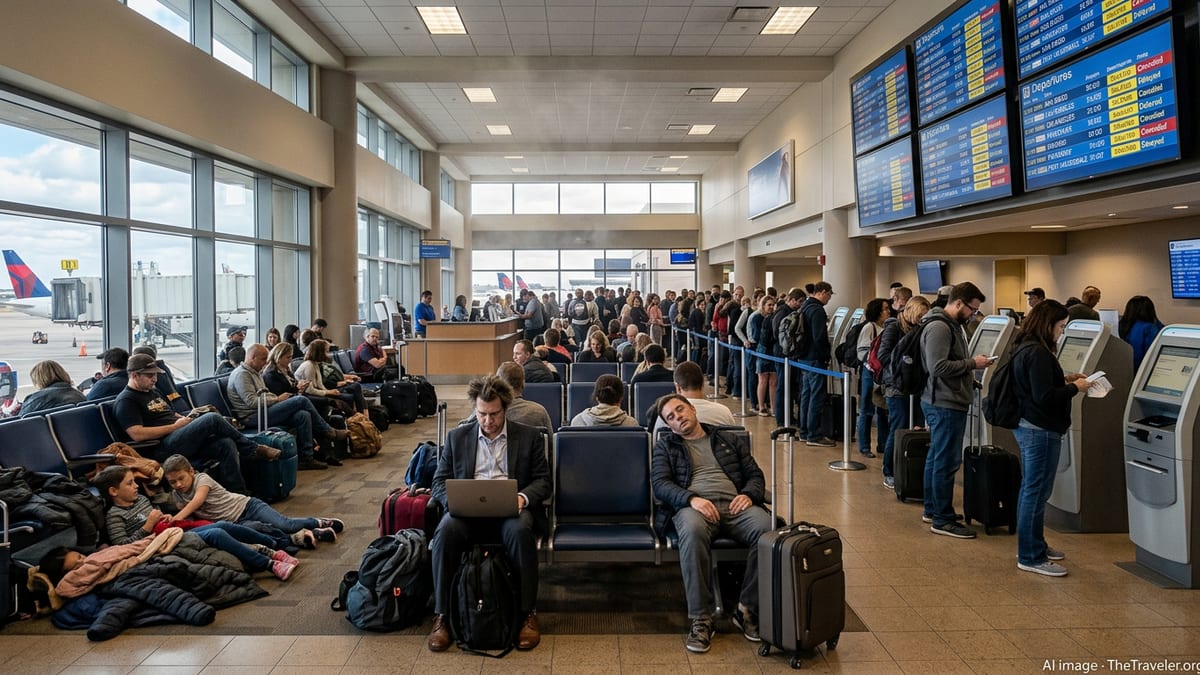
The result was a familiar pattern for frequent fliers: departure boards sliding from green to orange and red, growing lines at customer service desks and passengers camped on terminal floors as they waited for rebooked itineraries. Airline representatives at Sky Harbor urged travelers to check their flight status repeatedly throughout the day and to accept alternative routings where available, warning that empty seats on later services were extremely limited at the start of the spring break travel period.
San Diego, Los Angeles and Fort Lauderdale Feel the Ripple Effect
The same weather systems and scheduling strains that backed up operations in Phoenix reverberated along the West and East Coasts. In Southern California, San Diego International and Los Angeles International both reported elevated delay levels as aircraft arriving from storm battered central and eastern hubs turned up late or out of rotation, compressing already tight turnaround times on some of the country’s busiest domestic routes.
At Los Angeles, an important gateway for transcontinental and transpacific services, some long haul departures left late while airlines waited for connecting passengers and crew members arriving from disrupted flights elsewhere. Short haul links between Los Angeles, San Diego, Phoenix and other western cities became critical recovery sectors, with carriers attempting to reposition planes and people to where they were needed most in the network.
Across the country in Florida, Fort Lauderdale Hollywood International Airport experienced its own pockets of congestion as afternoon storms over parts of the Southeast compounded schedule pressures. Travelers bound for the Caribbean and Latin America reported missed connections after delayed inbound flights from western cities, including Phoenix and Los Angeles, arrived too late to meet tightly timed onward departures, forcing overnight stays and last minute itinerary changes.
Vancouver and Canadian Gateways Struggle With Parallel Turmoil
North of the border, Canadian airports from Vancouver to Toronto and Halifax spent Saturday grappling with a separate but compounding wave of cancellations and delays. Airlines there reported dozens of scrubbed flights and several hundred late departures as winter weather and constrained capacity collided with a busy travel weekend, echoing the pressure facing U.S. carriers.
At Vancouver International, a key transpacific hub that also handles significant cross border traffic to and from U.S. West Coast cities, including San Diego and Los Angeles, passengers described crowded terminals and check in lines stretching deep into public areas. Some flights linking Vancouver with U.S. destinations departed hours behind schedule after aircraft arriving from affected Canadian and American cities were themselves held up by earlier storms.
Because many major airlines share fleets and crew bases between the United States and Canada, operational shocks in one country frequently spill into the other. Industry analysts noted that when a system wide disruption coincides with high demand, as is the case heading into spring break, there is little slack left in schedules to absorb further surprises, leaving travelers vulnerable to cascading knock on effects.
Passengers Face Long Waits, Limited Options and Confusion
For passengers caught up in the latest round of disruptions, the statistics translated into hours of uncertainty in cramped concourses. At Phoenix Sky Harbor, families heading to vacation destinations watched repeated gate changes and rolling departure times, while some business travelers ultimately opted to abandon their trips altogether when it became clear they would miss same day meetings.
Social media posts from San Diego, Los Angeles, Vancouver and Fort Lauderdale showed crowded boarding areas and long lines at airline help desks as travelers sought meal vouchers, hotel rooms and replacement flights. Many reported difficulty reaching call centers or rebooking through mobile apps during peak disruption windows, as systems became overloaded with simultaneous change requests.
Travel rights advocates urged passengers to keep all receipts for meals, ground transport and emergency accommodation, noting that reimbursement rules vary widely between carriers and depend on whether a delay is considered within the airline’s control. They also advised travelers to document interactions with airline staff and to be persistent but patient in seeking assistance, as frontline workers at airports often find themselves managing surges of frustrated customers with limited real time information.
Airlines and Regulators Under Pressure as Peak Season Nears
The latest episode of widespread flight problems comes as airlines and regulators continue to face scrutiny over the resilience of the North American air travel system. Following major disruption events in recent years, including large scale weather emergencies and high profile IT failures, both U.S. and Canadian authorities have signaled closer oversight of how carriers plan for and respond to operational shocks.
In Washington, transportation officials have repeatedly pressed airlines to improve customer communication, staffing and contingency planning, particularly at pressure point hubs such as Phoenix, Los Angeles and major East Coast airports. Consumer groups argue that chronic schedule padding and tight aircraft utilization leave little margin when storms or technical problems arise, while airlines counter that they have invested heavily in new tools and infrastructure to speed recovery after major events.
With spring break and the busy summer season approaching, analysts warn that the combination of full flights, increasingly volatile weather and lingering staffing challenges could make similar multi day disruptions more likely. For now, passengers planning trips through affected airports are being urged to build in extra time, book earlier in the day where possible, and ensure that their contact details with airlines are up to date so that they receive rapid notice of any changes.