

More news on this day
Thousands of travelers across the United States faced significant disruptions as 721 flight cancellations and 2,801 delays were recorded in a single day, snarling operations at key airports including Buffalo, Miami, Nashville, New York, Pittsburgh and San Francisco and affecting carriers such as Republic, Endeavor, Air Canada and Delta.
Get the latest news straight to your inbox!
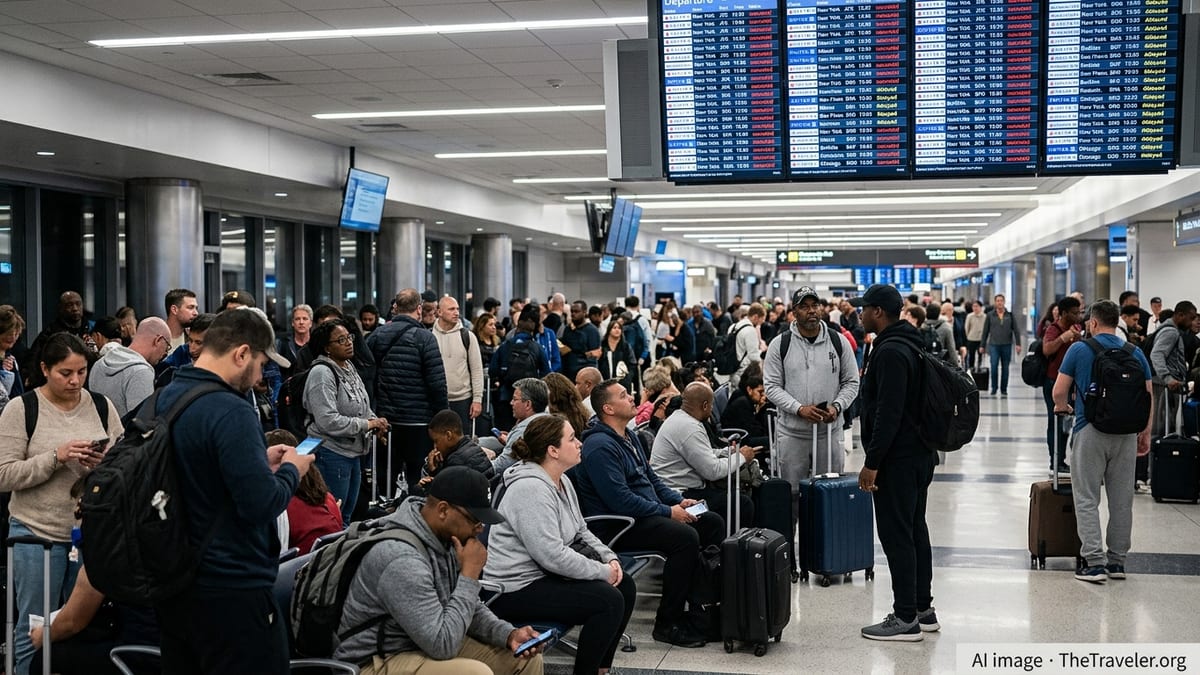
Major Hubs Struggle With a Wave of Cancellations
Data from national flight-tracking services show that the latest wave of disruptions ranks among the more difficult operating days of this spring travel period, with more than 700 flights canceled and nearly 2,800 delayed across the United States. The impact has been concentrated at major and mid-sized hubs, where dense schedules leave airlines and airports with limited room to recover when conditions deteriorate.
Buffalo, Miami, Nashville, New York City, Pittsburgh and San Francisco were among the hardest-hit metropolitan areas. Publicly available airport boards indicated clusters of grounded departures and late arrivals across morning and afternoon banks, leading to crowded gate areas and mounting connection issues for passengers. The pattern mirrored previous weather and system disruption days where a handful of constrained hubs quickly translated into nationwide knock-on effects.
Published coverage and operational dashboards suggest that regional operations tied to large network carriers showed particular strain. Flights marketed by major brands but operated by partners such as Republic Airways and Endeavor Air featured prominently in the cancellation and delay tallies, highlighting the vulnerability of hub-and-spoke systems that rely heavily on smaller jets feeding into busy hubs.
The scale of the disruption placed additional pressure on customer-service channels as travelers sought rebooking options. Historical Department of Transportation data indicate that when cancellations exceed several hundred in a day, average recovery times often stretch into subsequent days as airlines work to reposition aircraft and crews and to clear passenger backlogs.
Regional Carriers and Codeshares Hit Hard
Regional airlines operating under familiar mainline brands bore a significant share of the operational pain. Republic and Endeavor, which fly feeder routes on behalf of major U.S. carriers, appeared across multiple airport boards with canceled or heavily delayed services, particularly on shorter-haul segments in and out of New York and other congested airspace.
These carriers typically operate tightly timed rotations with limited spare aircraft and crew, making them especially susceptible to cascading delays when early flights are disrupted. If one leg is canceled due to weather, a staffing issue or an airspace constraint, the same aircraft and crew are frequently scheduled to operate several more flights that day, multiplying the impact.
Air Canada and Delta were also among the brands affected, according to public tracking tools and media rundowns of disrupted flights. For Air Canada, cross-border operations linking Canadian hubs with U.S. cities such as New York and San Francisco are particularly exposed to compounding delays when either side of the route network experiences adverse weather or congestion. Delta’s extensive domestic system, supported by Endeavor and other regional partners, likewise tends to feel ripple effects across multiple hubs when a disruption day takes hold.
Aviation analysts regularly note that regional partners play a central role in maintaining connectivity to smaller U.S. cities. When these flights are canceled, alternatives may be limited, often requiring passengers to route through different hubs, accept long layovers or in some cases wait until the following day for the next available seat.
Buffalo to San Francisco: Local Impacts of a National Problem
Conditions in Buffalo and other Northeastern airports have been particularly volatile this late winter and early spring, with frequent storms and strong winds. Recent severe weather systems across the Midwest and East, as well as a powerful March blizzard that disrupted power and transport over wide areas, have repeatedly translated into flight restrictions and ground delays at affected airports and their downline destinations.
In New York, the combined traffic flowing through LaGuardia, John F. Kennedy and Newark means even moderate disruptions can quickly saturate runways, taxiways and gate capacity. Travelers reported seeing extensive boards of delayed departures and arrivals, reflecting holding patterns in crowded airspace and slower-than-normal turnaround times on the ground.
Miami and other Florida airports have contended with seasonal thunderstorms and congested airways along the East Coast corridor. Delays there can be difficult to make up because many flights are tightly scheduled to connect with international departures and arrivals, especially to Latin America and the Caribbean. A late arrival into Miami can therefore jeopardize onward connections, forcing rebookings and creating longer stays in already busy terminals.
On the other side of the country, San Francisco’s geographically constrained airfield and frequent low clouds and crosswinds leave it prone to flow-control measures that reduce the number of permitted arrivals and departures per hour. When these restrictions coincide with weather elsewhere in the network, the result can be the sort of broad, multi-hub disruption seen in the latest figures, with Pittsburgh, Nashville and other inland airports absorbing diversions and rolling delays.
Why Flight Disruptions Cascade So Quickly
Recent academic research into U.S. aviation delays has underscored how interconnected the system has become. Studies of flight data from more than a decade show that a relatively small number of days each year qualify as high-disruption events, yet those days account for a significant share of total passenger delays nationwide. Weather is consistently cited as the leading trigger, but system-level factors such as air traffic control constraints, staffing, security procedures and late-arriving aircraft play substantial roles.
Industry reporting and government statistics also highlight how tightly scheduled aircraft rotations and crew pairings have reduced operational slack. While this improves efficiency on ordinary days, it leaves airlines with fewer options when conditions change suddenly. A storm cell over one hub, a ground stop at another and a staffing shortfall at a third can interact to create exactly the kind of nationwide ripple seen in the latest cancellation and delay counts.
Technology issues can intensify the problem. Past outages involving airline scheduling systems, crew-assignment software or air-traffic tools have caused sudden spikes in cancellations that took days to unwind. Airlines have since invested heavily in resilience, but corporate filings and technical assessments indicate that complex digital infrastructure remains a potential point of failure in a highly integrated network.
Travel data providers note that passenger demand has largely recovered to or surpassed pre-pandemic levels, meaning that planes are often operating with very high load factors. When flights cancel, rebooking capacity is limited, and travelers may need to accept different routings, downgraded cabins or overnight stays before seats become available.
What Travelers Can Expect in the Days Ahead
For passengers caught up in the latest disruption, the practical concern is how long the effects will linger. Historical patterns suggest that when cancellations reach into the hundreds at multiple hubs, residual delays can persist for at least a day or two as aircraft and crews are repositioned and as airlines work through stranded customers.
Publicly available travel advisories issued during recent storm systems encourage passengers to check flight status frequently and to monitor airline apps, which are typically updated more quickly than airport departure boards. Many carriers, including those affected in this latest event, have increasingly relied on digital notifications to offer free rebooking within specific date windows when severe weather or large-scale system issues are anticipated.
Consumer advocates point out that federal rules provide certain protections around refunds when a flight is canceled, but compensation for delays remains more limited. Travelers are often advised to keep documentation of disruption-related expenses and to review ticket conditions, particularly when trips involve multiple carriers or regional partners such as Republic and Endeavor operating under a mainline brand.
With spring break and early summer travel seasons approaching, aviation experts expect infrastructure, staffing and weather challenges to remain in focus. The day that saw 721 cancellations and 2,801 delays across the country offers a reminder of how quickly U.S. air travel can be thrown off balance, and how vulnerable tightly wound networks remain to storms, congestion and technical strain.