

More news on this day
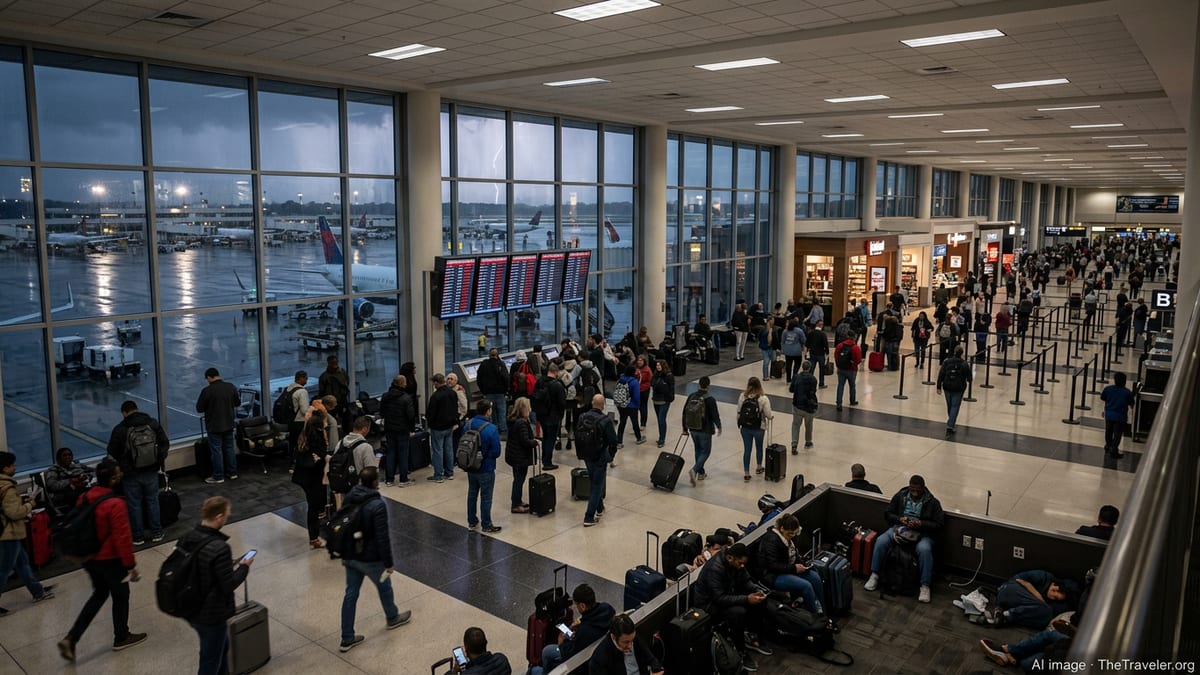
Severe storms sweeping across the Southeast and Mid-Atlantic, combined with mounting Transportation Security Administration staffing strains linked to the ongoing federal funding standoff, have pushed major U.S. airports including Atlanta, Charlotte, New York’s John F. Kennedy and Newark into a new wave of disruption, grounding or delaying thousands of flights and leaving passengers stranded nationwide.
Get the latest news straight to your inbox!
Weather System Slams Major Hubs From Atlanta to New York
A powerful storm complex tracking from the Lower Mississippi Valley through the Carolinas into the Northeast between March 13 and March 17 has unleashed a mix of heavy rain, high winds, severe thunderstorms and localized tornadoes across key aviation corridors. The system has led to ground stops, extended arrival holds and large clusters of cancellations at the nation’s busiest hubs, including Hartsfield-Jackson Atlanta International, Charlotte Douglas International, John F. Kennedy International and Newark Liberty International.
Publicly available flight tracking data and airline status boards show Atlanta again near the center of the turmoil, with hundreds of flights scrubbed or significantly delayed as thunderstorms and low visibility forced repeated interruptions to departures and arrivals. Charlotte, a critical connecting hub for the Southeast and East Coast, has experienced similar patterns as convective storms and wind shear periodically closed departure queues and slowed ramp operations.
In the New York region, JFK and Newark have faced their own operational bottlenecks as bands of heavy rain and low clouds moved through during peak morning and evening rush periods. Reports from passengers and aviation enthusiasts monitoring flight operations describe long conga lines of aircraft waiting for takeoff clearances and diversions to secondary airports when runway configurations shifted abruptly with the weather.
The timing of the current storm comes on the heels of earlier 2026 winter systems that already pushed the air travel network to its limits. Analysts note that repeated multi-day weather events in a short span leave airlines with fewer reserve aircraft and crew options, making each subsequent storm more disruptive than the last.
TSA Staffing Pressures Expose Airport Vulnerabilities
While the weather has been the most visible trigger of the latest wave of cancellations and delays, underlying staffing pressures at security checkpoints are compounding the crisis. The Transportation Security Administration workforce has been operating under increasing strain as federal funding disputes and lingering attrition from the pandemic era continue to thin staffing at select airports.
According to recent congressional and oversight reports, TSA has grappled with recruitment and retention challenges for several years, with vacancy rates in some metropolitan areas well above internal benchmarks. The current budget standoff in Washington is intensifying those pressures as screeners face uncertainty over pay and overtime, raising concerns about increased absenteeism and reduced schedule flexibility just as spring travel demand climbs.
Travelers posting on social platforms over the past several days describe security lines stretching into terminal lobbies and, in some cases, parking garages at large hubs. Atlanta, Charlotte and several Northeast airports have been singled out as locations where extended wait times contributed to missed flights and forced rebooking, even when aircraft and crews were technically available.
Aviation industry analysts say the combination of lean checkpoint staffing and severe weather creates a “double constraint” on airport capacity. Even when skies briefly clear, departures cannot ramp up quickly if passengers are still bottlenecked at security, keeping gates occupied longer and limiting airlines’ ability to reset their schedules.
Network Ripple Effects Strand Travelers Nationwide
The disruption at Atlanta, Charlotte, JFK, Newark and other major hubs is reverberating far beyond the storm zone, rippling across the national air travel system. Because these airports function as central nodes in the route networks of the largest U.S. carriers, cancellations and delays there quickly translate into missed connections and aircraft shortages in cities hundreds or even thousands of miles away.
Publicly available airline data and schedule tracking suggest that secondary airports in the Midwest, Mountain West and West Coast are experiencing rolling delays as aircraft arrive late from the East or do not arrive at all. Travelers report being stranded overnight in cities far from the original storm track, as airlines struggle to reposition planes and crews once weather-related restrictions lift.
Experts in air traffic operations note that today’s highly interconnected hub-and-spoke system makes it difficult to contain disruption in a single region. When large hubs such as Atlanta and Charlotte experience multi-hour capacity reductions due to storms, the result is often a cascading series of missed crew connections and aircraft rotations that can take days to unwind.
The latest events recall other recent high-impact travel days, when a combination of extreme weather and staffing limits led to what researchers describe as “systemwide disruption days” in the National Airspace System. Studies of those days indicate that once cancellations surpass a certain threshold, recovery times lengthen sharply and the odds of knock-on effects to the broader network increase.
Airlines Issue Waivers as Passengers Seek Workarounds
In response to the unfolding crisis, major U.S. airlines have expanded weather-related travel waivers for portions of the Southeast and Northeast, allowing many customers to change flights without additional fees. Publicly available advisory notices indicate that carriers are urging travelers bound for Atlanta, Charlotte, New York and other affected cities to consider rebooking outside peak storm windows or shifting to alternative airports where possible.
Despite those measures, many passengers are finding that rebooking options are limited as remaining seats fill quickly. Social media posts describe long lines at customer service desks, extensive hold times on airline call centers and difficulties securing same-day alternatives, especially for travelers on multi-leg itineraries passing through the most heavily affected hubs.
Some travelers are turning to creative workarounds, including booking flights into less affected regional airports and completing the final legs of their journeys by train, rental car or bus. However, high demand and weather-related road closures in parts of the storm zone are placing additional pressure on ground transportation networks, particularly around Atlanta and the Carolinas.
Travel advisors and consumer advocates are publicly recommending that passengers check their flight status frequently, allow significantly more time for check-in and security, and be prepared with backup plans in case of extended delays. They also emphasize the importance of understanding airline policies around duty of care, hotel vouchers and meal allowances during widespread disruptions.
Growing Questions Over Resilience of U.S. Air Travel
The current wave of cancellations and delays is sharpening debate over the resilience of the U.S. air travel system as it heads toward the busy spring and summer peak. Industry groups, labor organizations and transportation researchers have repeatedly warned that structural challenges in staffing, aging infrastructure and constrained runway capacity at key hubs leave the system vulnerable when severe weather and operational shocks coincide.
Testimony and reports presented in recent months have highlighted persistent shortfalls in both air traffic control and security staffing, noting that hiring pipelines have struggled to keep pace with retirements and growing demand. At the same time, several large hubs including Atlanta, Charlotte, JFK and Newark operate near their practical capacity limits during normal conditions, leaving little margin when storms or operational constraints emerge.
Policy discussions in Washington have increasingly focused on longer-term solutions, including modernization of air traffic management technology, investment in terminal expansions and targeted incentives to attract and retain TSA personnel. However, many of those measures will take years to implement, while travelers are dealing with immediate, tangible impacts as storms and staffing strains converge this month.
For now, passenger experience at the nation’s busiest gateways is likely to remain uneven, with relatively smooth periods punctuated by sudden bouts of gridlock whenever the next line of storms moves through or staffing gaps appear. As airlines, airports and federal agencies navigate this latest crisis, travelers across the country are once again being reminded of how quickly the intricate machinery of modern air travel can stall when multiple points of pressure align.