

More news on this day
Severe spring storms sweeping across Europe in early April 2026 have triggered widespread flight disruptions, with thousands of passengers facing cancellations, diversions and long delays at major hubs from Northern Europe to the Mediterranean.
Get the latest news straight to your inbox!
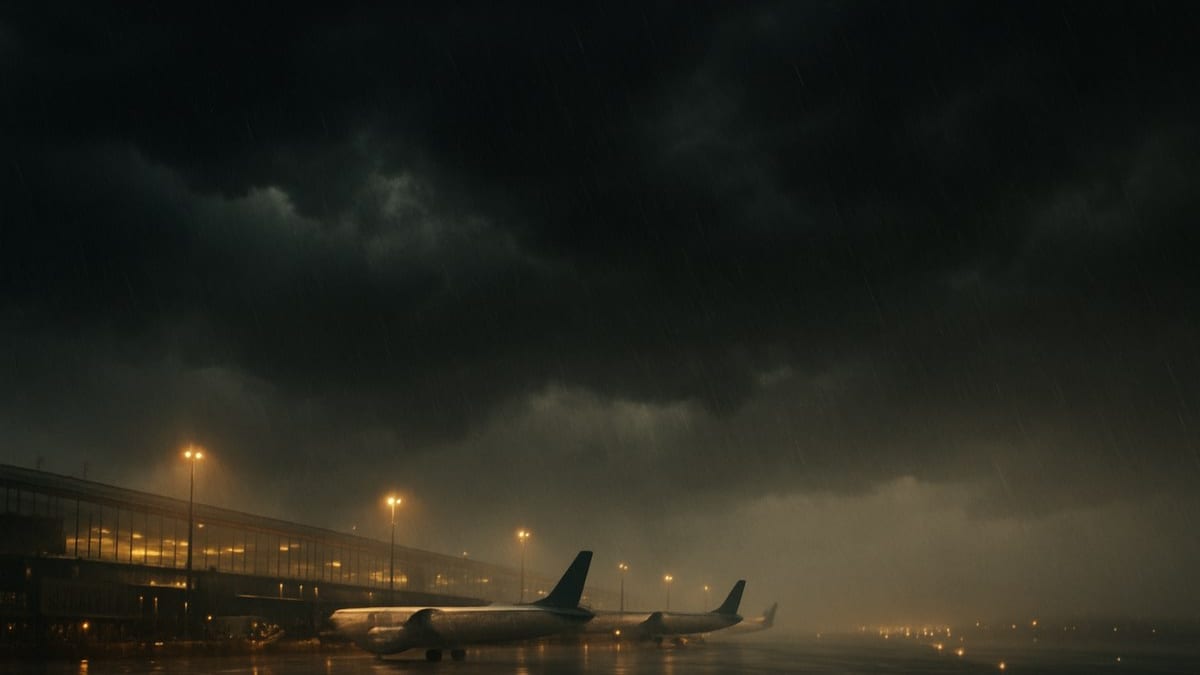
Atlantic Storm Dave Batters Northern and Western Routes
A powerful Atlantic low pressure system, widely referred to in regional coverage as Storm Dave, has emerged as a primary driver of aviation disruption across Northern and Western Europe this week. Reports from travel industry outlets on April 7 describe a systemic hit to flight schedules as high winds, heavy rain and turbulent conditions reduced airport capacity and forced airlines to scale back operations.
According to publicly available disruption tallies, airports in Iceland, Sweden, Ireland, the United Kingdom and Germany have seen hundreds of services cancelled or delayed as the storm’s core moved across the North Atlantic and into Scandinavia. Keflavik, Stockholm, Dublin, London and Frankfurt are among the hubs highlighted as facing clusters of cancellations, with regional and low cost carriers particularly exposed on short haul routes.
Operational data published on April 6 and 7 indicates that the storm’s impact is highly uneven, with some morning and late night waves experiencing the heaviest cuts while midday services continue to operate with extended delays. Aviation analysts note that wind direction and crosswind limits on specific runways can sharply constrain take off and landing rates, creating bottlenecks that quickly ripple through the wider network.
Industry commentary also points to crew rostering challenges and aircraft positioning issues as the weather system lingers over key corridors. With aircraft and crews stranded out of place, airlines have had to consolidate services, rebook passengers onto later departures and, in some cases, suspend marginal routes until conditions stabilize.
Mediterranean Dust Storms and Cyclone Erminio Disrupt Greek Airspace
While the North Atlantic storm has dominated headlines, southern Europe has faced its own weather driven disruption. On April 1, a powerful dust laden storm system linked to Cyclone Erminio swept north from the Sahara into Greece, covering large parts of Crete and the Aegean in dense sand and reducing visibility to near zero at times.
Travel focused publications report that Heraklion Airport on Crete experienced significant operational difficulties as visibility dropped, triggering a wave of cancellations and diversions. Some services were rerouted to alternative Greek airports with clearer conditions, while others were held on the ground as air traffic controllers and airlines assessed changing visibility thresholds.
Local coverage describes an unusual “red” sky over parts of Crete and nearby islands as Saharan dust mixed with existing cloud cover. The phenomenon forced pilots and air traffic managers to rely heavily on instrument approaches and conservative separation margins, slowing the overall rate of arrivals and departures even when the runway technically remained open.
Regional meteorological agencies had flagged the risk of intense dust storms and strong winds ahead of the event. As the system moved eastward on April 2, reports indicate that a gradual improvement in visibility allowed a phased resumption of flights, though knock on delays persisted as airlines worked through backlogs of stranded passengers and repositioned aircraft.
Rising Tally of Delays and Cancellations Across European Hubs
The latest storms have hit an aviation network that was already under strain from earlier spring weather systems. In late March and the opening days of April, tracking services and travel rights organizations recorded several spikes in disruption across major European hubs, with hundreds of flights cancelled and thousands delayed in single day windows.
Data compiled by passenger advocacy groups for April 5 suggests that more than 80 flights were cancelled and several hundred delayed in one 24 hour period, as severe weather and airspace constraints combined with staffing pressures at busy airports. Separate reporting on March 28 pointed to over 500 delayed flights and several dozen cancellations across five of Europe’s largest gateways, including London, Paris and Amsterdam.
Newsrooms following the situation note that the pattern of disruption is increasingly characterized by rapid changes in status. Some departures that initially appear on time later shift to extended delays as inbound aircraft struggle to reach their origin airports through storm affected corridors, catching travelers out who rely solely on early timetable snapshots.
Travel media based in Spain and other tourism heavy markets describe scenes of long queues at check in and customer service desks as airlines juggle rebooking obligations, hotel placements and meal vouchers. The concentration of disruption at hub airports that funnel large volumes of connecting traffic has amplified the overall impact, with missed connections leading to additional rebookings on already constrained later flights.
Storms Expose Structural Vulnerabilities in European Aviation
Beyond the immediate travel chaos, the April 2026 storms are adding to a growing body of evidence that Europe’s aviation system remains highly vulnerable to clusters of severe weather events. Analysts interviewed across specialist travel and insurance publications highlight how relatively localized storms can cascade into continent wide disruption when they intersect with already tight schedules and limited spare capacity.
Recent coverage from consumer rights organizations emphasizes that airlines often run lean operations with minimal slack in aircraft and crew availability. When storms force ground stops at one hub or slow operations at several airports simultaneously, the lack of spare aircraft and reserve crews can turn what might once have been a short lived disruption into a multi day challenge.
Insurance industry briefings in early April, focused on similar weather related turmoil in North America, draw parallels with Europe’s situation. They note that complex hub and spoke networks, combined with higher frequency of extreme weather, increase the likelihood of rolling disruption episodes that outlast the initial storm front by several days.
Commentary from climate and disaster monitoring groups also points to a backdrop of more volatile weather patterns across the 2025 to 2026 winter and spring seasons in Europe, including multiple named windstorms and severe convective events. While direct attribution for any single storm remains the subject of ongoing scientific work, travel specialists increasingly frame such episodes as part of a broader shift toward more frequent operational shocks.
What Travelers Are Experiencing and How They Are Adapting
For individual travelers, the April storms have translated into missed holidays, disrupted business trips and unplanned overnight stays in hub cities. Social media posts and on the ground reporting depict crowded terminal halls, families sleeping on benches and long lines at information counters as passengers seek clarity on rebooking options.
Many travel advisories now encourage passengers to monitor both airline apps and independent flight tracking tools before leaving for the airport, particularly during active weather warnings. Publicly available guidance from travel rights platforms suggests that checking the status of inbound aircraft and cross referencing several sources often provides a clearer picture than static departure boards alone.
Consumer advocates note that while storms typically fall under the “extraordinary circumstances” category in European passenger protection rules, which can limit eligibility for cash compensation, airlines are still required to provide care such as meals and accommodation when passengers are stranded. Travelers have been urged by advisory sites to keep receipts for additional expenses and to document interactions with carriers for potential reimbursement claims.
As Storm Dave gradually weakens and Cyclone Erminio’s dust plume dissipates, airlines across Europe are working to restore normal schedules. However, with further unsettled weather forecast for parts of the continent later in April, travel planners and passenger groups warn that Europe’s aviation network could continue to face sporadic weather related shocks throughout the spring shoulder season.