

More news on this day
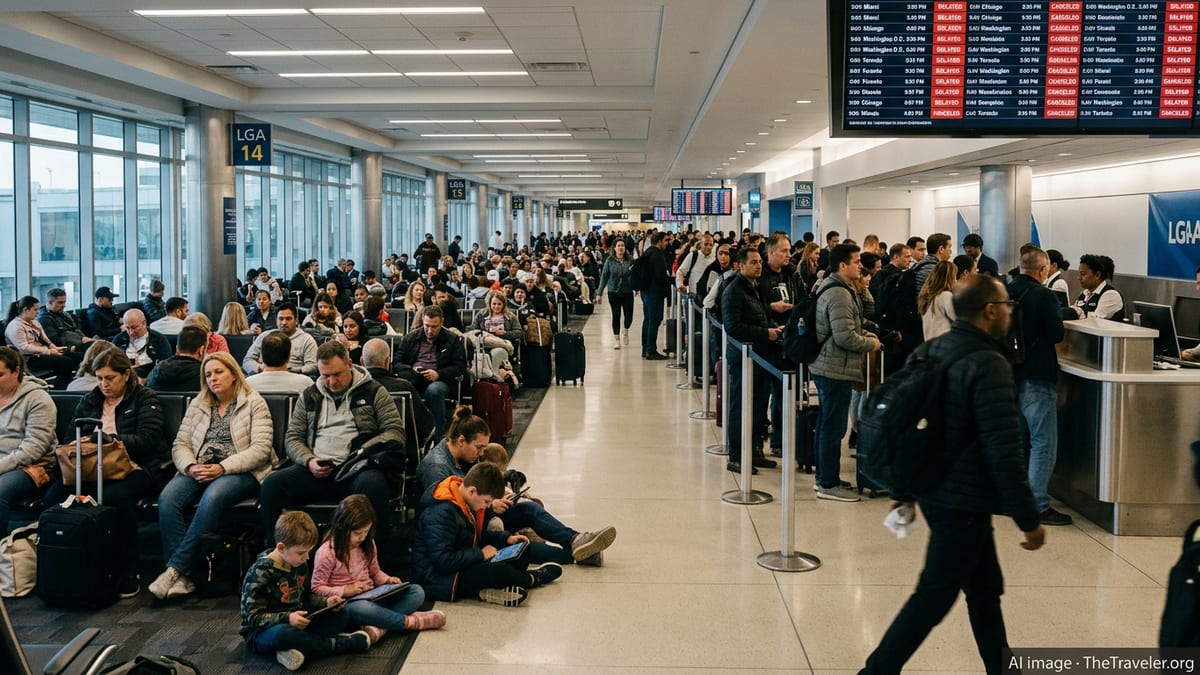
Hundreds of passengers were left stranded at New York’s LaGuardia Airport on March 17 as a combination of severe weather and ongoing operational strains triggered 288 delays and 59 cancellations, disrupting flights to major destinations including Miami, Chicago, Washington D.C., Toronto and other key U.S. cities.
Get the latest news straight to your inbox!
Storm System Adds New Turbulence to Spring Travel Rush
The disruption at LaGuardia unfolded as a large storm system swept across the Midwest and moved into the eastern United States between March 13 and March 17, bringing heavy snow, high winds and thunderstorms to multiple states. Publicly available information shows that this weather pattern has already caused thousands of delays and cancellations nationwide, with New York among the hardest-hit regions.
Gusty conditions and low visibility around the New York City area on March 16 and March 17 led to temporary traffic management measures across the region’s airports. Flight-tracking data indicates that LaGuardia experienced knock-on effects as carriers attempted to reposition aircraft and crews after earlier disruptions in cities such as Chicago and Atlanta.
The timing has been particularly difficult for airlines and travelers. The severe weather coincides with the busy spring break period, when demand for flights to leisure destinations such as Florida and the Caribbean surges, leaving limited spare capacity to absorb schedule shocks.
Industry data and recent coverage also point to the additional impact of a prolonged federal government funding impasse, which has weighed on staffing levels at airport security checkpoints. Longer screening times have added friction to an already strained system during peak hours.
LaGuardia Backlogs Ripple Out to Major U.S. and Canadian Hubs
On March 17, operations at LaGuardia slowed sharply as ground and air traffic control programs limited arrivals and departures. Flight data for the day indicates 288 delayed departures and arrivals and 59 outright cancellations tied to the airport, leaving aircraft out of position and passengers scrambling for alternatives.
Key domestic routes bore the brunt of the disruption. Services linking LaGuardia with Miami, Chicago and Washington D.C. saw rolling delays as airlines held flights for weather windows or slot availability. Some departures left hours behind schedule, while others were removed from the timetable altogether, forcing travelers to rebook via other hubs such as Atlanta, Charlotte or Dallas.
International short-haul connections were also affected. Flights between LaGuardia and Toronto faced schedule changes as carriers evaluated cross-border weather impacts and available gates. For travelers connecting onward from Toronto to Western Canada or Europe, missed connections became an additional concern.
Airline operations data suggests that once a hub like LaGuardia experiences this level of disruption, recovery is rarely immediate. Crews can run up against their duty-time limits, and aircraft rotations into and out of smaller cities are often delayed into late evening or pushed into the following day, prolonging the effects beyond the initial weather event.
Passengers Confront Long Queues, Uncertain Timelines and Limited Options
Inside LaGuardia’s terminals, the day’s figures translated into crowded departure halls, long service lines and a shortage of same-day rebooking options. Social media posts from travelers described queues stretching from airline service counters deep into concourse areas, as stranded passengers attempted to secure new itineraries or hotel vouchers.
Publicly visible flight boards showed clusters of delayed departures to cities including Miami, Chicago, Washington D.C., Toronto, Boston and other major markets, often updated in 15 to 30 minute increments as airlines waited for revised air traffic control clearances. For many travelers, particularly those with evening departures, uncertainty over whether flights would eventually leave became a central frustration.
Travel analysts note that in this kind of system-wide disruption, the combination of high seasonal demand and constrained airline capacity leaves relatively few empty seats to accommodate displaced passengers. Even when flights are able to depart, rebooked travelers are often spread across multiple later flights or rerouted through different hubs, extending total journey times well beyond original plans.
At security checkpoints, the convergence of delayed passengers and those arriving for later flights created additional crowding. Reports from travelers referenced waits of over an hour at certain points on Monday and Tuesday, adding to anxiety for those still hoping to catch remaining departures.
Weather, Infrastructure and Policy Combine in a Broader Pattern
The situation at LaGuardia reflects a broader pattern in U.S. aviation where aging infrastructure, volatile weather and policy uncertainty intersect. Government and industry performance reports have consistently ranked LaGuardia among the country’s more delay-prone airports, in part because of its dense schedule, short runways and limited room for expansion within New York City’s tightly constrained airspace.
Data compiled in recent aviation performance benchmarks show that LaGuardia records a relatively high share of delayed arrivals compared with other U.S. airports, with average delay times often exceeding an hour when weather and congestion peak. Other hubs fed by LaGuardia, including Chicago and Miami, carry similar reputations for vulnerability to storms and knock-on effects across the network.
Analysts highlight that the current partial federal government shutdown, which has stretched into its second month, is adding an extra layer of stress on this system. With security staffing under pressure and federal agencies operating with temporary arrangements, delays that might once have been absorbed more quickly can now cascade through an already fragile network.
Advocacy groups and transportation researchers have repeatedly called for long-term investment in air traffic control modernization, airport infrastructure and staffing resilience. While several modernization projects are underway in the New York region, the scale of recent disruptions illustrates how exposed large hubs remain to compound shocks from weather and policy events.
What Travelers Can Expect in the Coming Days
As airlines work to restore normal operations following the March 17 disruptions, publicly available forecasts suggest that weather conditions over the Northeast may gradually improve, though intermittent wind and rain could still affect tight schedules. Carriers are expected to continue adjusting timetables over the next 24 to 48 hours as they reposition aircraft and crews.
Travel experts recommend that passengers scheduled to depart from LaGuardia or connect through major hubs such as Chicago, Washington D.C., Miami or Toronto monitor their reservations closely and allow extra time at the airport. Same-day changes may remain difficult on heavily booked routes, and some travelers could continue to face overnight stays or extended layovers as the system stabilizes.
For now, the backlog at LaGuardia serves as a reminder of how quickly conditions can change in a tightly interconnected aviation network. A single storm complex sweeping across the country, when combined with existing strains on staffing and infrastructure, can strand hundreds of people in a matter of hours and send schedule disruptions rippling across North America’s busiest corridors.