

More news on this day
Nashville International Airport is experiencing significant disruption as severe storms, a prolonged federal government shutdown and heavy spring travel volumes combine to trigger extensive flight delays and cancellations across much of the United States.
Get the latest news straight to your inbox!
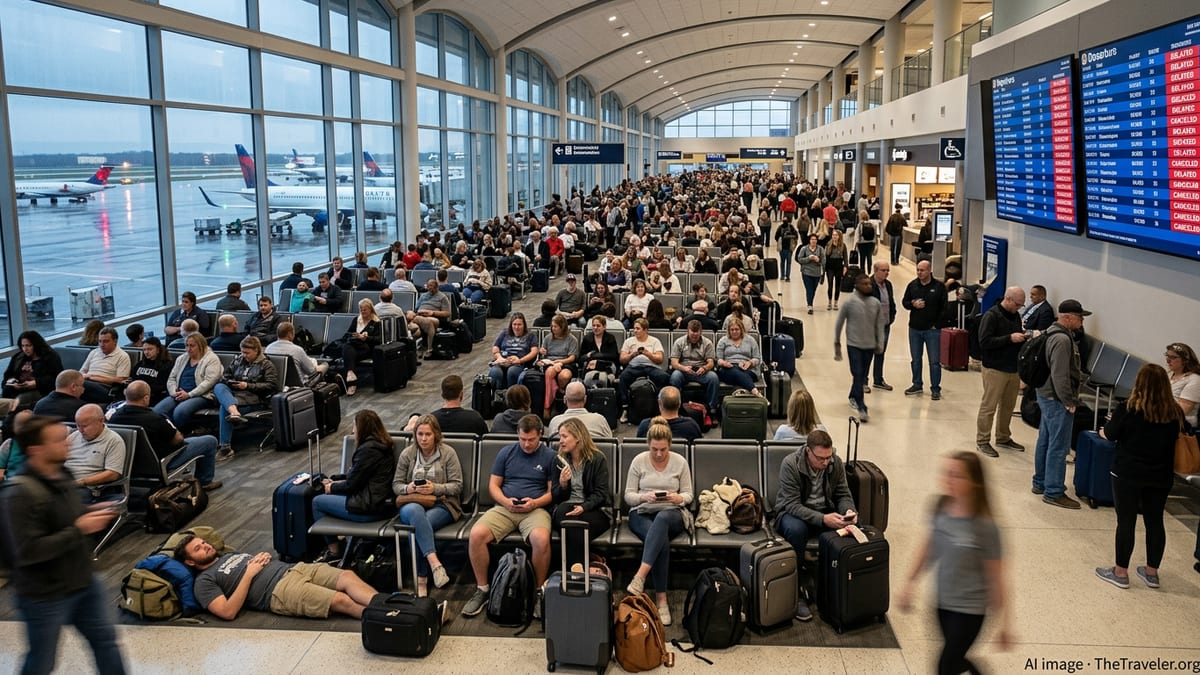
Storm System and National Air Travel Turmoil Converge on BNA
Reports from national flight-tracking services indicate that hundreds of flights across the country have been canceled or delayed on March 17, with Nashville International Airport caught in the wider disruption pattern affecting major hubs throughout the eastern half of the United States. A powerful storm system that developed over the Midwest and pushed east has produced snow, high winds and severe weather, upending air travel at multiple airports and rippling through the network of connections that serve Nashville.
Although Nashville has not faced the heaviest snowfall associated with the storm complex, its position within busy east-west and north-south corridors has exposed it to widespread knock-on effects. Delays and cancellations at major connecting hubs such as Chicago, New York and Atlanta have led to aircraft and crew imbalances, leaving passengers in Nashville confronting rolling schedule changes, extended ground holds and short-notice cancellations.
The disruption is unfolding during one of the busiest travel periods of the late winter and early spring. Colleges and schools across the country are in the midst of spring break, and fans are traveling to early rounds of the NCAA basketball tournaments, adding pressure to an air traffic system already strained by weather and operational constraints.
Shutdown-Strained Security Adds to Passenger Gridlock
The storm-related turmoil is intersecting with a separate challenge: a partial federal government shutdown that began in mid-February and continues to affect staffing for airport security screening across the country. Publicly available information shows that Transportation Security Administration resources remain under pressure, leading to longer lines and sporadic checkpoint slowdowns in multiple cities.
While Nashville International has not reported a total breakdown of screening capacity, the national environment has increased the risk of bottlenecks when passenger volumes surge. Reports indicate that when arrival and departure waves are compressed by weather-related schedule changes, security checkpoints can quickly become congested, compounding the frustration of travelers whose flights are already late or at risk of cancellation.
Travel-industry guidance emphasizes that irregular operations days often magnify every small inefficiency in the system. When flights are bunched into narrow time windows, even minor equipment issues or staffing gaps at checkpoints can cascade into missed departures and further rebooking headaches for passengers moving through BNA.
Ripple Effects, Diversions and “Unstoppable” Delays
The current disruption at Nashville International is part of a broader pattern of instability seen in recent weeks across the North American air network. Recent winter storms and severe weather outbreaks have generated days with exceptionally high levels of nationwide delays and cancellations, and those patterns are visible again as the March storm complex tracks east and interacts with already tight airline schedules.
Flight-tracking data and traveler reports point to diversions, go-arounds and holding patterns in several regional airspace sectors impacted by the latest weather system. When aircraft are forced to divert or significantly delay arrivals at large hubs, downstream flights to and from Nashville can quickly lose their planned aircraft, cabin crews or available gate space, making some local disruptions feel relentless and difficult to escape.
Aviation research on large-scale system disruptions notes that the most severe days often arise when multiple stressors align, such as bad weather in several regions, high demand periods and operational constraints. Current conditions fit that pattern, and Nashville’s role as a fast-growing, mid-continent airport means it is particularly sensitive to problems at its primary connecting partners.
Passenger Impact: Missed Connections and Crowded Terminals
For travelers on the ground in Nashville, the combined effect of weather, staffing pressures and peak-season demand is highly visible. Published coverage of the ongoing disruption across the United States shows that many passengers are contending with lengthy waits at customer service desks, repeated text alerts announcing rolling delays, and last-minute gate changes that force travelers to crisscross busy concourses.
Missed connections are a central issue. When inbound flights arrive late from affected hubs, onward departures from Nashville often cannot wait for all connecting passengers without disrupting subsequent rotations. That dynamic leaves some travelers stranded in Nashville overnight or forced to accept multi-stop reroutes that significantly extend their travel time.
Families heading to vacation destinations and fans traveling to early-round basketball games are among those most acutely affected, as tight itineraries leave little room for rebooking. Passengers traveling to international gateways through Nashville’s domestic connections may also face particular challenges, as a missed domestic leg can jeopardize separate long-haul departures that are operating on time from other cities.
What Travelers Through Nashville Can Do Now
Air travel experts and consumer advocates consistently recommend several steps for passengers navigating days of widespread disruption such as those affecting Nashville International. First, travelers are urged to monitor flight status through both airline apps and independent tracking tools, since schedule changes may appear on third-party services before they are fully reflected in airport departure boards.
Second, passengers are encouraged to arrive earlier than usual, particularly while the partial government shutdown continues to influence screening operations. Extra time can help absorb unexpected security delays or last-minute gate moves caused by shifting traffic patterns around the storm system.
Finally, travelers are advised to familiarize themselves with airline policies on rebooking and cancellations, including options for same-day changes, travel credits and refunds when significant delays occur. Consumer-focused guidance notes that during severe, system-wide events, flexibility and rapid use of self-service tools can make the difference between securing an alternate route the same day and waiting much longer as limited open seats are quickly claimed.