

More news on this day
Winter-style weather has once again thrown Canada’s air travel network into turmoil, with publicly available tracking data on March 17 indicating at least 80 newly cancelled flights and more than 380 delays affecting major carriers including Air Inuit, Air Canada, WestJet and Jazz Aviation across Montreal, Vancouver, Toronto, Quebec City, Kuujjuaq and other hubs.
Get the latest news straight to your inbox!
Storm System Batters Key Canadian Hubs
Weather maps and aviation data platforms show a sprawling late-season storm system sweeping across southern Quebec, Ontario and the Pacific coast of British Columbia, delivering a volatile mix of snow, high winds and heavy rain. Montreal and Quebec City are seeing periods of freezing precipitation and gusty winds, while Toronto and Vancouver are contending with low ceilings, poor visibility and waterlogged runways that are slowing operations.
In Quebec’s far north, conditions at Kuujjuaq have been particularly disruptive for regional links operated by Air Inuit, with snow, blowing snow and strong crosswinds limiting aircraft movements. The ripple effects are being felt across smaller communities that depend on these flights for essential travel and supplies, as rotations to and from Montreal and Quebec City are delayed or scrubbed.
The unsettled conditions follow a winter marked by several significant systems affecting Canada and the northern United States, and transport analysts note that today’s storm has arrived at a time when many airlines are already operating tight schedules. As a result, even relatively short ground stops to clear snow or reconfigure runway use are translating into missed slots and subsequent cancellations.
More Than 80 Cancellations and 383 Delays Reported
Live flight-status dashboards on the morning of March 17 show at least 80 new cancellations and around 383 delays across Canada’s major airports, with the bulk of the disruption concentrated in Montreal, Toronto and Vancouver. These numbers are shifting through the day as airlines adjust schedules, but the pattern reflects a network under sustained weather pressure rather than isolated local issues.
At Montreal–Trudeau, a combination of snow, freezing rain and strong winds has triggered a sequence of early-morning cancellations by multiple carriers, including Air Canada and Jazz, as well as delays on remaining departures while de-icing queues build. Quebec City’s Jean Lesage International is experiencing a smaller but still notable wave of delays as aircraft await improved braking conditions and de-icing capacity.
In Toronto, publicly available information shows a heavy load of weather-related delays at Pearson International, particularly on eastbound and transcontinental services, while Vancouver is dealing with rain, low cloud and gusty winds that have forced some arrivals into holding patterns. Even when flights eventually depart, extended taxi and sequencing times are lengthening end-to-end journeys for thousands of passengers.
Airlines Juggle Safety Protocols and Tight Crewing
Across the country, airlines are emphasizing operational safety constraints that become more acute in winter weather, such as mandatory de-icing, stricter crosswind limits and runway contamination checks. These procedures are routine, but when layered onto an already busy schedule, they can dramatically reduce the number of aircraft movements an airport can handle in a given hour.
Publicly accessible airline statements from this winter have repeatedly pointed to de-icing bottlenecks, air-traffic control flow restrictions and crew duty-time limits as key reasons why delays sometimes tip into outright cancellations. When an aircraft and its crew arrive late into a hub like Montreal or Toronto because of earlier weather disruption, they may be unable to legally operate the next sector if further delays mount, forcing airlines to cut flights from the schedule at short notice.
Regional carriers such as Air Inuit and Jazz are particularly exposed to these constraints on routes into smaller or remote airports where there is limited ground-handling capacity and fewer backup aircraft. When Kuujjuaq or similar northern stations experience blowing snow and poor visibility, inbound flights can be postponed or diverted, and it may take days rather than hours to fully restore regular frequencies.
Travelers Face Long Lines, Missed Connections and Overnight Stays
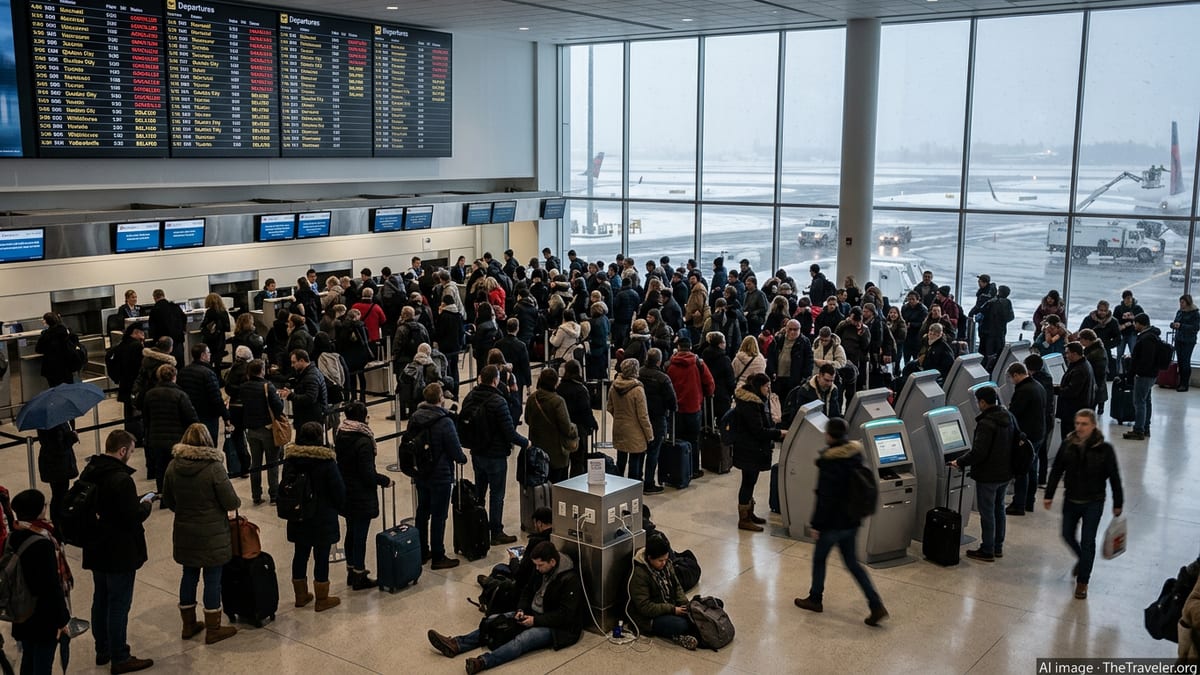
For travelers, today’s disruption is translating into lengthy queues at check-in counters and customer service desks, as well as congested phone and online support channels. Social media posts from airports including Montreal, Vancouver and Toronto depict crowded gate areas where passengers await information about rebookings, hotel arrangements and baggage retrieval following cancellations.
Those with tight connection windows are among the hardest hit. With many transcontinental and international flights operating near capacity during the busy spring travel period, re-accommodation options can be limited, particularly for large groups or passengers needing specific routing. Some travelers are facing overnight stays in hub cities as they wait for open seats on later departures.
Air passenger advocacy groups have been using earlier episodes this winter to remind travelers of the importance of understanding Canada’s air passenger protection rules, especially the distinctions between weather-related cancellations and controllable delays. While today’s disruptions are clearly linked to adverse weather, published guidance underscores that passengers may still be entitled to certain forms of assistance, such as rebooking on the next available flight operated by the airline.
What Passengers Can Do as Disruptions Continue
With the storm system forecast to linger over parts of Quebec, Ontario and the West Coast, aviation forecasters and travel analysts warn that rolling delays and additional cancellations remain possible through the rest of March 17 and into March 18. Conditions at individual airports may improve or worsen quickly as bands of snow or heavy rain move through, creating a stop-start rhythm for airfield operations.
Publicly available travel advisories recommend that passengers check flight status frequently using airline apps or official airport information before leaving for the terminal, and consider building extra time into connections where possible. For those already at the airport, agents typically have the most up-to-date visibility into rebooking possibilities, but online and self-service tools can sometimes secure alternate options more quickly than standing in line.
For upcoming trips later in the week, some carriers serving Montreal, Quebec City and Toronto have issued or recently used flexible rebooking policies during similar storms, allowing customers to move travel to nearby dates when severe weather is expected. Travelers are encouraged by consumer advocates to review current advisories closely, keep boarding passes and receipts, and document any additional expenses in case they are eligible for reimbursement under airline policies once operations stabilize.