

More news on this day
High winds and fast-moving spring storm systems sweeping across Illinois, New York and Massachusetts on Sunday left thousands of airline passengers stranded in packed terminals, as at least 144 flights were cancelled and more than 1,000 were delayed across the three states, according to real-time tracking data.
Get the latest news straight to your inbox!
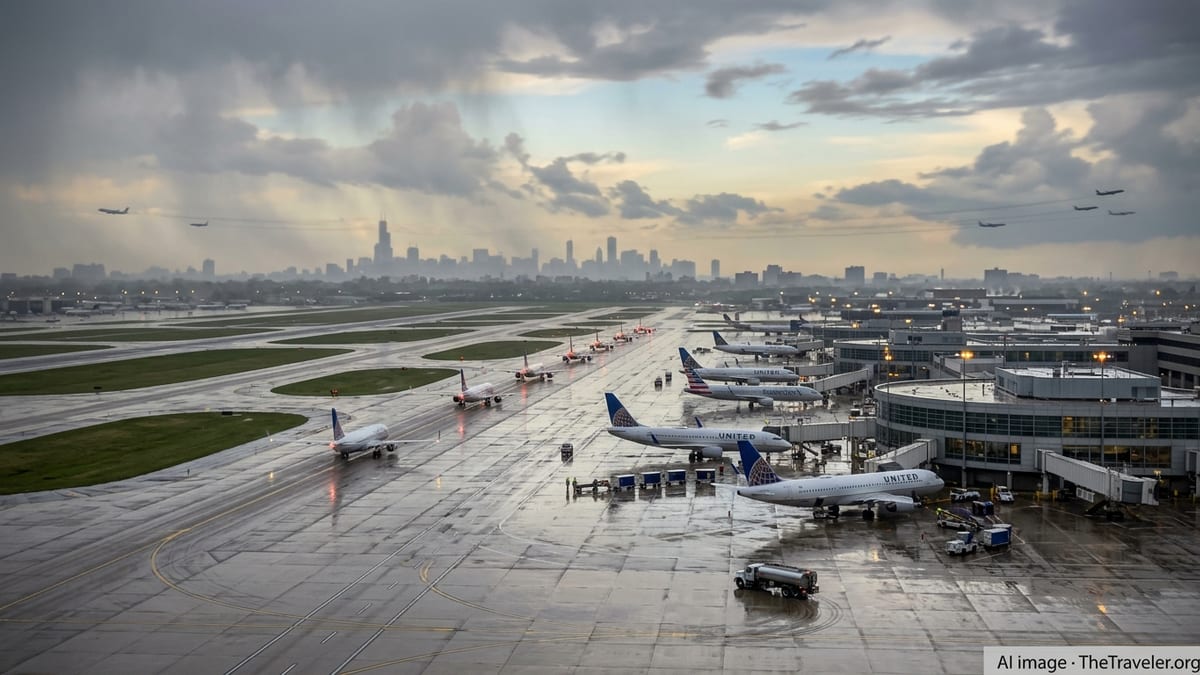
Weather Turbulence Hits Chicago, New York and Boston
Publicly available aviation and meteorological data show a volatile pattern of spring weather across the Midwest and Northeast, with strong crosswinds and bands of heavy rain repeatedly disrupting operations at some of the country’s busiest hubs. In Illinois, gusty winds and lingering instability associated with recent storm systems have complicated takeoffs and landings at Chicago O’Hare International Airport and Chicago Midway International Airport.
In New York, operational reports indicate that LaGuardia and John F. Kennedy airports again faced wind-related flow restrictions, with ground delay programs slowing arrivals into the already congested airspace. Similar conditions in Massachusetts affected Boston Logan International Airport, where blustery coastal winds and passing showers reduced runway capacity and created rolling delays throughout the day.
Air traffic management programs put in place to maintain safety when winds shift or intensify can quickly cascade into schedule disruptions. When arrival rates are cut, aircraft and crews fall out of position, leaving airlines to trim flights, reroute planes, or hold passengers for hours in crowded gate areas.
American, United and Spirit Lead the Disruptions
According to flight-tracking dashboards that compile Federal Aviation Administration and airline schedule data, American Airlines, United Airlines and Spirit Airlines accounted for a significant share of the cancellations and delays across Illinois, New York and Massachusetts on Sunday. These three carriers operate dense schedules at O’Hare, LaGuardia, JFK and Boston Logan, making them particularly vulnerable when weather reduces capacity.
American and United both rely heavily on Chicago and New York for domestic and international connections, meaning a ground stop or wind-related runway change at one hub can ripple across dozens of routes. When storms or high winds persist, airlines may proactively cut frequencies on competitive short-haul routes and consolidate passengers onto fewer flights to preserve longer-haul operations.
Spirit, which concentrates many of its low-cost flights at busy East Coast and Midwest airports, has also been prominently affected. Recent days have seen repeated cancellations on select Spirit routes touching Chicago and New York, with passengers reporting last-minute notices and difficulty finding same-day alternatives as aircraft and crews cycle out of place.
Where the 144 Cancellations and 1,016 Delays Are Concentrated
Aggregated data for Sunday indicate that at least 144 flights were cancelled across Illinois, New York and Massachusetts, with 1,016 flights delayed to varying degrees. A large portion of the cancellations appear to be clustered at O’Hare and LaGuardia, where strong winds and congestion forced airlines to trim schedules and extend turnaround times at the gate.
New York’s constrained runway layout and dense traffic often amplify the impact of any weather-related restriction. When high winds shift preferred runways or lower arrival rates, flights to LaGuardia and JFK can stack up quickly, triggering airborne holding, diversions, and, ultimately, cancellations as the operating day wears on. In Chicago, similar dynamics at O’Hare can cause widespread disruption, particularly for regional jets that feed larger hubs.
Boston Logan has seen a smaller but still significant share of Sunday’s problems, with cancellations and delays tied primarily to coastal wind gusts and intermittent low clouds. While the absolute numbers are lower than in Chicago and New York, the impact on individual routes can be outsized when an airport serves as the primary nonstop link for smaller New England cities.
Why Spring Storms Disrupt Flights So Severely
Spring weather patterns across the United States are notoriously difficult for airlines to manage. Forecasters note that rapidly developing low-pressure systems can bring sharp wind shifts, strong crosswinds and embedded thunderstorms along the same frontal boundary, affecting multiple regions over the course of a single day.
At airports like O’Hare, LaGuardia and Boston Logan, crosswinds above aircraft limits can temporarily close certain runways, forcing air traffic controllers to rely on alternative configurations with lower capacity. Even when winds fall just within acceptable thresholds, safety margins may require increased spacing between aircraft, slowing departure and arrival rates and building queues on taxiways and in terminal corridors.
These operational realities intersect with tight airline schedules that leave little slack in aircraft or crew rotations. When a morning bank of flights is disrupted by weather, aircraft arrive late for their next segments and flight crews can reach their legal duty limits before completing all of their planned legs, resulting in additional cancellations even after conditions improve.
What Stranded Passengers Can Do Right Now
Travel advocates and consumer guidance from transportation agencies consistently suggest that passengers facing widespread disruptions should act quickly to secure alternatives. In fast-moving weather events, rebooking options on American, United and Spirit can disappear within minutes as entire planeloads of travelers compete for the same limited seats.
Same-day changes are typically easier to obtain via airline apps or websites than at crowded airport counters, where lines can stretch through concourses during major disruptions. Publicly available airline policies indicate that carriers sometimes relax change fees or fare differences during severe weather events, but the specifics vary by route and ticket type.
Passengers whose flights are significantly delayed or cancelled are encouraged by consumer groups to keep all receipts for meals, lodging and ground transportation. While U.S. regulations do not mandate broad compensation for weather-related disruptions, published policies for some carriers outline limited hotel or meal support in certain circumstances, particularly when cancellations occur late in the day and same-night rebooking is not possible.
With storms and high winds expected to remain a feature of the spring travel season, analysts note that travelers connecting through Chicago, New York or Boston in the coming weeks may want to build in longer layovers, schedule morning departures where possible, and monitor weather and flight status closely in the 24 hours before departure.