

More news on this day
Spring weather and tight airline schedules converged at Hartsfield-Jackson Atlanta International Airport on April 4, causing 271 flight delays and 35 cancellations that disrupted travel on Delta Air Lines, Virgin Atlantic, Air Canada, Frontier Airlines and other carriers, affecting routes linking the United States with England, Japan, Mexico and Spain.
Get the latest news straight to your inbox!
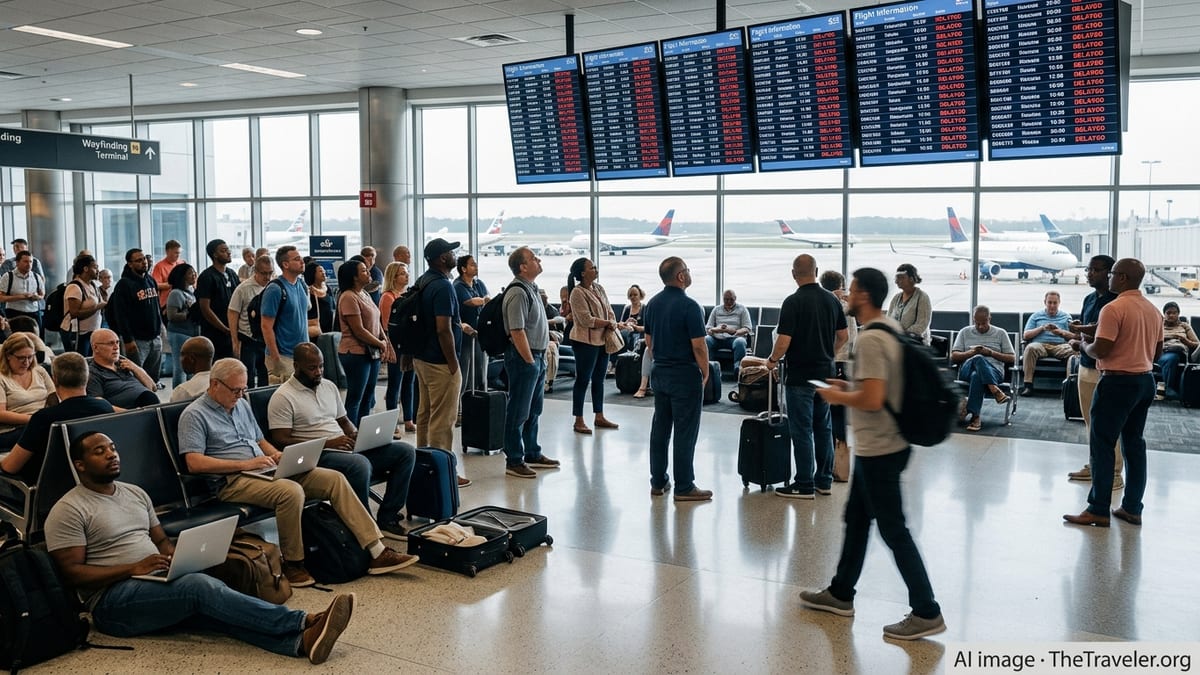
Weather System Over the Eastern United States Hits Atlanta Hub
Publicly available airline and airport data for April 4 indicate that a band of thunderstorms and unsettled conditions across the eastern United States slowed traffic flows into and out of Atlanta, one of the world’s busiest hubs. The weather system coincided with already dense spring break travel, leaving limited room in schedules to recover when flights began to stack up on the ground and in holding patterns.
Industry bulletins describe air traffic management initiatives in the region, including ground delay programs and metering of arrival flows, which reduced the number of flights that could land at Hartsfield-Jackson each hour. As those restrictions took hold, departure banks were pushed back, forcing airlines to reset aircraft rotations and crew assignments throughout the day.
The combination of weather-driven constraints and high demand contributed to a total of 271 delays and 35 cancellations at the airport, according to aggregated flight-tracking figures reviewed on April 4. Those numbers are modest when compared with the most extreme nationwide disruptions seen in recent years, but they were substantial enough to create missed connections and overnight stays for many travelers relying on Atlanta as a connecting hub.
Delta, Virgin Atlantic, Air Canada and Frontier Among Affected Carriers
As Atlanta’s dominant carrier, Delta Air Lines absorbed a significant share of the impact. Flight-tracking services show delayed departures on key domestic routes feeding Atlanta, such as services from Fargo and other midsize markets, which in turn affected onward connections to long-haul destinations. Delta’s network structure, which relies heavily on tight connection windows in Atlanta, meant that even modest schedule slips translated into missed onward flights for some passengers.
Virgin Atlantic, which partners closely with Delta on transatlantic services, also experienced knock-on disruptions. Flights linking Atlanta with leisure destinations such as Cancun, as well as key U.S. cities like Las Vegas and Washington, showed extended or late operations on April 4, according to live status boards. These services feed Virgin Atlantic’s broader network to England and beyond, increasing the risk of missed onward connections at partner hubs.
Air Canada and Frontier Airlines faced their own operational challenges as the day progressed. Frontier’s point-to-point model can be particularly exposed when an aircraft is delayed early in the day, since that same jet often operates several subsequent segments. Air Canada’s transborder services connecting Atlanta with Canadian gateways play an important role for travelers bound for Europe and Asia, and delays there added another layer of complexity for itineraries involving England, Japan and Spain.
Ripple Effects on Transatlantic and Transpacific Routes
While most of the disruptions at Hartsfield-Jackson on April 4 involved domestic U.S. flights, the consequences were felt across international networks. Many travelers heading to England, Japan, Mexico and Spain rely on Atlanta as a connecting point, either through Delta’s own long-haul services or through partnerships with carriers such as Virgin Atlantic and Air Canada.
In the transatlantic market, delays on feeder flights into Atlanta increased the risk of missed evening departures to English gateways. For some passengers, missed connections meant rebooking on next-day services or rerouting through alternative hubs such as New York or Boston. Similar patterns appeared on itineraries bound for Spain, where travelers often connect in Atlanta before continuing to major European hubs.
Connections to Japan also faced added strain. Although some flights from the southeastern United States to Asia depart from coastal hubs, itineraries that routed through Atlanta were vulnerable when inbound flights arrived late. Missed or tight connections can trigger a cascade of rebookings, hotel arrangements and schedule changes that extend well beyond the initial weather event.
Mexico-bound travelers, particularly those heading to major resort areas, saw delays compound over the course of the day. Flight-status boards for Cancun and other Mexican destinations showed late arrivals and departures associated with the Atlanta disruptions, underscoring how a single weather-affected hub can influence travel patterns across North America.
Passenger Experience and Limited Recovery Options
For passengers on the ground, the most visible signs of the disruption included crowded gate areas, lengthening standby lists and frequent schedule adjustments on departure boards. Some travelers arriving late into Atlanta found that their final legs to smaller U.S. cities had already departed, or that limited remaining frequencies left only next-day options.
Reports posted by travelers on social platforms in recent weeks provide context for how quickly operations at Hartsfield-Jackson can tip from routine to strained. Accounts describe earlier episodes of extended tarmac waits, long security lines and multiple rounds of aircraft boarding and deplaning, illustrating how even a moderate number of cancellations can translate into significant inconvenience when airport facilities and staffing are already stretched.
With 35 flights cancelled outright on April 4, rebooking options were constrained, especially on popular domestic and leisure routes. Budget carriers such as Frontier, which operate fewer daily frequencies on many city pairs, offered limited same-day alternatives when a flight did not operate. Full-service airlines were sometimes able to reroute passengers through other hubs, but that often involved additional connections and further travel time.
Ongoing Vulnerability of Major U.S. Hubs in Early Spring
The disruptions at Hartsfield-Jackson align with a broader pattern of early-spring volatility across the U.S. air travel system. Recent national tallies compiled from flight-tracking data show thousands of delays and hundreds of cancellations on several days in late March and early April, with large hubs in the Southeast, Texas and along both coasts repeatedly appearing near the top of disruption rankings.
Analysts reviewing historical performance data from government and industry sources note that major hubs such as Atlanta are particularly susceptible during transitional weather seasons. Non-extreme weather events, including low clouds, scattered thunderstorms and shifting wind patterns, often trigger national aviation system delays even when conditions do not appear severe to travelers on the ground.
Despite ongoing investments in technology and staffing, the finely tuned nature of hub-and-spoke networks means that relatively small disturbances can still cause significant operational challenges. The events of April 4 at Hartsfield-Jackson highlight how fast-moving storms combined with tight schedules can quickly cascade into missed connections and overnight stays, especially for travelers relying on complex itineraries that span multiple airlines and continents.