

More news on this day
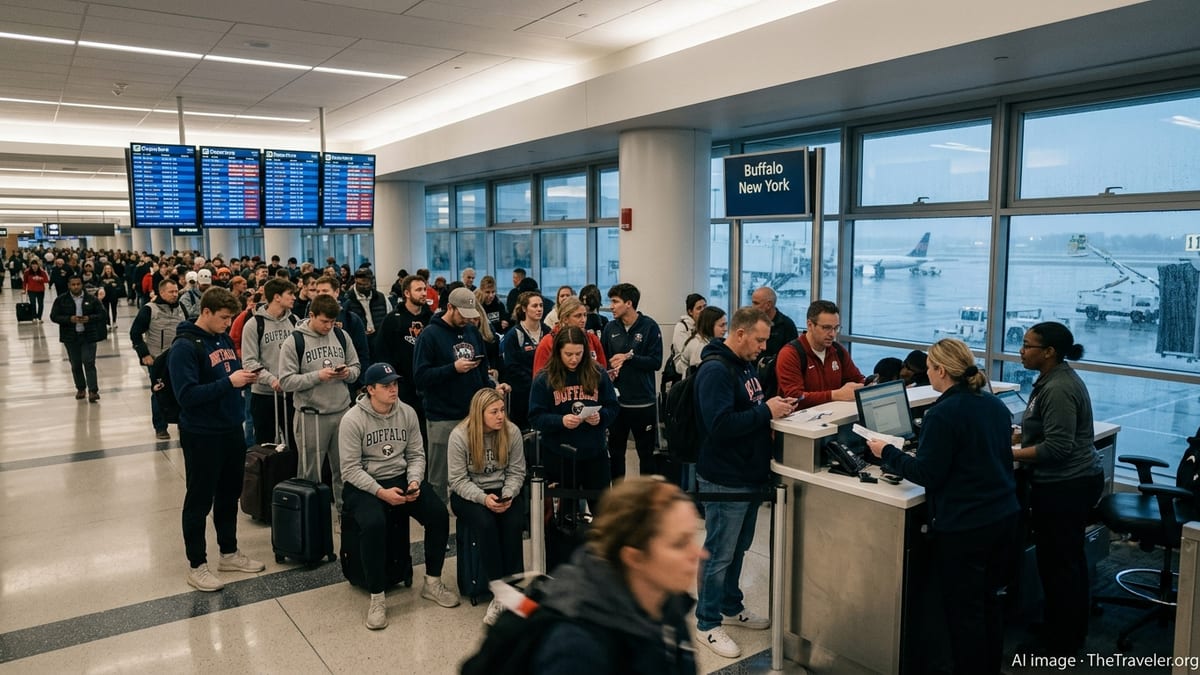
Thousands of college basketball fans heading to Buffalo for the opening rounds of March Madness are confronting major flight disruptions this week, as powerful storms sweeping across the eastern United States trigger widespread cancellations, delays and last-minute itinerary changes for travelers bound for Western New York.
Get the latest news straight to your inbox!
Storm System Collides With Tournament Travel Rush
Published aviation data and weather reports show that a fast-moving storm system that dumped heavy snow across parts of the Midwest and then pushed into the Northeast has upended flight schedules at several major hubs in the days leading up to the men’s NCAA tournament. Airlines have been working through waves of cancellations and multi-hour delays at airports in New York, Chicago and other key connecting cities, creating bottlenecks for passengers trying to reach Buffalo Niagara International Airport.
The timing is particularly challenging, coming just as March Madness traffic surges and spring break trips overlap. National coverage indicates that thousands of flights across the country have been canceled or delayed since the start of the week, with recovery efforts stretching over multiple days as carriers reposition aircraft and crews. That ripple effect has left some Buffalo-bound travelers stranded far from Western New York or arriving well behind schedule.
For tournament fans, the disruptions are hitting during a narrow window. The 2026 Division I men’s basketball championship schedule places first and second round games at Buffalo’s KeyBank Center on March 19 and March 21, according to NCAA event information and published bracket schedules. With tipoff approaching, even moderate delays are shrinking the margin for late-arriving ticket holders hoping to catch their teams from the opening tip.
Buffalo’s Role as a Key First- and Second-Round Host
Buffalo is one of several cities selected to host early-round games in the 2026 men’s NCAA tournament, alongside locations such as Greenville, Oklahoma City, Portland and Philadelphia, based on NCAA planning documents and media guides. KeyBank Center, in downtown Buffalo, is scheduled to stage multiple doubleheaders during the first and second rounds, drawing fans from campuses across the country into Western New York over a tight three-day span.
Local tourism and event listings highlight the city’s preparations for an influx of visitors, from arena logistics to downtown hospitality and transportation planning. Hotel blocks near the waterfront and in neighboring districts have been marketed for visiting fan bases, while regional travel guides have promoted side trips to Niagara Falls and other attractions for those arriving early or staying between game days.
The heavy reliance on air travel, however, makes Buffalo especially sensitive to national aviation hiccups. Many supporters are flying through major hubs in the Midwest and along the East Coast, where the current storm system has been strongest. When flights into or out of those hubs are grounded or severely delayed, itineraries to Buffalo can quickly unravel, often with limited rebooking options during one of the busiest travel weeks of the late winter and early spring period.
Airlines Issue Weather Waivers as Cancellations Mount
Airline travel alerts and publicly shared customer communications indicate that several major U.S. carriers have issued flexible travel waivers tied to severe thunderstorms in the East and lingering winter weather in the Midwest. These waivers typically allow passengers booked to or through affected airports to change their flights without standard change fees during a defined period, an attempt to reduce congestion at customer service desks and give travelers more control over their plans.
On social platforms and traveler forums, passengers have posted accounts of Buffalo-bound itineraries disrupted by rolling delays, missed connections and aircraft swaps. Some have reported being rebooked onto late-night arrivals or next-day flights that risk overlapping with early game times or fan events planned around the tournament.
Operational data compiled by flight-tracking services shows that even airports not directly in the storm’s path can experience downstream impacts as aircraft and crews arrive out of position. For Buffalo, this has meant a mix of local weather challenges and knock-on effects from disruptions in larger hubs, leaving the airport to manage fluctuating arrival banks just as March Madness demand peaks.
Fans Adjust Plans as Tipoff Nears in Western New York
The uncertainty has prompted many basketball fans to adjust itineraries on short notice. Travel forums focused on college basketball and airline communities feature advice for March Madness attendees to monitor their flights closely, build in extra connection time and consider arriving a full day early if possible. Some travelers have reported shifting from tight same-day arrivals to earlier flights, or exploring alternate routings through less congested hubs to improve their odds of reaching Buffalo before their session begins.
Buffalo’s proximity to other regional airports is also playing a role in contingency planning. Trip-planning resources note that some visitors are weighing backup options such as flying into Rochester, Syracuse or even Toronto and then driving into Western New York, particularly if nonstop options into Buffalo sell out or become prohibitively expensive after cancellations.
Hotel operators and local visitor information sites stress that the city is prepared to host fans even if they arrive later than expected, with downtown establishments planning extended hours around evening tipoffs and potential overflows of supporters whose travel days run long. For many, simply making it to KeyBank Center in time to see their team take the floor is becoming the primary goal, even if pregame sightseeing or side trips to Niagara Falls are cut short.
What Traveling Fans Should Watch in the Coming Days
Publicly available forecasts show that conditions across the Great Lakes and Northeast can remain volatile in late March, with late-season snow, high winds and rapidly changing temperatures still possible. Travel commentators note that even after the current system moves through, residual operational challenges can linger for several days, particularly if crews run up against duty-time limits and aircraft rotations remain out of sync.
Analysts following aviation and sports logistics suggest that fans should keep an eye on new or extended travel waivers from airlines, which can open up same-city or nearby-airport alternatives at lower cost. They also point to the importance of tracking gate changes and schedule updates in airline apps, as day-of adjustments can create narrow windows for rebooked passengers to board an earlier or less crowded flight.
With Buffalo set to take a prominent place on the March Madness map this year, the next few days will test how well airlines, airports and travelers can navigate the overlap of volatile late-winter weather and one of the nation’s most tightly timed sporting events. For thousands of fans eager to see the tournament’s opening upsets and buzzer-beaters in person, the journey to Western New York may prove almost as suspenseful as the games themselves.