

More news on this day
Hundreds of travelers were left stranded today at Houston’s George Bush Intercontinental Airport as a fast-moving storm system triggered 409 flight delays and 103 cancellations, disrupting operations for United Airlines, American Airlines, Delta Air Lines, Qatar Airways and other carriers on key routes to New York, Los Angeles, London, Dubai and Mexico City.
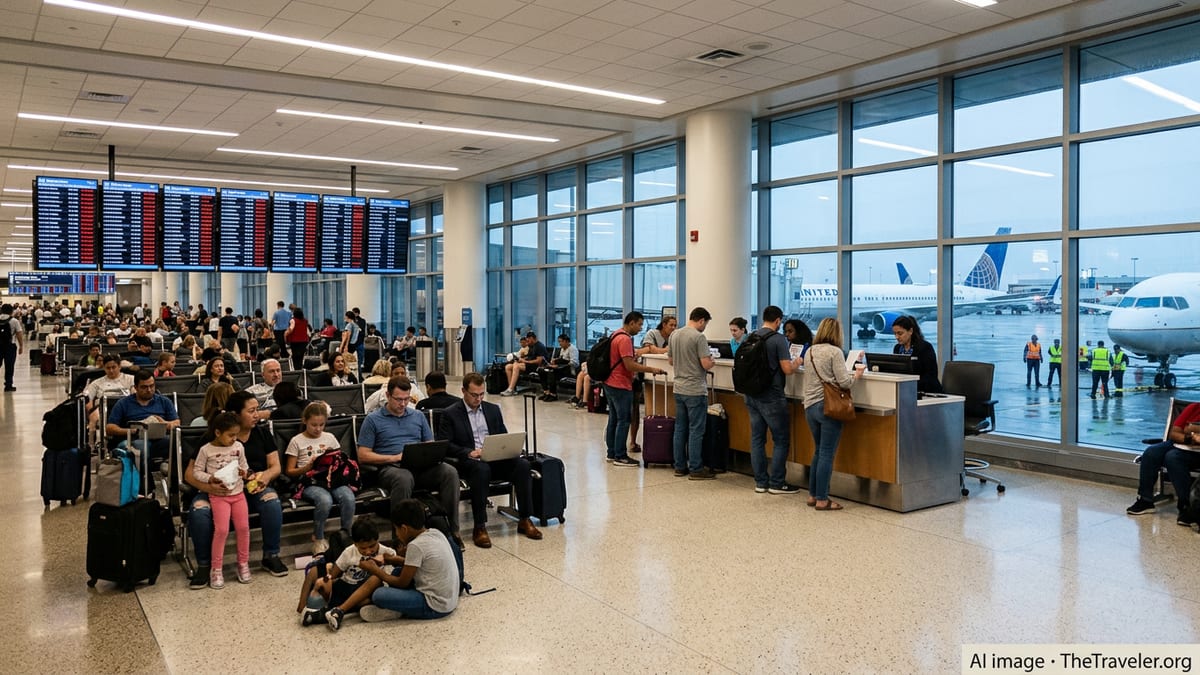
Storm System Over Houston Triggers Fresh Wave of Disruptions
The latest round of disruption hit Houston on March 8 as thunderstorms and low clouds swept across southeast Texas, prompting federal air-traffic managers to slow the rate of flights into and out of Bush Intercontinental. Airlines at the busy United hub quickly racked up delays as crews and aircraft fell out of position and departure slots were pushed back.
By midafternoon, operational data showed 409 departures and arrivals delayed at IAH and 103 flights canceled outright, creating bottlenecks not only in Houston but across airline networks. The figures placed Bush Intercontinental among the hardest hit major U.S. airports for weather-related disruption today, even as other hubs contended with lingering impacts from severe conditions in the Midwest and along the Gulf Coast.
Passengers reported rolling delays of 45 minutes or more on many departures, with some flights held at gates while ramp crews paused operations due to nearby lightning and heavy downpours. Others were forced to circle in holding patterns before landing, burning extra fuel and further compressing already tight connection times for onward journeys.
While the Federal Aviation Administration briefly listed IAH with normal arrival rates at times during the day, airlines and travelers experienced a far more challenging reality on the ground as storms pulsed over different parts of the Houston area, repeatedly slowing the flow of aircraft.
Major Airlines Scramble as Hub Operations Falter
United Airlines, which operates its largest hub at Bush Intercontinental, bore the brunt of the disruption as it worked to re-accommodate customers on a Saturday that already carried heavy leisure travel demand. The carrier faced a combination of delayed bank departures to domestic hubs like Newark, Chicago and Denver and knock-on effects to long-haul flights connecting through Houston.
American Airlines and Delta Air Lines, which run smaller but significant schedules out of IAH, also reported clusters of delays as aircraft arriving late from other weather-affected cities disrupted subsequent legs to New York, Los Angeles and other major markets. Regional affiliates operating under the big three brands struggled to keep crew schedules and aircraft rotations aligned with fast-changing departure times.
On the international side, Qatar Airways, British Airways and several Latin American carriers saw schedules tightened by the difficult conditions. Widebody departures to London and Dubai faced extended boarding and ground holds as airlines balanced the need to depart within crew duty limits against evolving thunderstorm cells in the area.
Airline staff at Houston described a familiar but unwelcome pattern: as soon as the operation appeared to stabilize, another round of storms forced additional flow restrictions or brief ramp closures, quickly erasing gains and pushing more flights into delayed or canceled status.
Global Routes to New York, Los Angeles, London and Beyond Affected
The disruption at Bush Intercontinental rippled across some of the world’s busiest air corridors. Key domestic trunk routes between Houston and New York, Los Angeles and other major U.S. gateways saw aircraft and crews stuck out of place, reducing flexibility to absorb new delays later in the day.
Transatlantic services linking Houston with London were also impacted as airlines adjusted departure times to fit within arrival curfews and slot restrictions at European airports. Even modest delays in leaving Texas can force carriers to reevaluate their planning for next-day rotations, including flights from London and other hubs back to the United States.
In the Middle East, flights to and from Dubai were affected as operators weighed whether to hold departures for connecting passengers misconnecting in Houston or to push flights out on time to protect the remainder of their global schedules. For some travelers, that meant unexpected overnight stays in Houston, while others were rebooked onto alternative routings via European or East Coast hubs.
Southbound services to Mexico City and other key Latin American destinations similarly felt the squeeze, with late-arriving aircraft from Houston cascading into evening departures from Mexico and beyond. The result was a patchwork of schedule changes across multiple time zones, complicating travel plans for business passengers and vacationers alike.
Passengers Face Long Lines, Limited Options and Rising Frustration
Inside Bush Intercontinental’s terminals, the operational stresses translated into long queues at check-in counters, customer service desks and rebooking kiosks as the day wore on. Travelers seeking alternative flights often found limited seats remaining on later services, particularly on popular routes to New York and Los Angeles, where weekend flights tend to run nearly full.
Families connecting from smaller regional airports through Houston reported missed onward flights and lengthy waits for the next available departures, sometimes stretching into the following day. Some passengers opted to cancel weekend plans altogether, citing concerns about further weather disruptions and the risk of being stranded away from home.
Airlines encouraged affected customers to use mobile apps and websites to track flight status and rebook where possible, but intermittent surges in demand led to slow response times and frustration. Airport concessions, meanwhile, saw a spike in demand as passengers camped out near gates, charging devices and stocking up on snacks while watching departure boards flicker with new times.
Airport staff and volunteers were visible in concourses, directing travelers to quiet areas, family rest zones and shuttle connections to nearby hotels as the scale of the disruption became clear and more passengers faced involuntary overnight stays.
Advisories Urge Flexible Plans as Weather Threat Continues
With storms forecast to linger in the region into the evening, aviation officials and airlines advised travelers with upcoming flights through Houston to build extra time into their plans and to monitor flight status closely before heading to the airport. Same-day trip changes and travel waivers were made available on several carriers, allowing customers to shift flights at reduced or no additional cost on select dates and routes.
Operational planners at major airlines signaled that while the worst of today’s delays at IAH may ease overnight, aircraft and crew displacement could continue to cause irregular operations on March 9, particularly on morning departures from Houston and on inbound flights from long-haul destinations.
For passengers with critical connections to international flights, travel advisers recommended considering earlier departures into Houston or alternative routings via less disrupted hubs such as Dallas or Atlanta, where capacity to absorb additional passengers may be somewhat higher once current weather systems pass.
As airlines and airport authorities worked to restore normal operations, today’s events underscored the vulnerability of complex hub-and-spoke networks to fast-changing weather in a single region. For travelers across the United States and around the world, a localized storm over Houston translated into another day of missed connections, lost weekends and an all-too-familiar sense of uncertainty at the departure gate.