

More news on this day
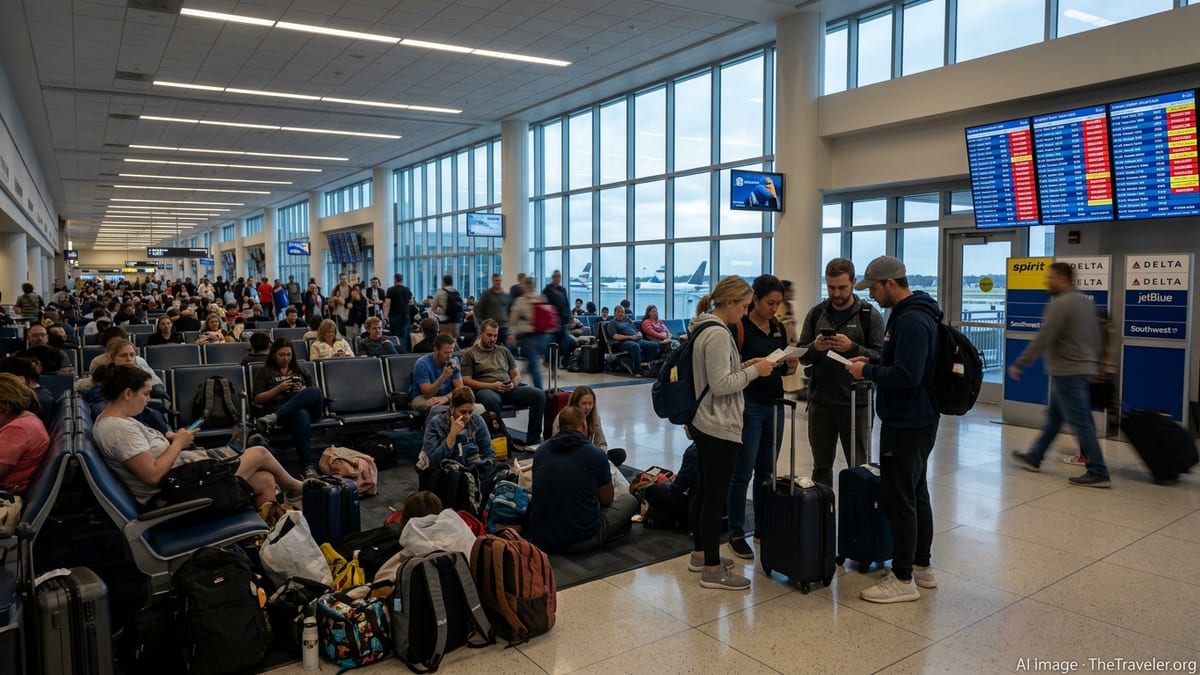
Travelers at Orlando International Airport faced hours of disruption this week as a wave of delays and cancellations across Spirit, Delta, JetBlue, Southwest and United left key routes to New York, Chicago, Toronto, Miami and other major cities severely constrained, with 131 delayed departures and 11 scrapped flights reported in a single day of intensified operational strain.
Get the latest news straight to your inbox!
Weather Turbulence Ripples Through a Major Florida Hub
The latest disruption at Orlando International came against a backdrop of unstable spring weather across large parts of North America, with thunderstorms and lingering wintry systems interrupting flight schedules in multiple regions. Publicly available tracking data for mid March indicated storms moving through the Midwest and Northeast, affecting connections through Chicago, New York and Toronto and putting additional pressure on Orlando’s tightly timed departure banks.
According to widely used flight-tracking dashboards and airline status pages, rolling ground stops and flow restrictions at hubs such as Chicago O’Hare and New York area airports significantly reduced arrival and departure capacity. When those constraints coincide with Orlando’s already busy leisure traffic, delays quickly mount as aircraft and crews fail to arrive in position for subsequent flights.
Recent winter storms documented by national meteorological services and transportation statistics have already produced some of the heaviest disruption in years, with tens of thousands of flights delayed or canceled across the United States and Canada over the 2025 to 2026 winter season. In that context, even a localized day of 131 delays and 11 cancellations at one airport reflects how fragile the wider network remains when weather systems sweep across multiple regions at once.
Spirit, Delta, JetBlue, Southwest and United Under Pressure
The impact in Orlando was spread across several major carriers, with low cost and full service airlines alike struggling to keep to schedule. Spirit, Delta, JetBlue, Southwest and United collectively operate a dense web of services between Orlando and major business and leisure markets including New York, Chicago, Toronto and Miami, as well as other large U.S. cities in the Midwest and Northeast.
Orlando International’s own destination guides show that these airlines provide frequent daily services to New York area airports, multiple Chicago fields, and major Canadian and Florida hubs. In normal conditions, this connectivity is a strength, giving travelers a wide range of departure times and connection options. On disruption days, however, these same interlocking schedules can amplify delays as a missed inbound aircraft cascades into late or canceled departures across several cities.
Industry data released over the past year by the U.S. Department of Transportation has highlighted how even well staffed carriers can see performance deteriorate quickly when bad weather, high load factors and tight turn times converge. The Orlando disruptions fit that pattern, with published performance statistics showing that carriers such as Spirit, JetBlue, Southwest, Delta and United can experience sharp, short bursts of poor on time performance around major storms or airspace constraints, even when their broader monthly averages remain relatively stable.
Stranded Passengers Confront Long Queues and Scarce Options
For travelers on the ground, the statistics translated into hours of waiting in crowded terminals and at customer service counters. Social media posts and traveler forums from the affected day in mid March described long lines at Orlando International as passengers on delayed flights to New York, Chicago and other northern cities sought rebooking options or overnight accommodation.
With multiple carriers affected simultaneously, same day alternatives were limited. High demand on the Orlando to New York and Orlando to Chicago corridors, in particular, meant later departures were already heavily booked, leaving some passengers unable to secure replacement seats until the following day. Families returning from theme park vacations and business travelers heading to key financial centers reported missed connections and extended stays as they waited for open seats.
Accounts shared publicly by travelers also pointed to several aircraft that boarded but then remained at the gate or on the tarmac for extended periods before ultimately returning passengers to the terminal. These kinds of rolling delays can be especially difficult for those with tight onward connections in New York, Chicago or Toronto, where operational buffers are often already slim.
Network Knock-On Effects for New York, Chicago, Toronto and Miami
The disruptions in Orlando did not remain local. Because Orlando sits at the heart of some of the busiest domestic flows in the United States, knock on effects were felt on routes throughout the network. High frequency corridors to New York and Chicago were particularly exposed, as a single delayed aircraft can impact two or three subsequent legs in a single day.
Publicly accessible route maps and scheduling data show that carriers like JetBlue, Delta and United rely on Orlando for substantial leisure and visiting friends and relatives traffic into the New York metropolitan area, while Southwest and Spirit tie the airport to key Midwestern and Sun Belt cities. When an Orlando departure to New York or Chicago runs significantly late, the onward aircraft may then miss its slot for a return to Florida or a connection on to other major markets, creating a chain of late arrivals and missed rotations.
Toronto and Miami were also caught in the web of disruption. Toronto Pearson has been a focal point for winter and early spring weather issues in recent years, and any schedule already strained by deicing and reduced runway capacity can be further hampered if inbound flights from Florida do not depart on time. Miami, meanwhile, often serves as a relief valve for Florida operations, but overlapping storms and strong demand this week limited the ability to reroute passengers smoothly between the state’s major airports.
Travelers Urged to Build in Buffers as Spring Peaks
The situation in Orlando underscores what transportation experts and aviation analysts have been emphasizing since the pandemic recovery phase: complex airline networks remain vulnerable to shock events, even as overall reliability has improved compared with the most acute disruption years. Weather, air traffic control staffing limitations and high seasonal demand continue to combine in ways that can strand travelers with little warning.
Consumer advocates and travel planners increasingly recommend that passengers traveling through congested hubs such as Orlando, particularly on routes to weather sensitive destinations like New York, Chicago and Toronto, build generous buffers into their itineraries. That may include avoiding tight connections, choosing earlier flights when possible, and allowing extra time before critical events such as cruises, international departures or important business meetings.
As spring break and early summer travel ramp up, Orlando International is expected to remain one of the nation’s busiest airports, connecting millions of travelers to theme parks, cruises and business centers. The episode of 131 delays and 11 cancellations in a single day serves as a reminder that even routine seasonal storms can significantly disrupt travel patterns across Spirit, Delta, JetBlue, Southwest and United, with ripple effects stretching far beyond central Florida.