

More news on this day
High winds and fast-moving spring storms across large parts of the United States have triggered 144 flight cancellations and 1,016 delays in Illinois, New York, and Massachusetts, leaving thousands of passengers facing long lines, diversions, and unexpected overnight stays at some of the country’s busiest hubs.
Get the latest news straight to your inbox!
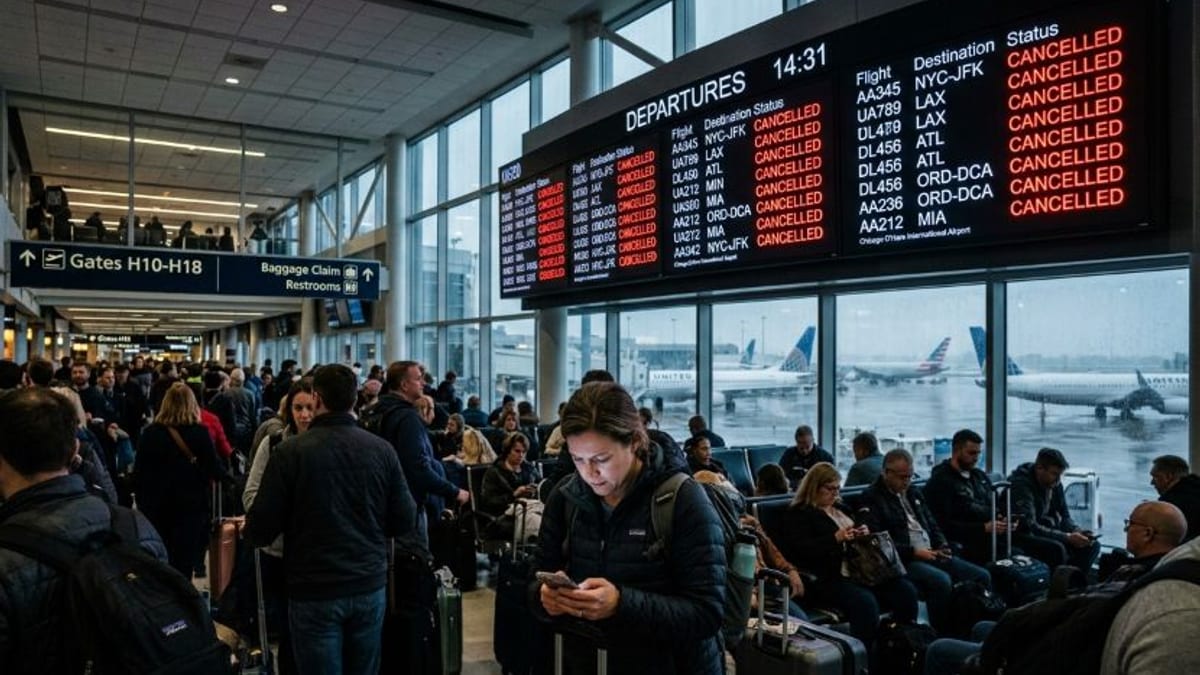
Image by Latest International / Global Travel News, Breaking World Travel News
Storm System Grinds Key Northeast and Midwest Hubs to a Crawl
Publicly available flight-tracking data for Sunday, March 29, 2026, show that the latest round of spring storms has concentrated disruption at airports in Chicago, New York City, and Boston, where wind gusts and fast-changing storm cells have repeatedly slowed takeoffs and forced inbound aircraft into holding patterns. The cumulative effect has been 144 cancellations and 1,016 delays tied specifically to departures and arrivals in Illinois, New York, and Massachusetts.
In Illinois, operations at Chicago O’Hare and Midway have been heavily affected as thunderstorms and high winds moved through the region, compounding an already strained spring schedule. Reports from aviation forums and airline operations updates in recent days indicate that the same storm belt has already caused several waves of cancellations and extended ground stops in the Chicago area, setting the stage for further gridlock as new systems arrive.
Along the East Coast, New York’s LaGuardia and John F. Kennedy airports, along with Boston Logan, have again found themselves on the leading edge of weather-related disruption. Federal air-traffic management programs implemented for safety in high winds and low visibility typically require wider spacing between aircraft and slower arrival rates. On days like March 29, that can quickly cascade into missed connections, rolling delays, and crews reaching duty-time limits before they can complete their assigned flights.
The current tally of 144 cancellations and more than a thousand delays in the three states comes on top of a volatile March in which previous storm systems have already produced thousands of affected flights nationwide, according to recent national disruption tallies. For many travelers, the result has been a second or third consecutive weekend of disrupted plans.
American, United, and Spirit Headline the Disruptions
Among the airlines most visibly affected on March 29 are American Airlines, United Airlines, and ultra-low-cost carrier Spirit Airlines, all of which maintain dense schedules through the hardest-hit airports. Public delay boards and consumer reports indicate that these carriers account for a substantial share of both the 144 cancellations and the 1,016 delays tied to Illinois, New York, and Massachusetts.
American and United rely on Chicago O’Hare as a major connecting hub, and both operate large banks of flights through New York and Boston. When storms roll across the Midwest and then shift toward the Northeast, the same aircraft and crews often sit at the center of multiple weather systems within a 24-hour period, which can turn a single thunderstorm line into a daylong operational tangle spanning several states.
Spirit’s route network, with key operations at Chicago O’Hare and New York area airports, has also been vulnerable. Recent passenger accounts from New York and Chicago highlight repeated cancellations on select Spirit routes during the current stormy stretch, with some flights reportedly scrubbed multiple days in a row as high winds, low ceilings, and ground delays upend planned rotations.
While all carriers cite safety as the primary reason for cancellations and diversions in high winds and convective weather, the impact on day-to-day travelers is immediate and highly visible, from crowded rebooking lines to long waits for baggage reclaim after aircraft return to gates late or are swapped at short notice.
Where the Cancellations Are Concentrated
The 144 cancellations and 1,016 delays are not evenly distributed across the three states. Chicago O’Hare appears to account for a significant portion of the Illinois impact, given its role as one of the country’s busiest hubs and a frequent focus of spring weather systems. Midway has also seen disruption, though on a smaller scale, largely affecting domestic short-haul routes.
In New York, LaGuardia’s tightly packed schedule and short runways make it particularly sensitive to high winds and low visibility. When air-traffic flow programs slow arrivals into LaGuardia, ripple effects quickly reach connecting passengers bound for smaller regional airports throughout the Northeast and Mid-Atlantic. John F. Kennedy, a key transatlantic and long-haul gateway, has seen a mix of departure delays, diversions, and scattered cancellations as carriers wait for safe operating windows during storm bursts.
Boston Logan, meanwhile, has faced repeated weather-related interruptions since the start of the year, including earlier winter storms and coastal wind events. In the latest round, Logan’s operations have once again been constrained by gusty crosswinds and reduced visibility, leading to a cluster of cancellations on shorter East Coast and regional routes along with extensive delays on departures to the Midwest and South.
The net effect is that travelers whose itineraries touch any of these three focal regions on March 29, particularly via American, United, or Spirit, have faced a heightened risk of disruption even if their origin or final destination is in another part of the country.
How This Fits Into a Turbulent Spring for Air Travel
The latest data from aviation trackers and recent weather coverage suggest that March 2026 is shaping up as one of the more volatile early-spring periods for U.S. air travel in recent years. Earlier in the month, a powerful multi-day storm complex brought blizzard conditions, severe thunderstorms, and tornadoes to sections of the Midwest and East, contributing to several thousand cancellations across multiple carriers nationwide.
Those earlier storms already stretched airline networks, as crews and aircraft ended up out of position and maintenance windows were compressed by repeated delays. Even after skies cleared, residual operational issues lingered, leaving airlines with little margin to absorb another round of severe weather. Against that backdrop, the current 144 cancellations and 1,016 delays centered on Illinois, New York, and Massachusetts illustrate how quickly the system can tip back into gridlock when high winds and thunderstorms return.
Flight operations experts note that this kind of pattern, where one storm system follows closely after another, often produces the most frustrating travel experiences. Passengers whose flights operate on time may still find connections broken, bags delayed, or seats oversold as carriers attempt to recover from earlier disruptions while simultaneously managing new weather threats in multiple regions.
With spring still in its early weeks, the broader trend suggests that travelers should be prepared for additional bouts of storm-related interruptions over the coming months, particularly on routes that rely heavily on weather-sensitive hubs around the Great Lakes and the Northeast corridor.
What Passengers Need To Know Right Now
For travelers holding tickets on American, United, and Spirit through Chicago, New York, or Boston over the next several days, publicly posted advisories and recent patterns point to several practical takeaways. Same-day rebooking options may be limited during peak cancellation periods, especially on heavily traveled routes, and some passengers are likely to be rebooked a day or more after their originally scheduled departures when large thunderstorms or high winds force extended ground stops.
Travel waivers, which allow customers to change flights without standard penalties, have become common during this stretch of unsettled weather. Passengers are being encouraged, via airline alerts and public-facing travel guidance, to proactively adjust departure times, consider alternative airports when possible, and build in longer connection windows if their journey passes through Chicago, New York, or Boston.
Given the intensity of the March storm pattern so far, aviation analysts also highlight the importance of monitoring flight status frequently on the day of travel. Some recent cancellations in the affected states have been announced several hours before departure as forecasts worsened, while others have occurred closer to boarding when winds strengthened unexpectedly or when arriving aircraft could not depart their previous cities on time.
For now, the 144 cancellations and 1,016 delays recorded in Illinois, New York, and Massachusetts on March 29 provide a snapshot of how quickly a single day of high winds and spring storms can upend travel plans for thousands. With more unsettled weather in the forecast for parts of the Midwest and Northeast, passengers and airlines alike are bracing for the possibility that this turbulent pattern will persist into April.