

More news on this day
Thousands of passengers across the United States are facing disrupted travel plans as more than 360 flights are cancelled and nearly 2,000 delayed, with New York, Las Vegas, Chicago, Cleveland, Phoenix, Dallas and Orlando among the hardest hit airports, according to real-time tracking data and airline operations updates on March 24, 2026.
Get the latest news straight to your inbox!
Ripple Effects Hit Major Carriers and Regional Partners
Publicly available flight-tracking boards show at least 366 cancellations and 1,904 delays across the U.S. network, affecting mainline carriers such as Delta Air Lines, American Airlines and United Airlines along with their regional partners, including Endeavor Air. These disruptions are concentrated at some of the country’s busiest hubs and leisure gateways, amplifying the impact on connecting travelers and spring holiday traffic.
Regional affiliates like Endeavor, which operate many short-haul and feeder routes for Delta, play a pivotal role in keeping banked connection schedules moving at big hubs. When those regional operations falter, passengers at downline airports can find themselves stranded even if local conditions appear calm and clear. Reports from recent weeks of concentrated Endeavor cancellations and inspections underscore how quickly challenges at a regional carrier can ripple across a wider network.
Mainline operations at American and United are also feeling the strain. Delays on key transcontinental and mid-continent routes are feeding into missed connections at central nodes such as Chicago, Dallas and Phoenix, forcing airlines to rebook large numbers of travelers onto already crowded flights. For many passengers, that means extended overnight stays in airport hotels or long lines to secure alternative itineraries.
Low-cost and ultra-low-cost carriers are not immune. While today’s disruption figures are dominated by the largest network airlines, schedules at leisure-heavy airports such as Las Vegas and Orlando show mounting delays, indicating that aircraft and crews are not always in the right place at the right time after days of rolling operational constraints.
Weather Systems Continue to Test a Fragile Aviation Network
Weather remains a primary driver of aviation disruption in the United States. Industry analyses of federal on-time performance statistics indicate that roughly three-quarters of the worst system-wide delays are linked to weather events, whether in the form of thunderstorms, winter storms or high winds that reduce runway capacity across key airports.
In recent weeks, a sequence of late-winter and early-spring systems has moved across the country, from blizzards and ice in the Upper Midwest to severe storms sweeping through the South and Mid-Atlantic. These events have repeatedly forced ground stops, de-icing operations and reroutes that slow traffic through hubs such as Chicago and New York. Even when skies clear at destination airports, residual constraints on airspace and crew availability can keep delays elevated for days.
New York City’s congested airspace is particularly vulnerable. Published coverage and traveler reports from earlier in March detail how storms and low ceilings in the region quickly cascade into delays and cancellations at John F. Kennedy, LaGuardia and Newark, with knock-on effects to and from airports as far away as Florida and the Midwest. Today’s elevated delay counts at New York-area fields fit into that broader pattern of weather-sensitive operations.
The run of disruptive storms this winter has also stressed airport infrastructure and ground handling operations, from snow removal to staffing de-icing pads. Each slowdown at the gate or on the ramp adds minutes to turn times, contributing incrementally to the national tally of late departures and arrivals reflected in today’s statistics.
Travelers Face Long Lines, Limited Rebooking Options
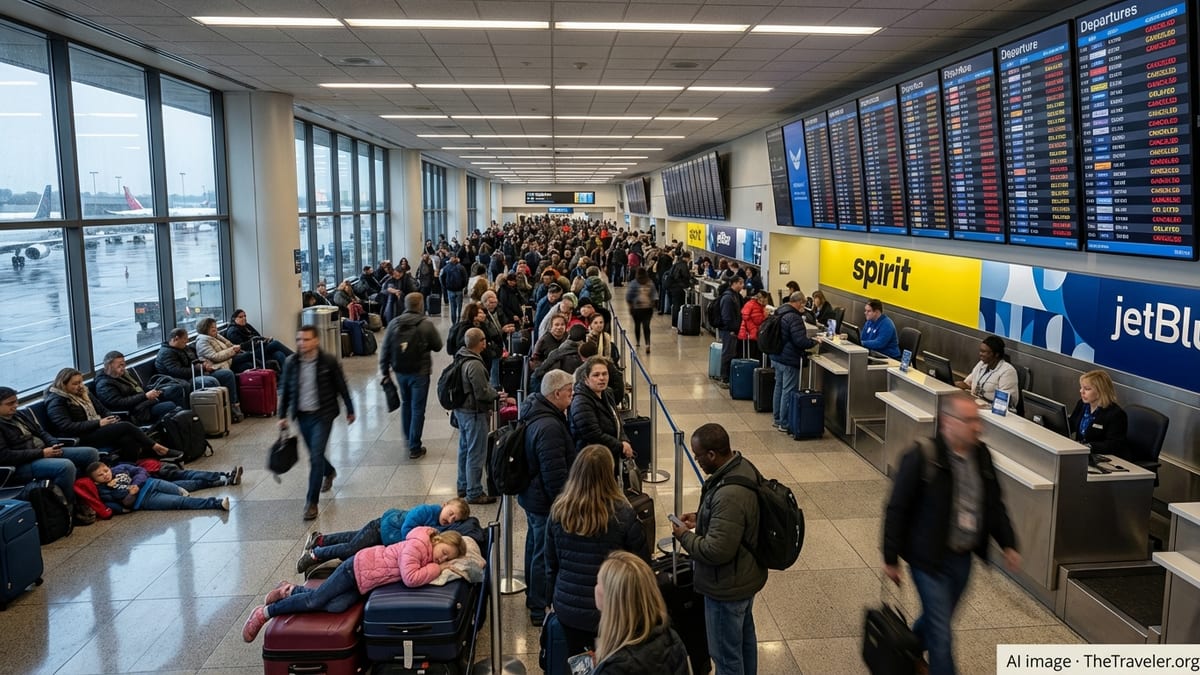
The immediate human impact of 366 cancellations and 1,904 delays is visible in crowded concourses and boarding areas across the country. Social media posts and first-hand accounts describe long queues at customer service desks in New York, Dallas and Chicago, as passengers seek rerouting, hotel vouchers or meal assistance after missed connections and scrubbed flights.
Seat availability is tightening as airlines try to accommodate displaced travelers. With many routes already running near capacity in late March, especially to leisure destinations such as Las Vegas and Orlando, finding same-day alternatives can be difficult. Publicly available booking engines show limited inventory on popular routes, pushing some passengers to accept inconvenient connections or travel a day or more later than planned.
Airport services are also feeling the pressure. Extended waits are reported at security checkpoints and food outlets at several affected hubs, as delayed travelers spend more time airside than originally scheduled. For those stuck overnight, nearby hotels around major hubs such as Dallas Fort Worth and Chicago O’Hare are reporting higher demand, with walk-up rates climbing and availability tightening in the evening hours.
The disruption is particularly challenging for travelers with tightly timed commitments, such as cruises, events or international connections. Even when airlines can offer rebooking, schedules are not always aligned with those onward plans, forcing some passengers to abandon parts of their itineraries or pursue refunds under individual fare rules and carrier policies.
Operational Strains Highlight Systemic Vulnerabilities
Beyond today’s immediate disruptions, aviation analysts point to broader structural issues that leave the system vulnerable to days like this. Industry reports and federal data highlight a network in which high aircraft utilization, lean staffing and tightly banked schedules leave little margin when storms, technical issues or air traffic constraints emerge.
Regional affiliates are a particular pressure point. Endeavor and other regional operators fly intensive schedules linking smaller cities with major hubs, often on narrow turnaround times. Any disruption, whether from inspections, maintenance bottlenecks or crew timing rules, can lead to a cascade of cancellations and delays out of proportion to the number of aircraft involved. Travelers booked on those flights may find fewer alternative options, especially on thinner routes with limited daily frequencies.
Staffing dynamics also play a role. While airlines and airports have rebuilt much of their workforce since the sharp reductions early in the decade, industry surveys suggest some roles remain difficult to fill, including pilots at regional airlines, maintenance technicians and specialized ground staff. When storms or irregular operations hit, these staffing gaps can slow recovery, turning what might have been short-lived disruptions into multi-day challenges.
Technology and infrastructure constraints add another layer of complexity. Modern scheduling and crew-management tools can optimize normal-day operations but may struggle under the weight of widespread, simultaneous disruptions across multiple hubs. Similarly, busy airspace corridors around cities like New York and Dallas leave air traffic managers with limited flexibility to absorb surges of diverted or delayed flights without triggering further knock-on effects.
What Travelers Can Expect in the Coming Days
With today’s tally of 366 cancellations and 1,904 delays reflecting both immediate and lingering operational strains, travelers planning to fly over the next several days should be prepared for potential schedule changes. Historical patterns suggest that it can take airlines multiple operating days to fully reset aircraft and crew rotations after widespread disruptions, particularly when weather remains unsettled across key parts of the network.
Publicly available forecasts indicate that unsettled conditions may persist in some regions into midweek, raising the possibility of further localized disruptions at already stressed hubs. Airlines are likely to continue issuing travel waivers on select routes, allowing passengers more flexibility to adjust itineraries in advance of anticipated weather or congestion.
Consumer advocates generally recommend that passengers monitor their flights closely through airline apps and airport departure boards, and consider building extra time into connections, especially when routing through busy hubs like New York, Chicago, Dallas and Atlanta. Travelers connecting to cruises, rail journeys or long-haul international departures may want to allow a longer buffer than usual.
For now, the scenes unfolding in terminals from New York to Phoenix underscore how quickly the finely tuned U.S. air travel system can be thrown off balance. With thousands of travelers still waiting for their journeys to resume, the latest wave of cancellations and delays serves as another reminder that even routine trips can be vulnerable to a complex web of operational, weather and staffing challenges.