

More news on this day
Severe winter weather and knock-on congestion across Europe have stranded thousands of travelers this weekend, as authorities in the United Kingdom, France, the Netherlands, Switzerland and Turkey report 43 flight cancellations and 1,364 delays affecting services at major hubs including Birmingham, Paris, Amsterdam, Geneva and Istanbul.
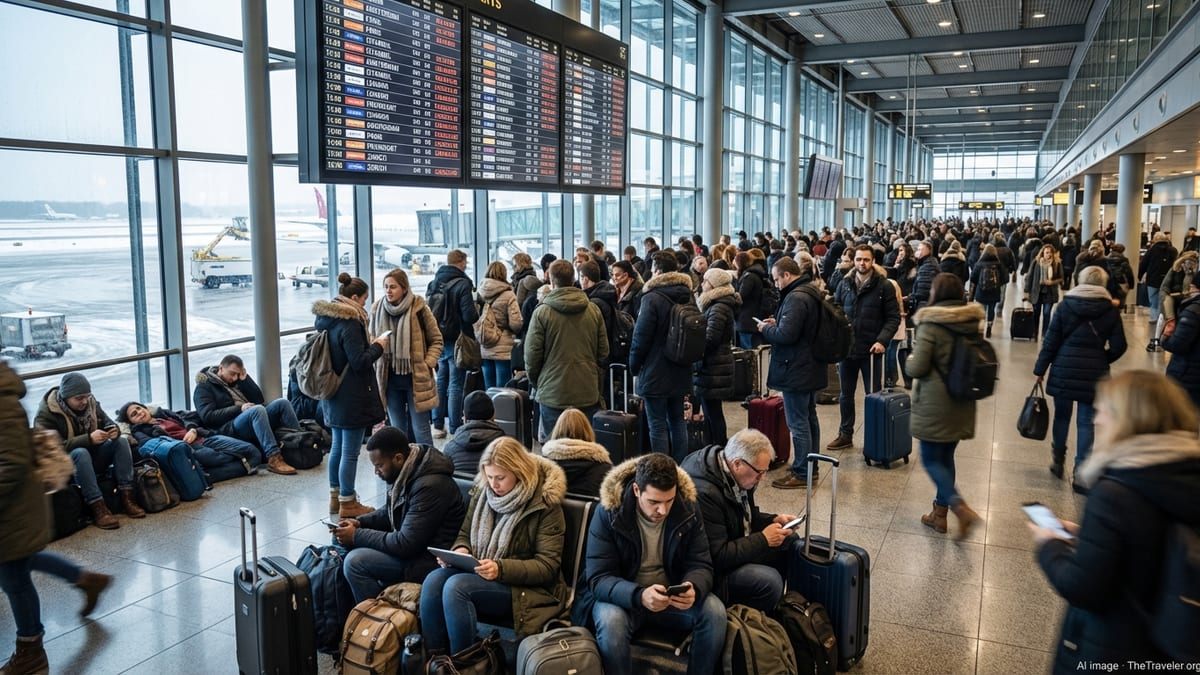
Storm System Triggers Fresh Wave of Disruptions
The latest figures, compiled from airport and air-traffic reports on February 21, highlight how quickly a winter storm system can destabilize Europe’s tightly interlinked aviation network. The 43 cancellations and 1,364 delayed flights come on top of multiple days of severe disruption this week, as snow, ice and low visibility sweep across parts of Western and Central Europe.
While the total number of disrupted flights is lower than the peak of chaos earlier in the week, aviation analysts note that even a few dozen cancellations and more than a thousand delays are enough to strand or significantly inconvenience tens of thousands of passengers. Many are stuck far from home or facing missed connections on long-haul itineraries that rely on European hubs as transfer points.
The pattern of today’s interruptions mirrors earlier events this week: dense cloud, freezing temperatures and intermittent snow showers have forced air-traffic controllers and airport operators to slow down takeoffs and landings for safety reasons. That has triggered rolling delays through the day, with some services eventually scrubbed altogether as crews and aircraft fall out of position.
Major Hubs From Birmingham to Istanbul Affected
The disruptions are spread across a string of key airports that collectively handle millions of passengers each week. In the United Kingdom, Birmingham Airport has seen a sharp build-up of delays as aircraft wait for de-icing and for visibility to improve, with some outbound flights held on the ground and inbound services forced into extended holding patterns.
In France, Paris Charles de Gaulle and Paris Orly have again reported clusters of delayed departures and arrivals, compounding earlier weather-related problems this week. Official data show that French airports are among those contributing to the total of 43 cancellations and 1,364 delays, as runways are cleared and capacity temporarily reduced.
The Netherlands, where Amsterdam Schiphol functions as one of Europe’s busiest transfer hubs, has remained under particular strain. Persistent wintry conditions and a backlog from previous days have left terminals crowded and departure boards dominated by amber and red status alerts, echoing earlier reports that Amsterdam has borne some of the heaviest weather impacts this week.
Further east, Geneva in Switzerland and Istanbul in Turkey have also recorded numerous delays and scattered cancellations. Both airports are vulnerable to winter weather, with Geneva affected by Alpine conditions and Istanbul juggling complex regional traffic flows that amplify the knock-on effects of every disruption.
Air France, SAS, Helvetic, ITA and Pegasus Among Hardest Hit
Today’s disruption is being felt across a wide range of carriers, from full-service national airlines to regional and low-cost operators. Air France, which operates a dense European and intercontinental network from Paris, has reported further delays on key routes, as aircraft rotate more slowly through congested hubs and crews reach duty time limits.
Scandinavian carrier SAS, already grappling with winter operations in Northern Europe, has seen additional knock-on delays at connecting airports including Amsterdam and Paris, where its flights feed into broader alliance networks. Passengers on SAS services have reported extended waits both on the tarmac and at boarding gates as ground staff juggle revised departure slots.
In Switzerland, regional airline Helvetic Airways has faced interruptions on short-haul services that connect Geneva with neighboring European cities. Even minor schedule changes for such regional flights can have outsized consequences, as many operate with limited slack and rely on tight turnaround times.
Italian operator ITA Airways and Turkish low-cost carrier Pegasus Airlines have also been swept up in the turbulence, particularly on routes touching Istanbul and major Western European hubs. For Pegasus, delays can cascade quickly across its point-to-point network, while ITA’s connections through other European airports risk missed onward flights for passengers heading to long-haul destinations.
Passengers Stranded, Queues Stretch Across Terminals
For travelers, the statistics translate into very tangible stress: long queues at airline desks, crowded waiting areas and an anxious wait for information. At Birmingham, passengers reported lines snaking through departure halls as travelers sought rebooking options and meal vouchers while watching departure times slide back hour by hour.
In Paris and Amsterdam, the combination of local travelers, transfer passengers and families on school-break holidays has created dense crowds around information screens and self-service kiosks. Many travelers have already endured overnight waits earlier in the week and are now facing a second or even third day of disrupted plans as new delays accumulate.
At Istanbul’s main airport, where today’s delays sit atop a complex schedule of regional and long-haul flights, passengers on Pegasus and other carriers have spoken of confusion over gate changes and revised departure times. Although airlines have stepped up app and text-message alerts, not all passengers receive updates in real time, particularly those relying on roaming services or public Wi-Fi.
For some, the disruption has had serious knock-on consequences beyond missed hotel bookings or lost sightseeing time. Business travelers describe canceled meetings, while others report difficulties reaching family events, medical appointments or onward rail and ferry connections across the continent.
Complex Causes: Weather, Congestion and Crew Availability
While winter weather is the immediate trigger for today’s 43 cancellations and 1,364 delays, aviation specialists underline that such figures usually reflect a complex web of factors. Heavy snow, ice or freezing rain reduce the safe rate of takeoffs and landings, but the resulting congestion can quickly spill over into later waves of flights, even after conditions begin to improve.
De-icing procedures, mandatory safety inspections and runway clearing all add crucial minutes to each movement. Once departure and arrival banks are disrupted, crews may exceed regulated duty hours, forcing airlines to reschedule or cancel flights altogether until replacement crews can be positioned. Those crew shortages, in turn, are often exacerbated by earlier disruptions in other parts of Europe.
Airports such as Amsterdam, Paris and Istanbul act as critical nodes for multiple airlines and alliances, so a delay affecting a single inbound flight can ripple through several outbound connections. Aircraft that arrive late for a morning rotation will often remain behind schedule for the rest of the day, extending the impact of a single weather event into the evening peak.
Infrastructure capacity also plays a part. Some regional airports served by carriers such as Helvetic, ITA and Pegasus have limited stands and fewer alternative runways, which restricts their ability to recover quickly after a temporary shutdown. When these smaller airports connect into congested hubs, the recovery curve lengthens further.
Pressure Mounts on Airlines to Support Affected Travelers
With thousands of passengers once again facing disrupted itineraries, pressure is growing on airlines to provide clear information and adequate support. Under European passenger-protection regulations, travelers whose flights are delayed or canceled may be entitled to meals, refreshments, hotel stays and, in some circumstances, financial compensation, depending on the cause and duration of the disruption.
Consumer advocates across Europe have urged airlines to proactively inform passengers of their rights and to avoid forcing customers to navigate complex claims processes after the fact. They note that today’s figures, while modest compared with the most extreme days of disruption, still represent a significant cohort of affected travelers who may need urgent assistance.
Airlines including Air France, SAS, Pegasus and others have been encouraging passengers to use digital channels where possible, directing them to apps and automated tools to rebook flights or request vouchers and refunds. Carriers argue that these systems help reduce queues at airport counters and enable staff to focus on passengers with the most urgent needs, such as those requiring special assistance or traveling with young children.
However, many travelers remain wary of handling last-minute, high-stakes changes on mobile devices, particularly when faced with unfamiliar routing options or language barriers. Airports have responded by deploying additional staff on the floor to guide passengers to customer-service desks, quiet zones and accommodation desks where necessary.
What Stranded Travelers Can Do Right Now
For passengers caught up in today’s wave of cancellations and delays, travel experts recommend a series of practical steps to improve the chances of a smoother resolution. The first is to closely monitor airline apps and departure boards, since gate changes and revised timings are often confirmed only shortly before departure in volatile weather conditions.
Travelers are advised to make contact with their airline as early as possible once a delay of more than a couple of hours appears likely. In many cases, rebooking onto a later service or an alternative routing through a different hub can be arranged while the original flight is still officially scheduled, avoiding the worst of the queues if the flight is later canceled outright.
Passengers facing overnight delays should keep records of their expenses, including hotel bills, meals and local transport, as these may be reimbursable depending on the circumstances and applicable regulations. Keeping boarding passes, booking confirmations and any written communication from the airline will also make it easier to file claims after travel is completed.
Experts also suggest that travelers consider their wider itinerary when assessing options. Those with non-refundable hotel or tour reservations at their destination may wish to contact providers as soon as a significant delay is confirmed, as many are willing to adjust bookings when disruption is clearly outside the traveler’s control.
Outlook for the Coming Days
Meteorological forecasts indicate that wintry conditions could persist in parts of Europe over the coming days, although the intensity of snowfall and ice is expected to vary by region. Aviation planners say the key question is whether additional storm fronts will coincide with peak travel periods, such as early-morning departure banks and late-afternoon arrival waves at major hubs.
If weather gradually improves and no new storm systems move in, airlines should be able to work through the backlog of displaced passengers, restoring more stable operations. However, with aircraft and crews still scattered after several days of rolling disruption, it may take time for schedules to fully normalize, particularly on cross-border routes that rely on tight turnarounds.
Travelers planning to pass through Birmingham, Paris, Amsterdam, Geneva, Istanbul or other major European airports in the next 24 to 48 hours are being urged to build extra time into their journeys, check in online where possible and keep a close eye on flight-status notifications. Many airlines are already offering flexible rebooking options for passengers willing to shift their travel dates by a day or two.
For now, the 43 cancellations and 1,364 delays reported across the United Kingdom, France, the Netherlands, Switzerland and Turkey today stand as a reminder of how vulnerable Europe’s dense, interconnected air network remains to bouts of severe weather at the height of the winter season.