

More news on this day
Air travel across the United States faced major disruption on March 17, 2026, as more than 1,100 flights were cancelled and over 5,300 were delayed, with operations snarled at major hubs including Atlanta, Orlando, Newark, Detroit, Tampa and Fort Lauderdale, according to flight-tracking data and multiple media reports.
Get the latest news straight to your inbox!
Severe Weather And Congested Skies Snarl Major Hubs
The latest wave of cancellations and delays has been linked primarily to a strong storm system sweeping across the eastern half of the country, combined with heavy spring travel demand. Publicly available forecasts and aviation advisories point to bands of severe thunderstorms, low clouds and gusty winds reducing visibility and slowing arrivals into already congested airspace.
Airports in Atlanta, Orlando, Newark, Detroit, Tampa and Fort Lauderdale are among the hardest hit, reflecting their roles as key connecting hubs and leisure gateways. Disruption at those facilities quickly ripples nationwide as aircraft and crews are left out of position, forcing further cancellations and rolling delays far from the original weather cells.
The timing is particularly challenging, coinciding with peak spring break travel and early traffic related to college basketball tournaments. Higher passenger loads, fuller flights and limited spare seats give airlines less flexibility to rebook travelers quickly once storms trigger widespread schedule changes.
While severe weather is a familiar factor in U.S. aviation, the scale of today’s disruption highlights how vulnerable tightly timed hub-and-spoke networks remain when multiple major airports along the East and Gulf coasts are affected at the same time.
Delta, United, SkyWest And JetBlue Lead Today’s Disruptions
Flight-tracking tallies for March 17 indicate that Delta Air Lines, United Airlines, SkyWest and JetBlue are among the carriers with the highest numbers of cancellations and delays. These airlines operate dense schedules through the affected hubs, particularly Atlanta for Delta, Newark for United, and multiple Florida airports for a mix of mainline and regional operators.
Regional carrier SkyWest, which flies under several major-brand flags, has seen a notable share of cancellations as storm-related air-traffic management programs force reductions in arrivals and departures. When regional flights are cut, travelers often lose vital feeder connections to larger domestic and international routes.
JetBlue’s network, with significant operations in the New York area and in Florida, has also been pressured by the combination of weather and airspace congestion. Reports indicate that crew and aircraft rotations have become increasingly complex as flights divert to alternate airports or return to gates after extended ground holds.
Other U.S. airlines have been affected to varying degrees, with the overall national tally of 1,102 cancellations and 5,372 delays reflecting a system-wide shock rather than isolated issues at a single carrier.
East Coast Weather Patterns Create Cascading Delays
According to publicly available information from meteorological services and aviation coordination centers, storms moving along the Eastern Seaboard have prompted traffic management initiatives at several major airports. These initiatives, which include ground delay programs and temporary arrival rate reductions, are designed to keep the skies safe but often result in longer waits on the tarmac and at departure gates.
When arrival rates are reduced at busy hubs such as Atlanta and the New York area, flights are held at their origin points or rerouted into holding patterns, which in turn can cause crews to run up against duty-time limits. Once pilots or flight attendants exceed their allowable working hours, aircraft can no longer depart, even if weather conditions briefly improve, further amplifying cancellations.
Florida’s large leisure airports, including Orlando, Tampa and Fort Lauderdale, are particularly exposed when storms track across the peninsula during peak afternoon and evening periods. Short-haul routes in and out of these cities are often scheduled tightly, leaving little buffer when ground stops or lightning alerts force ramp closures and slowdowns.
Travelers have reported diversions between Florida cities and to inland hubs as airlines attempt to wait out the worst of the weather. These diversions can add hours to journeys and complicate baggage handling, as luggage sometimes continues on different aircraft or remains at the original destination until operations stabilize.
Impact On Travelers During Peak Spring Travel
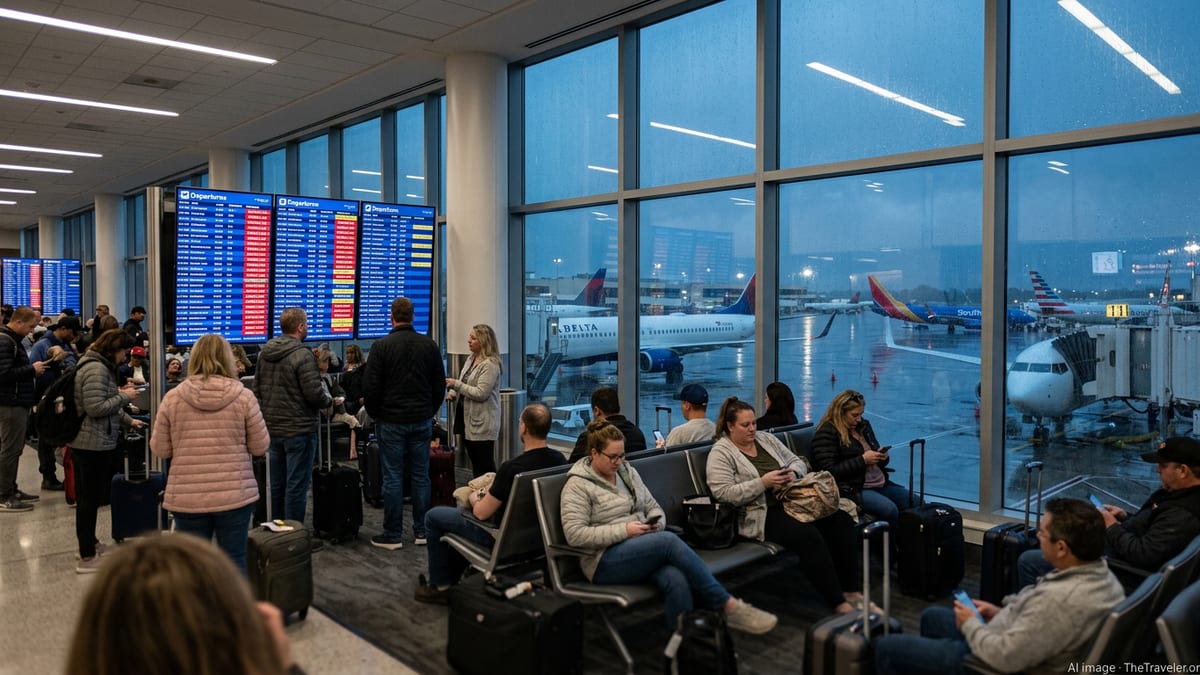
The widespread disruption has created long lines, crowded terminals and changing itineraries for tens of thousands of passengers. Social media posts and publicly shared accounts from Atlanta, Orlando and Newark describe departure boards dominated by red and yellow status markers, with some travelers facing overnight stays as rebooked flights fill quickly.
Families heading to spring break destinations in Florida have been particularly affected, with some itineraries being rerouted through alternate cities such as Fort Lauderdale or Tampa when original nonstop flights to Orlando are cancelled. In some cases, travelers are accepting arrivals at a different airport and completing the final leg of their journey by car to avoid waiting days for a direct replacement flight.
Business travelers and those connecting to international services from major hubs like Atlanta and Newark are also contending with missed connections and extended layovers. With hotel availability tightening in cities such as Detroit and Atlanta during irregular operations, some passengers are opting to adjust their plans entirely or delay trips until conditions improve.
Reports indicate that many travelers are leaning heavily on airline mobile apps and text alerts to track last-minute gate changes and schedule shifts, as call centers and in-person service desks experience surging demand.
What Passengers Can Do As The Disruptions Continue
With storms forecast to linger in some areas and airline operations still working to recover, passengers with upcoming flights over the next several days are being encouraged by publicly available travel advisories to monitor their bookings closely. Same-day changes may be possible in some cases, especially where airlines issue weather-related flexibility policies for affected airports.
Travel experts commonly recommend arriving at the airport earlier than usual during periods of disruption, especially at large hubs such as Atlanta, Orlando and Newark, where security queues and check-in lines can lengthen quickly when schedules go off-track. Carrying essential items in hand luggage can also help when checked bags become separated from passengers amid rapid rebookings.
Public information from consumer agencies notes that travelers are generally entitled to a refund when a flight is cancelled and they choose not to travel, even during weather-related disruption. Compensation policies for delays and additional expenses vary by airline and circumstance, prompting many passengers to review their carrier’s published customer service commitments before submitting claims.
As airlines reshape schedules and reposition aircraft and crews, further cancellations and delays remain possible. For travelers set to pass through Atlanta, Orlando, Newark, Detroit, Tampa, Fort Lauderdale and other busy hubs, flexibility and close attention to real-time updates will be essential while the system gradually returns to normal.