

More news on this day
Severe thunderstorms and flash flood alerts across several US regions have left the national aviation grid struggling on one of the busiest spring travel days, with 3,141 delays and 117 cancellations reported for flights within, into, or out of the country.
Get the latest news straight to your inbox!
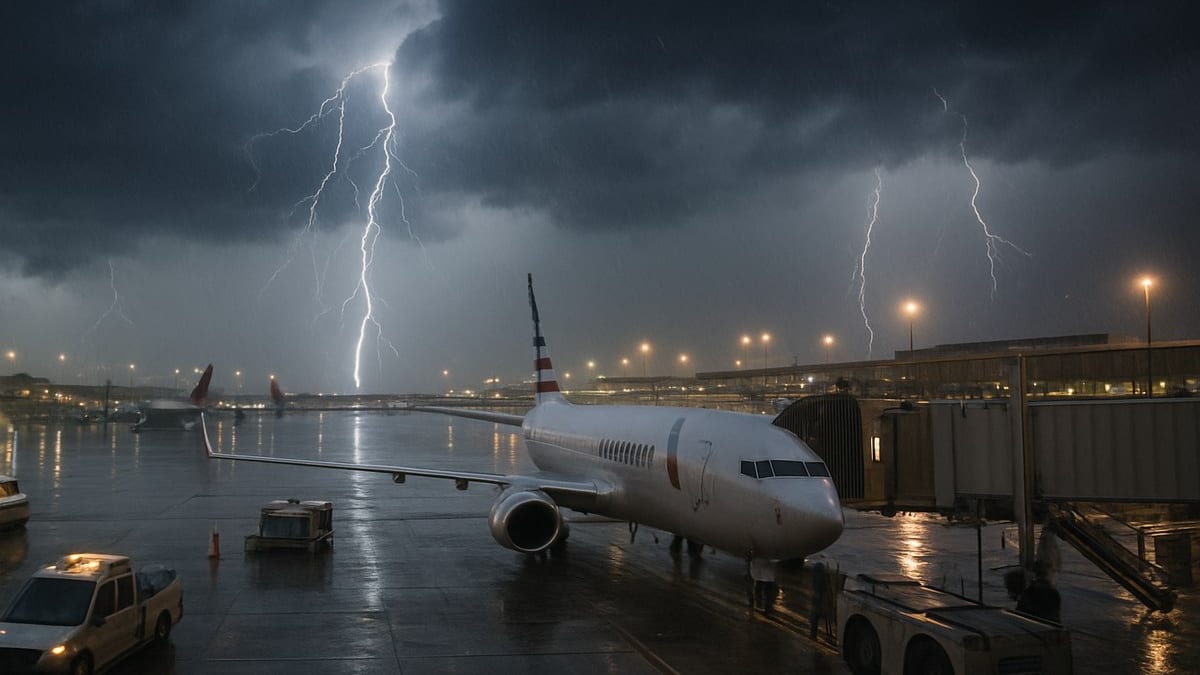
Image by Nomad Lawyer
Thunderstorms, Flash Floods Snarl Airports Nationwide
Publicly available aviation tracking data shows that a fast-moving line of storms, heavy rain and localized flash flooding combined to slow traffic across major hubs and regional airports alike. The disruption stretched from busy Midwest and East Coast gateways to smaller airports in the South and along the Gulf, creating a patchwork of delays that rippled through the national network.
Reports indicate that weather-related constraints were felt most acutely at large connecting airports, where arrival and departure rates were cut to maintain safe spacing in low visibility and convective conditions. Ground stops and flow-control programs meant that flights bound for affected cities were held at origin, contributing to mounting delays even in regions with relatively calm weather overhead.
The 117 cancellations recorded nationally kept the overall cancellation rate relatively low by historical storm standards, but the sheer number of delayed flights underscored how modern airline schedules, built around tight aircraft and crew rotations, can quickly seize up when thunderstorms park over key corridors.
Major Carriers Hit by Heavy Delays, Limited Cancellations
According to aggregated flight status data highlighted in industry coverage, large US carriers bore the brunt of the disruption in terms of delay counts, even as they kept outright cancellations to a minimum. One national roundup cited United, American and Southwest among the most affected by delays, with several hundred late departures and arrivals each, but only a small number of flights scrubbed from the schedule.
Regional affiliates and contract carriers feeding traffic into the big networks also posted sizable delay totals. Operators such as Envoy, SkyWest and Horizon were identified among those experiencing knock-on effects as storms slowed operations at the major hubs they serve. With many of these carriers operating shorter routes and high daily utilization, even modest holdups can cascade rapidly through the day.
Despite the uneven impact across individual airlines, the pattern pointed to a systemwide weather event rather than an isolated operational failure. Delays were recorded at airports from Chicago and Columbus to Boston, Norfolk and New Orleans, suggesting that multiple storm cells and rain bands were influencing different segments of the grid at overlapping times.
Storm Systems Add Pressure to an Already Stressed Network
The latest wave of weather disruptions is landing on top of broader operational pressures within US aviation. Recent analyses of federal air traffic statistics and airline performance data have highlighted how staffing constraints at air traffic control facilities and tight airline scheduling practices have reduced the system’s flexibility to absorb shocks.
Research drawing on Bureau of Transportation Statistics data has shown that while some carrier-controlled delays have improved since the height of the pandemic, late-arriving aircraft and weather-related disruptions now account for a growing share of total delay minutes. Severe thunderstorms, low clouds, and flooded taxiways can quickly force airports to reduce capacity, amplifying these structural vulnerabilities.
Industry commentary in recent weeks has also noted that multiple late-winter and early-spring storm systems, from blizzards in the Midwest and Northeast to repeated thunderstorm outbreaks in the central and eastern United States, have repeatedly tested airline resilience. The latest tally of 3,141 delays and 117 cancellations is modest compared with the worst weather meltdowns, but it reinforces a trend of frequent, medium-scale disruptions that erode traveler confidence.
Travelers Face Missed Connections and Overnight Stays
For passengers, the numerical totals translate into real-world complications: missed connections, diverted flights and unplanned overnight stays. With thunderstorms frequently forcing holding patterns and extended taxi times, even relatively short delays can cause travelers to misconnect at hub airports, especially on tightly timed evening banks of departures.
Consumer-facing coverage of recent storm events has documented how a delay on the first leg of a multi-city itinerary can unravel the rest of the trip. Airlines may automatically rebook affected customers, sometimes on next-day flights or on routes involving additional connections, which can significantly lengthen total journey times.
On days when severe weather constrains capacity across multiple regions, airport hotels and rental cars can quickly become scarce, leaving some travelers with limited options. Travel experts routinely advise building longer connection windows during storm-prone seasons and monitoring flight status continuously, but many passengers are still caught off guard when a fast-developing thunderstorm triggers a ground stop or flash flood warning at a key hub.
What Today’s Numbers Signal for the Months Ahead
The combination of 3,141 delays and 117 cancellations tied primarily to thunderstorms and flash flooding offers an early-season preview of the challenges likely to intensify as the US moves deeper into the warm-weather convective season. Meteorological records and aviation statistics consistently show that spring and summer bring higher frequencies of severe storms, which in turn raise the risk of airport ground stops and route diversions.
Weather and aviation analyses suggest that as storm systems become more erratic in timing and intensity, traditional scheduling buffers can prove insufficient. Airlines and airports have invested in better forecasting tools and decision-support systems, but when storms line up over multiple major corridors, the margin for recovery within a single operating day remains narrow.
For travelers planning trips in the coming weeks, the latest disruption underscores the value of flexible itineraries and contingency planning. Earlier departures, nonstop routes where possible, and awareness of storm outlooks for both origin and destination can help reduce exposure to cascading delays. The figures from this latest outbreak of thunderstorms and flash floods highlight that even on days with relatively limited cancellations, the US aviation grid can be significantly slowed by the atmosphere above it.