

More news on this day
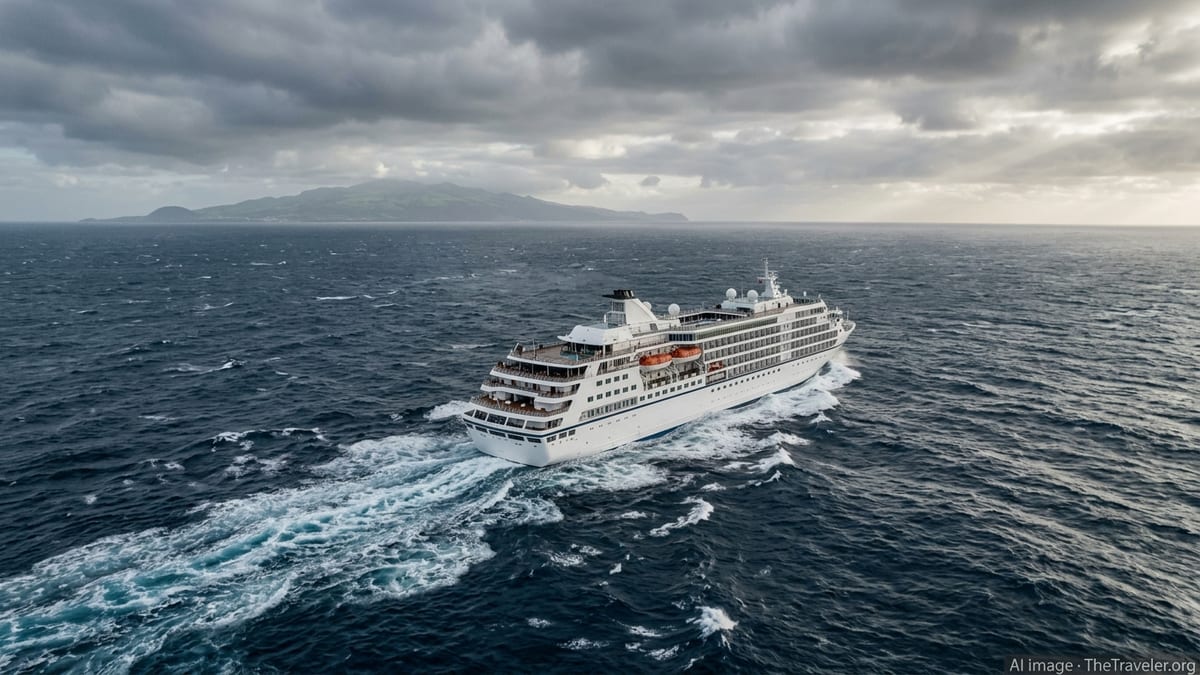
Ambassador Cruise Line’s Renaissance has altered its spring transatlantic route, bypassing a scheduled call in the Azores as unsettled North Atlantic weather disrupts one of Europe’s key mid-ocean stopovers.
Get the latest news straight to your inbox!
Weather Concerns Reshape a Key Atlantic Crossing
The decision for Renaissance to sail past the Azores highlights how quickly conditions can change on North Atlantic crossings at the tail end of winter. Publicly available marine forecasts show repeated low-pressure systems tracking across the central Atlantic in mid to late March, bringing strong winds and elevated swells across common transatlantic cruising lanes. For a mid-sized ship repositioning between the Caribbean and Europe, those conditions can make a call at the mid-ocean archipelago difficult to maintain while keeping schedules and comfort in balance.
Industry coverage of recent seasons points to a pattern of weather-driven changes across several cruise brands operating similar repositioning routes. Reports on Ambassador’s own fleet describe other voyages where itineraries were modified, extended in port or re-routed to avoid waves exceeding five meters in the open Atlantic. That wider context has made cruise watchers particularly attentive to how the line’s newest ship, Renaissance, manages its first full cycle of Caribbean fly-cruise and transatlantic operations under the Ambassador banner.
Although the Azores are often marketed as a picturesque and tranquil mid-Atlantic haven, oceanographic data and cruising guides both stress that the islands sit close to strong pressure gradients in late winter and early spring. When those systems intensify, captains of ocean-going passenger ships routinely opt to alter speed or course to maintain safer, more comfortable conditions, even if that means dropping a port call long featured in brochures.
Renaissance’s Route and Ambassador’s Growing Atlantic Portfolio
Renaissance, a 1,200-guest ship that entered Ambassador’s orbit following the merger with French operator Compagnie Française de Croisières, has become central to the company’s expanding Caribbean and Atlantic strategy. Corporate updates and trade coverage describe the vessel operating winter fly-cruise programs out of the Caribbean before returning to Europe on longer repositioning voyages that blend familiar Western European ports with more remote calls such as the Azores. These crossings are promoted as extended, sea-day focused journeys for travelers seeking a classic ocean passage rather than a port-intensive itinerary.
Trade press detailing Ambassador’s recently announced second winter Caribbean season for 2026 to 2027 shows how heavily the line leans on the Azores in marketing its Atlantic discovery routes. Launch coverage describes eastbound and westbound transatlantic sailings for Renaissance that typically include a call in the Portuguese archipelago either en route from Europe to the Caribbean or on the return leg. The bypass on the current crossing demonstrates that even marquee ports can be set aside when mid-ocean weather patterns fail to cooperate.
Public itinerary snapshots for Renaissance also underline how tightly scheduled these crossings can be, with limited slack built in between Caribbean turnaround ports and northern European homeports. On such voyages, losing several hours to heavy seas or slower speeds can create a knock-on effect for subsequent calls and pier slots. In that context, removing a single mid-Atlantic stop can be one of the few practical levers available to keep an entire season on time.
Azores Under Storm Watch as Cruise Stops Prove Vulnerable
The Azores occupy a strategic yet exposed position for ships crossing between Europe and the Caribbean or North America. Sailing guides and technical notes on typical Atlantic routing describe how many vessels aim for latitudes near the islands to skirt the Azores High in summer, while in spring they must instead contend with transient low-pressure systems. When those systems deepen, seas can build quickly in the approaches to islands such as São Miguel and Terceira, complicating both port operations and pilotage.
Travel and cruise publications that profile the Azores as a cruise destination often highlight the mild year-round temperatures but also warn that conditions can be unpredictable, with rapid shifts between sun, cloud and heavy showers. For large cruise ships on a fixed schedule, the main challenge is not day-to-day rain but the combination of wind strength, swell direction and harbor thresholds for safe berthing. As a result, even in years without named storms, the shoulder seasons of March and April tend to see more last-minute itinerary adjustments than the calmer summer months.
The current bypass by Renaissance aligns with a broader pattern in which multiple lines have, in recent years, skipped Azores calls to stay clear of rough seas on both spring and autumn crossings. Online cruise communities and past-season reports document diversions where captains sailed further south or north of the archipelago, substituting additional sea days or alternative European ports to avoid the worst of the conditions.
Passengers Face Longer Sea Stretches and Revised Expectations
For guests on board Renaissance, the cancellation of the Azores call means a longer uninterrupted stretch at sea and the loss of a distinctive mid-ocean landfall that many consider a highlight of transatlantic cruising. Repositioning voyages that feature the Azores are often marketed to travelers eager to explore volcanic landscapes, hot springs and historic towns after several days on the open ocean. When that element disappears from the schedule, passengers are left to reframe the experience more squarely around sea days and onboard programming.
Public reports and community discussions of past weather-related changes on Ambassador voyages suggest that travelers tend to be divided in their reactions. Some emphasize disappointment at missing a rare destination, while others accept that North Atlantic crossings at this time of year carry inherent uncertainty. In general, passengers on long repositioning sailings are considered more experienced cruisers, often familiar with the idea that safety and navigational prudence will take precedence over port calls when conditions deteriorate.
Travel planners note that itinerary flexibility is increasingly being framed as part of the appeal of these extended voyages. Marketing materials for transatlantic cruises commonly reference the spirit of ocean adventure and the variability of weather at sea. In the case of Renaissance, the current route change underscores those themes in real time, turning what had been billed as a balanced mix of ports and sea days into a more purely maritime journey.
North Atlantic Routing Under Growing Scrutiny
The alteration to Renaissance’s schedule is the latest in a series of weather-impacted itineraries that have drawn attention to North Atlantic routing practices. Cruise industry outlets have recently highlighted multiple instances in which Ambassador’s other ships, including Ambition, were kept in port longer than planned or saw port calls shortened and reshuffled in response to forecasts of heavy swell and high winds. These episodes have fed a wider conversation about how cruise operators plan shoulder-season deployments in increasingly changeable conditions.
Maritime analysts and voyage planners point out that modern forecasting tools, satellite data and shipboard routing systems allow cruise lines to identify problematic weather windows earlier than in the past. However, even with improved technology, the choice between pressing ahead with a risky call, pushing the ship harder in heavy seas or sacrificing a port altogether remains a difficult balancing act that must take into account comfort, safety and commercial obligations. In that environment, dropping an exposed island call such as the Azores can emerge as the least disruptive option.
For ports in the Azores, the pattern of weather-related bypasses raises questions about how often spring and autumn calls can be reliably maintained on longer repositioning voyages. At the same time, cruise line scheduling for future seasons, including Ambassador’s published plans for Renaissance in 2026 and 2027, indicates that the archipelago will likely remain a coveted feature on transatlantic routes. The latest diversion by Renaissance therefore appears less a retreat from the Azores and more a reminder that, on the open Atlantic, nature still has the final word.