

More news on this day
Passengers traveling through the United States on Friday faced another round of disruptions after a fresh operational slowdown at Houston’s George Bush Intercontinental Airport led to a cluster of cancellations and dozens of delays affecting flights to and from major hubs including Chicago, Phoenix and Dallas.
Get the latest news straight to your inbox!
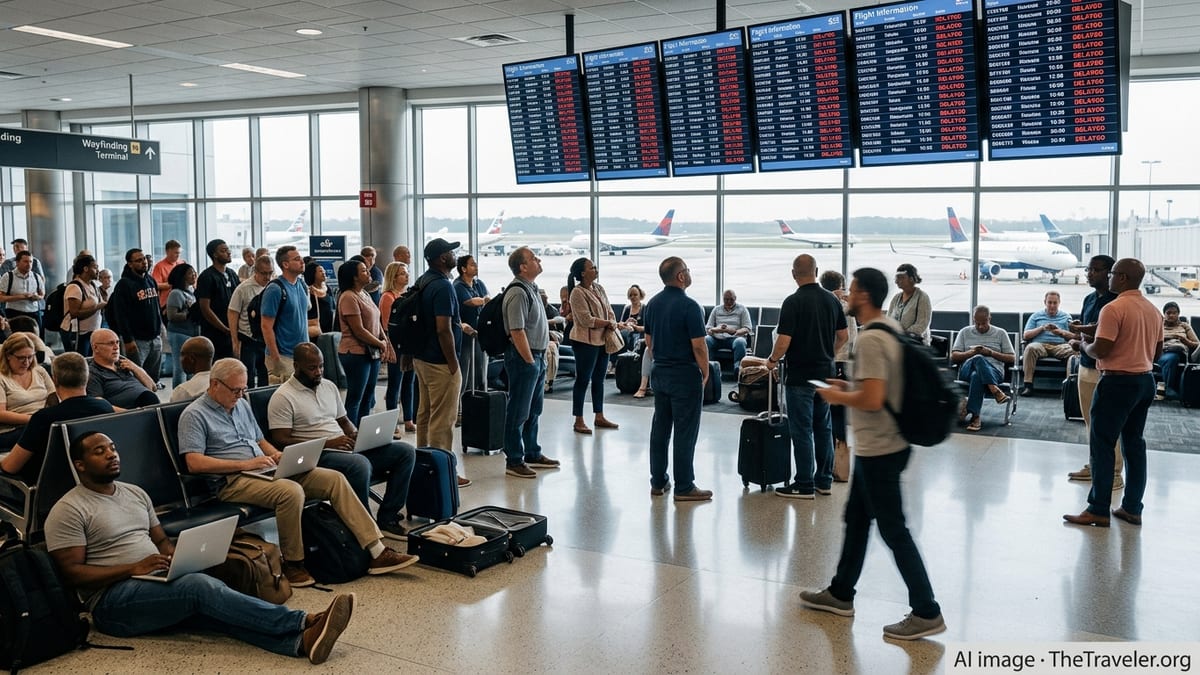
Targeted Cancellations And Dozens Of Delays At Houston Hub
Publicly available flight tracking data on Friday indicated that operations at Houston Bush Intercontinental were constrained, with at least 12 departures and arrivals cancelled and 79 flights delayed over the course of the day. The disruption was modest compared with full-scale meltdowns seen at large hubs in previous seasons, but it was enough to rattle schedules for thousands of travelers booked through one of the country’s busiest connecting airports.
The latest disruption followed a week in which Texas airfields had already seen elevated irregular operations. Recent industry tallies pointed to nearly 400 delayed flights at major Texas airports including Bush Intercontinental, Dallas Fort Worth International and San Antonio International, driven by unsettled weather patterns, congested airspace and tight airline schedules. The new wave of hold ups at Houston added pressure to an already stretched system, especially for passengers relying on tight connections.
Operational dashboards showed that most affected flights were late rather than cancelled outright, with many departures pushed back between 30 minutes and several hours. That pattern reflected reduced throughput on the ground and in surrounding airspace rather than a complete shutdown, creating rolling domino effects as aircraft and crews rotated through Houston and onward to other cities.
While the raw number of cancellations remained relatively contained, passenger impact was amplified by the role Houston plays as a key connecting node in domestic and international networks. Even a limited series of cancellations at a hub can strand travelers across multiple regions when spare seats and backup aircraft are in short supply.
United, Frontier, Spirit And SkyWest Among Impacted Carriers
The latest irregular operations at Bush Intercontinental touched a cross section of airlines, led by United Airlines and its regional partners, along with low cost carriers such as Frontier and Spirit and regional operator SkyWest. United maintains a major hub at Houston, so even small shifts in departure rates can quickly cascade across its domestic grid.
SkyWest flights operating on behalf of United were particularly exposed, as regional jets connect Houston with secondary markets and feed passengers into longer haul services. When those regional arrivals run late, they can disrupt onward departure banks that carry travelers to cities including Chicago and Phoenix. Similar dynamics apply to low cost operators that rely on rapid aircraft turnarounds to maintain dense schedules.
Frontier and Spirit, which operate point to point models rather than traditional hub and spoke networks, nonetheless felt the impact where their routes intersected with the Houston area and other weather sensitive airports in Texas. Any knock on delay can ripple into later segments as aircraft continue their day’s rotations, leaving passengers on seemingly unrelated routes suddenly facing revised departure times.
Historical on time performance reports from the US Department of Transportation show that carriers such as United, Frontier, Spirit and SkyWest already manage relatively tight operating margins, with a notable share of delays tied to weather, air traffic management and carrier controlled issues. Episodes like Friday’s underscore how quickly that margin can erode when several factors align against smooth operations.
Chicago, Phoenix, Dallas And Beyond See Knock On Effects
Because Houston functions as a major domestic hub, even limited disruption there can be felt far from the Texas Gulf Coast. Flight schedules on Friday showed connectivity between Bush Intercontinental and other large hubs such as Chicago, Phoenix and Dallas, with multiple services operated throughout the day by United and partner carriers as well as low cost competitors.
When departures from Houston push back or inbound flights arrive late, connection windows at downline airports tighten or break entirely. Travelers heading from smaller cities through Houston onto Chicago or Phoenix, for example, risk missing onward flights when ground holds or taxi delays add unscheduled minutes before arrival at the gate. Airlines then have to rebook those passengers onto later departures, which in turn can approach or exceed capacity.
Texas has already been at the center of several recent disruption cycles, with earlier storms and airspace constraints prompting elevated delay counts in Dallas and Houston. Industry analyses note that once a hub’s operation slows below planned levels, it can take many hours to restore normal flows, meaning that even flights departing on time later in the day may be carrying passengers who were rebooked from earlier missed connections.
The knock on effects are not limited to the largest hubs. Smaller airports that rely on a handful of daily departures to Houston can see their entire schedule pattern affected when one or two key flights are delayed or cancelled, reducing flexibility for travelers heading to business meetings, family events or onward international travel.
Weather, Staffing And System Strain Behind The Latest Slowdown
The immediate trigger for Friday’s slowdown at Bush Intercontinental appeared to be a combination of unsettled weather in the Houston region and broader system strain following a week of challenging operating conditions across Texas. The Federal Aviation Administration’s status page for the airport continued to highlight shifting weather advisories and cautions, while local reports in recent days have pointed to extended security lines and staffing pressures at Houston airports.
In March, coverage from regional outlets documented hour long security queues at Bush Intercontinental as Transportation Security Administration staffing was stretched, contributing to missed flights and a tense environment in departure halls. Separate analyses have highlighted how even modest thunderstorms in the Houston area can sharply reduce airport arrival and departure rates as controllers space aircraft further apart for safety, triggering inbound holding patterns and departures waiting at the runway.
Airline specific communications in recent weeks have also flagged travel waivers tied to Houston and Texas weather, giving passengers the option to change flights when storms were forecast or when significant operational disruption was already under way. Those notices underline the expectation among carriers that weather volatility around key hubs will continue to challenge schedules as spring progresses.
Infrastructure constraints add another layer of complexity. Construction and terminal projects at large hubs can limit how flexibly ground crews and gate agents respond when a burst of delayed arrivals suddenly appears at once. That can leave aircraft waiting for open gates even after landing and further compress turn times for onward departures.
What Travelers Can Expect In The Coming Days
Travel analysts caution that Friday’s cluster of 12 cancellations and 79 delays at Bush Intercontinental may not be an isolated event, given seasonal storm patterns over the central United States and the tight schedules that major carriers are operating to meet robust demand. With more unsettled weather expected in parts of Texas and the south central region, pockets of delay could persist even if daily disruption totals fluctuate.
Passengers booked through Houston in the near term are likely to see continued schedule adjustments, rolling departure time changes and occasional gate swaps as airlines attempt to rebalance fleets and crews. Those connecting onward to or from cities such as Chicago, Phoenix and Dallas may face added uncertainty if inbound aircraft run late or if crews encounter duty time limits after extended delay periods.
Recent consumer guidance from advocacy organizations has stressed the importance of building longer connection buffers when routing through historically delay prone hubs like Houston during storm season. Travelers are also encouraged to monitor airline apps and airport information screens closely on the day of travel, as many changes are implemented only hours before scheduled departure times.
While airlines have become more adept at recovering from localized weather events, the experience at Bush Intercontinental on Friday shows how even a relatively small cluster of cancellations and a few dozen delayed departures can disrupt travel plans across multiple regions when they strike at a critical junction in the national air network.