

More news on this day
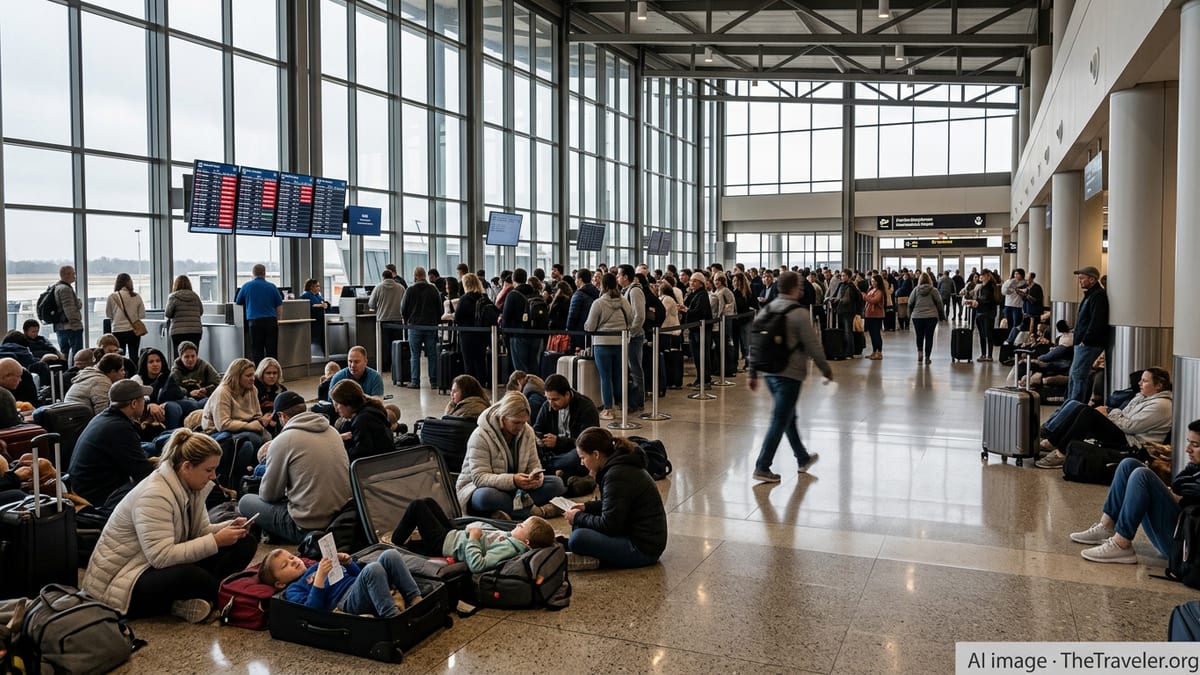
Travelers moving through Austin-Bergstrom International Airport on Saturday, April 4, faced mounting disruptions as more than 70 delays and at least a dozen cancellations rippled across a network of domestic and international routes, affecting flights to major hubs including Dallas, New York, Boston, London and Cancun.
Get the latest news straight to your inbox!
Dozens of Flights From Austin Experience Delays and Cancellations
Publicly available airport monitoring dashboards on April 4 show Austin-Bergstrom operating under what some trackers label “moderate” disruption, with roughly 77 delayed departures and arrivals and around a dozen outright cancellations across the day’s schedule. Major U.S. carriers such as United Airlines, Southwest Airlines and JetBlue Airways account for a substantial share of the affected flights, alongside other domestic and international operators.
Departure boards at Austin-Bergstrom reflected a pattern familiar to many U.S. travelers this spring: rolling delays that began as relatively short schedule pushes and lengthened as the day progressed. While some services ultimately departed close to on time, a nontrivial portion of the schedule shifted into hour-plus delays, with a small but significant slice canceled outright.
Airport performance data compiled by aviation intelligence sites indicate that Austin-Bergstrom typically posts a relatively strong on-time record, but the volume of disruptions recorded on April 4 aligns with a broader uptick in irregular operations across the United States during early April. Aggregated figures highlighted in recent industry coverage point to several thousand delays nationwide on peak disruption days, with Texas repeatedly listed among the hardest hit regions.
The disturbances at Austin-Bergstrom arrive as the airport continues to manage rapid passenger growth and a long-range construction program that will eventually add new gates and terminal capacity. While those projects aim to ease congestion over the next decade, they also leave the facility operating close to its current limits during heavy traffic periods.
Dallas, Northeast Hubs and Holidaymakers’ Favorites Feel the Impact
Route maps and real-time trackers show that disruptions originating in Austin did not remain local. Flights from Austin to Dallas-Fort Worth and Dallas Love Field experienced shifting departure times on April 4, as a combination of local congestion and stormy North Texas weather complicated operations. Forecasts for the Dallas-Fort Worth region called for moderate to heavy rain and a high likelihood of storm-related delays, increasing the chance that even minor schedule changes at Austin would cascade into missed slots and holding patterns further north.
Connections to the Northeast also felt the strain. Services from Austin to New York-area airports and Boston, on a mix of United, JetBlue and other carriers, frequently appeared among the delayed flights on tracking boards. Those routes connect into congested corridor airspace that has recently been affected by lingering winter weather systems and capacity-constraining traffic management programs, which can magnify the effect of delays originating in Texas.
International and leisure-focused routes from Austin faced challenges as well. Flights linking Austin to resort destinations such as Cancun and to European gateways including London saw schedule adjustments, reflecting the interdependence of long-haul operations on tightly timed banks of feeder flights. Even modest delays on earlier domestic segments can push widebody departures behind schedule, particularly when crews, aircraft and passengers must connect through multiple nodes.
For travelers heading to beach destinations or transatlantic city breaks, these disruptions translated into missed hotel check-ins, shortened vacations and a scramble to rebook onward transportation. Travel forums and social media posts on April 4 showed passengers weighing whether to hold their existing itineraries through extended delays or seek alternative routings through less affected hubs.
Spring Weather, Staffing Pressures and Tight Infrastructure Converge
While there is no single cause behind the April 4 disruption picture, a mix of recurring factors appears to be at play. Meteorological outlooks pointed to unsettled conditions across parts of Texas and the broader heartland heading into the first week of April, with periods of rain, gusty winds and thunderstorms in some corridors. These patterns can trigger air traffic control initiatives, such as flow restrictions and ground delay programs, that ripple through network schedules far from the immediate storm zone.
At the same time, Austin-Bergstrom has been grappling with the demands of rapid passenger growth, seasonal event spikes and an infrastructure footprint that many local observers argue has struggled to keep pace with the region’s booming population. Recent public reports and community discussions have highlighted recurring crunch points around gate availability, ramp congestion and security screening, particularly during peak morning and afternoon waves.
Across the United States, airlines are also still working to stabilize crew and fleet utilization after a turbulent winter that included major storm systems and scattered staffing shortages. Industry analyses of the broader disruption pattern in early 2026 emphasize that carriers such as United, Southwest and JetBlue have seen elevated numbers of delayed flights on certain days, especially at their busier hubs and focus cities. Those statistics reinforce how vulnerable tightly wound schedules can be when weather, staffing and infrastructure constraints collide.
Observers note that Austin’s transition away from its separate South Terminal for ultra-low-cost carriers, combined with ongoing expansion work at the main terminal, has added another layer of operational complexity. Consolidating more airlines under one roof promises long-term efficiency gains but can create short-term pressure on gate and checkpoint capacity when irregular operations spike.
Passengers Confront Long Lines, Missed Connections and Rebooking Scrambles
For passengers, the numbers on delay dashboards translated into long waits in departure lounges and security lines. Crowdsourced wait-time tools and traveler reports in recent weeks have routinely flagged Austin-Bergstrom as one of the more challenging U.S. airports for peak-hour queues, particularly at check-in counters for high-volume carriers and at consolidated security checkpoints. On a day with elevated delays and cancellations, those baseline pressures become markedly more visible.
Missed connections emerged as a key risk once outbound services from Austin began to slip later into the day. Travelers with tight layovers in Dallas, New York or Boston found that even a 45-minute delay from Austin could jeopardize onward flights, especially when weather and air traffic control measures reduced flexibility at receiving hubs. International itineraries to London and Cancun were particularly sensitive, as many of those flights depart only once daily and rely on coordinated arrival banks.
Consumer guidance pieces published in recent days have urged travelers to monitor their flights closely through airline apps and independent tracking services, check aircraft inbound status and act early when a delay threatens a connection. On days like April 4, when disruption levels are measurably above normal, that advice becomes crucial for anyone trying to preserve tight schedules or complex multi-city trips.
Travel advocates also point travelers toward federal resources such as the U.S. Department of Transportation’s airline customer service dashboard, which summarizes each carrier’s stated commitments on rebooking, meal vouchers and hotel coverage in the event of significant delays or cancellations. While policies vary between airlines and depend on whether a disruption is within the carrier’s control, having a clear view of those pledges can help passengers navigate the rebooking process more effectively when plans unravel.
What Comes Next for Austin-Bergstrom and Spring Travel
Looking beyond the immediate wave of delays and cancellations, Austin-Bergstrom sits at the intersection of several structural trends that will shape reliability in the months ahead. The airport’s multibillion-dollar expansion program is intended to more than double passenger capacity over time, add new concourses and improve the flow of both domestic and international traffic. As those projects advance, airport planners face the challenge of maintaining operational resilience during construction while still accommodating rising demand.
For airlines, Austin remains an attractive and competitive market, with United, Southwest, JetBlue and other carriers maintaining and in some cases expanding service to major U.S. hubs and leisure destinations. That competition benefits travelers through more route choice, but it also concentrates traffic at peak times, making days of adverse weather or air traffic constraints more disruptive than they might have been in a less crowded era.
Industry observers suggest that the pattern visible on April 4 could repeat periodically during the spring travel season, especially on Fridays and weekends when leisure traffic peaks and connecting flows through Dallas, the Northeast and key international gateways are heaviest. Travelers departing from Austin over the coming weeks are being encouraged, in publicly available advisories and travel columns, to arrive early, build longer connection buffers where possible and keep contingency plans in mind.
For now, the April 4 disruption underscores how a combination of spring weather, tight infrastructure and complex airline networks can swiftly turn a normal travel day into a challenging one for passengers in Austin and across the wider map of U.S. and international destinations.