

More news on this day
Thunderstorms moving through the Mid-Atlantic on April 1 and April 2 prompted federal air traffic managers to temporarily halt or sharply slow flights at Ronald Reagan Washington National Airport, Baltimore/Washington International Thurgood Marshall Airport, and Washington Dulles International Airport, with planning data pointing to potential program extensions toward the 6 p.m. hour.
Get the latest news straight to your inbox!
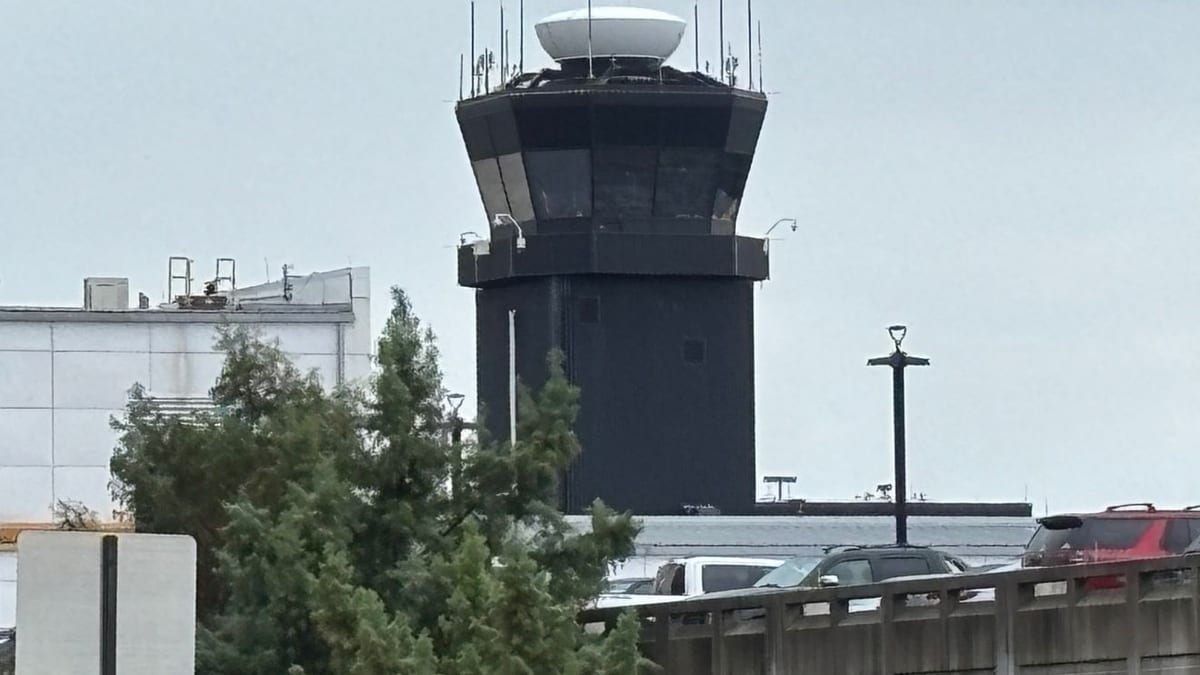
Image by wjla.com
Thunderstorms Prompt Ground Stops Across Washington Region
Publicly available traffic management updates indicate that by late Wednesday afternoon, ground stops were in place at Dulles International, Reagan National, and BWI Marshall as a line of thunderstorms passed through the Washington region. Coverage from local broadcast outlets described inbound flights being held at origin airports and departures paused or metered while air traffic control reduced arrival rates for safety.
Reports from regional newsrooms and airline status dashboards showed that the restrictions were time-limited but significant, with some programs initially set to expire around 6 p.m. Eastern time. Forecasters noted that strong cells and low visibility over the Potomac and Patuxent corridors created conditions in which takeoffs and landings had to be carefully sequenced, reducing overall capacity into the three major Washington-area hubs.
As of midafternoon on April 2, federal airport status pages showed improving conditions at Dulles, but with the system-wide traffic plan still flagging the Washington area as vulnerable to renewed delays if storms redeveloped. Aviation tracking services reflected a mix of cancellations and rolling delays, particularly on shorter regional routes that rely on tight turnarounds.
Airlines Manage Cascading Delays and Cancellations
According to airline operations dashboards and flight-tracking data, carriers serving DCA, BWI, and IAD responded to the constraints with a combination of departure holds, extended taxi times, and preemptive cancellations. Late-afternoon shuttle flights along the Northeast Corridor appeared particularly affected, as limited arrival slots in the Washington area created bottlenecks for aircraft cycling between New York, Boston, and the Mid-Atlantic.
Several carriers also adjusted schedules by swapping aircraft and consolidating passenger loads, a common tactic when weather disruptions are expected to ease by the evening but leave a trail of misaligned crews and equipment. Publicly visible schedule changes suggested that some late-night departures would operate, but with revised times and, in some cases, downgraded aircraft types.
For travelers already in the air when the ground stops took effect, the weather-triggered constraints translated into airborne holding patterns and occasional diversions to nearby airports. Flight data showed some arrivals being routed to secondary fields in the Mid-Atlantic until approach paths into Washington-area airports reopened at reduced but workable rates.
Passenger Experience Compounded by Busy Spring Travel
The weather-related slowdowns landed on top of an already strained travel period, with spring break, Easter, and Passover pushing passenger volumes higher across the country. Recent coverage of security wait times at the three Washington-area airports has highlighted longer lines and periodic crowding at checkpoints, and Thursday’s disruptions added another layer of uncertainty for travelers.
At BWI and Dulles, where a mix of domestic and international flights converge, publicly shared images from terminals in recent days have shown dense gate areas and travelers clustered around departure boards. The latest storms and resulting traffic management programs created new rounds of rebooking requests as passengers sought to salvage connections through other hubs such as Charlotte, Atlanta, and Chicago.
Reagan National, which operates under tight airspace and runway constraints, tends to feel the impact of summer-style thunderstorms quickly, as even short holds can back up operations. With many flights scheduled in short bursts at the top and bottom of each hour, a temporary pause during the afternoon can cascade into evening, leaving some passengers facing overnight delays even after the weather itself has improved.
System-Wide Ripple Effects Expected Into the Evening
National airspace planning documents for April 2 pointed to the Washington region as part of a broader pattern of weather-related disruptions, with potential traffic management programs also noted for New York, Boston, central Florida, and parts of the Midwest. As a result, travelers whose itineraries did not begin or end in the Washington area still faced knock-on effects from capacity cuts at DCA, BWI, and IAD.
Industry analysts tracking the day’s operations noted that when a major metropolitan airspace like Washington slows, aircraft and crews can fall out of position for subsequent flights across the country. This can lead to seemingly unrelated delays hours later in distant markets, particularly for carriers that rely heavily on Washington-area hubs for connecting traffic.
By late afternoon, national delay maps showed clusters of moderate to severe delays radiating outward from the Mid-Atlantic, including on transcontinental routes tied to Dulles and on leisure-heavy services linked to Baltimore. Even if formal ground stops taper near the 6 p.m. hour, residual congestion is expected to linger into the late evening departure banks.
What Travelers Can Expect for the Remainder of the Day
Based on the evolving forecast and published air traffic management plans, travelers heading to or through the Washington region should anticipate the possibility of rolling delays beyond the nominal 6 p.m. timeframe. While the most intense thunderstorms are forecast to move east, lingering showers, low clouds, and airspace congestion may keep arrival and departure rates below normal for several hours.
Publicly available guidance from airlines and airport operators continues to emphasize the importance of monitoring flight status in real time and allowing extra time at the airport. Same-day standby options, reaccommodation through alternate hubs, and voluntary travel waivers may be available on some carriers, particularly for passengers booked on later flights that risk missing onward connections.
Travelers already on the road or in the air may see their plans adjust multiple times as dispatchers, pilots, and air traffic managers balance safety, crew duty limits, and limited gate space. Even as the weather improves, the cumulative effect of several hours of constrained operations at DCA, BWI, and IAD is likely to shape the Washington region’s air travel experience through the end of the day.