

More news on this day
The United Arab Emirates has joined a fast-growing list of nations feeling the strain of a worsening shutdown in the Strait of Hormuz, as suspended tanker traffic, rerouted flights and heightened security concerns trigger fresh turbulence across global tourism, aviation networks and energy markets.
Get the latest news straight to your inbox!
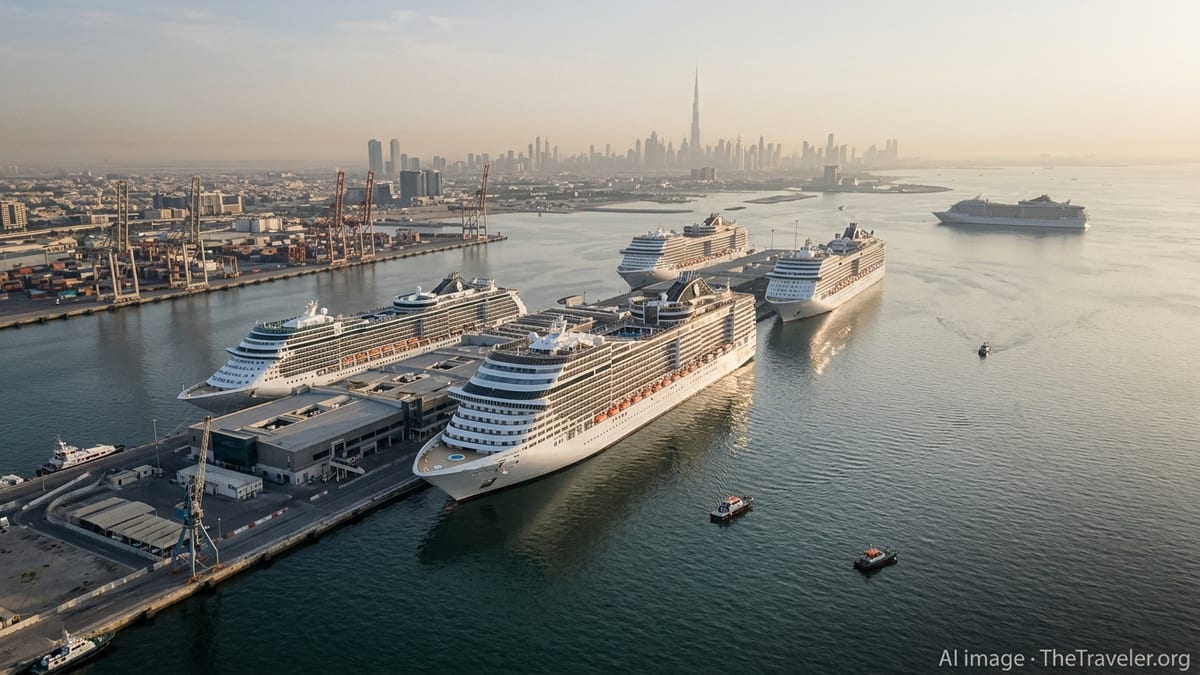
Regional Shipping Standstill Widens as UAE Feels the Strain
The latest disruption centers on the Strait of Hormuz, the narrow maritime chokepoint between Oman and Iran that is critical for moving Gulf oil and liquefied natural gas to global markets. Since late February, heightened conflict and repeated attacks on vessels have prompted major carriers to halt or severely curtail sailings through the waterway, effectively freezing a substantial share of regional energy exports.
Publicly available assessments indicate that most commercial shipping lines have paused transits through the strait due to security risks, even where no formal closure has been declared. Operators are diverting vessels toward alternative terminals on the Red Sea or Gulf of Oman where possible, but capacity constraints mean large volumes of crude and gas remain stranded in Gulf ports.
Coverage from energy and security analysts shows that the UAE, Qatar, Saudi Arabia, Oman and Kuwait are among the countries most exposed to the tanker halt, with the UAE’s key export and bunkering hub at Fujairah also affected by recent drone-related incidents. While the UAE has partial pipeline routes that bypass Hormuz, these alternatives cannot fully offset the scale of the disruption.
Reports from freight and logistics providers describe a cascading effect in surrounding states, including Lebanon and European nations such as the UK and France, which are experiencing tighter fuel supplies and increased shipping costs as cargoes are rerouted or delayed. War-risk insurance premiums for vessels operating anywhere near the Gulf have surged, further disincentivizing commercial movements.
Airspace Restrictions and Flight Rerouting Hit Gulf and European Travel
The shipping standstill has been accompanied by rolling airspace closures and reconfigured flight paths across the Gulf, severely affecting both regional and long-haul aviation. Travel and aviation advisories compiled in recent days note that the UAE, Qatar and Oman have all seen periods of restricted or partially open airspace, forcing airlines to cancel services or adopt longer diversion routes around high-risk zones.
Industry data cited in recent analysis points to tens of thousands of flight cancellations in the first ten days of the conflict alone, with Gulf carriers such as Emirates, Etihad and Qatar Airways among those heavily affected. Many services between Europe and Asia are now operating via northern corridors through Turkey and Central Asia, or via southern arcs around the Arabian Sea, adding two to four hours to typical flight times.
European travelers are increasingly feeling the knock-on effects. Updated travel alerts highlight that the UK and France, along with other European states, are dealing with widespread schedule changes, missed connections and capacity squeezes on alternative routes. Some carriers have reduced frequencies into Dubai, Doha and Muscat, while others have temporarily suspended services into smaller Gulf markets to prioritize core trunk routes.
Travel planners report that these disruptions are especially challenging for countries with large expatriate communities in the Gulf and for tour operators selling multi-stop itineraries that rely on smooth hub connections in Dubai or Doha. With aviation networks still in flux and security assessments being updated frequently, passengers are being advised to expect short-notice changes well into the northern summer season.
Tourism, Hotels and Cruise Lines Brace for Prolonged Shock
The UAE, Saudi Arabia, Qatar and Oman have all spent recent years positioning themselves as global tourism hubs, but the Hormuz crisis is placing that strategy under severe stress. According to travel-industry reporting, Dubai and Abu Dhabi are seeing a rise in last-minute cancellations and rebookings as travelers react to headlines about regional instability, even where local attractions and city infrastructure continue to operate normally.
Hotel analysts note that occupancy patterns are becoming more volatile, with some properties in the UAE experiencing a sudden dip in bookings from European and Asian source markets, while others benefit from passengers stranded in transit or rebooked onto longer layovers. Discounting and flexible booking policies are being deployed to shore up confidence, particularly for high-spend leisure segments and business events.
The cruise sector is also under pressure. Many winter and spring itineraries that ordinarily include calls in Dubai, Abu Dhabi, Doha and Muscat have been altered or replaced with Red Sea, Mediterranean or Indian Ocean alternatives. Operators are weighing whether to cancel future Gulf seasons entirely if shipping and security conditions in and around the Strait of Hormuz fail to improve in the coming weeks.
Within the region, tourism boards are pivoting messaging toward safety, resilience and alternative experiences away from potential flashpoints. However, published economic projections suggest that if closures persist into the peak travel periods later this year, Gulf tourism revenues could face declines reminiscent of major past shocks, even as domestic and regional visitors partially offset lost long-haul demand.
Oil and Gas Prices Surge as Markets Weigh Next Moves
Global energy markets have reacted sharply to the disruption. Benchmark crude prices climbed above the 110 dollar per barrel mark in late March as traders priced in the effective loss of a large portion of Gulf exports, while analysts have warned that a protracted blockade could push prices toward the 150 dollar range if alternative supplies fail to materialize at scale.
Recent updates from OPEC+ meetings describe attempts by Saudi Arabia, the UAE, Oman and others to raise official production targets in May in an effort to signal stability. Yet with tankers unable to move freely through Hormuz, much of this additional output is considered symbolic; barrels have, in effect, “nowhere to go” unless rerouted via pipelines to Red Sea or Gulf of Oman ports.
Financial commentary indicates that this imbalance is already filtering through to refined products and gas markets, with jet fuel, marine fuel and liquefied natural gas prices all moving higher. In Europe, forward contracts for natural gas and electricity have risen as buyers compete to secure alternative shipments from the Atlantic basin, while Asian importers are exploring longer and more expensive routes that avoid the Gulf entirely.
Central banks and economic forecasters are now reassessing inflation and growth trajectories for 2026. Research published in recent days suggests that higher energy costs linked to the Hormuz crisis could reignite global inflation just as many economies were preparing to ease monetary policy, posing fresh challenges for households and energy-intensive industries.
Global Supply Chains Adjust as Risk Management Becomes Priority
Beyond tourism and energy, the Strait of Hormuz disruption is reshaping trade and logistics strategies worldwide. Freight consultancies report that container lines, project cargo operators and airfreight providers are all reconfiguring their networks, with some shippers temporarily suspending movements to and from Gulf ports most exposed to the security risks.
Air cargo operators are shifting freighter routes away from contested airspace, which, combined with passenger flight cancellations, is tightening capacity for high-value or time-sensitive goods. Pharmaceutical, electronics and automotive supply chains that rely on Gulf hubs for transshipment are seeing longer transit times and elevated freight rates.
In response, multinational companies are accelerating contingency plans that had been discussed in earlier geopolitical risk scenarios. These include diversifying energy sources, routing more trade via the Red Sea, East Africa and India, and increasing inventory buffers in key consumer markets to guard against further shocks.
While some analysts argue that a rapid diplomatic breakthrough could normalize flows through Hormuz in the coming weeks, most current risk assessments emphasize that travel, aviation and shipping stakeholders should plan for a protracted period of uncertainty. For now, the UAE’s experience illustrates how quickly a regional shipping halt at one narrow strait can reverberate through airports, hotels and fuel pumps far beyond the Gulf.