

More news on this day
The deepening crisis in the Strait of Hormuz, where tanker traffic has been severely curtailed amid the Iran war, is rapidly cascading into a worldwide wave of fuel rationing, transport cutbacks and price controls that is reshaping how countries, airlines and travelers consume energy.
Get the latest news straight to your inbox!
A Chokepoint Turns Into a Global Shock
The Strait of Hormuz has long been recognized as the most sensitive bottleneck in the global oil and gas system, but the current shutdown has elevated it from strategic risk to immediate shock. Publicly available data from international energy agencies indicate that roughly one fifth of the world’s oil and significant volumes of liquefied natural gas normally transit this narrow waterway. Since early March, a combination of military activity, damaged infrastructure and security concerns has left the corridor “practically closed,” with tankers idling in the Gulf of Oman or diverting onto longer routes.
The supply disruption is now described by major energy institutions as one of the largest in modern history, with estimates suggesting that more than 10 percent of global oil consumption has effectively been knocked offline in recent weeks. Benchmark crude prices have surged above 110 dollars per barrel, with some analysts warning that levels of 150 dollars or even 200 dollars are possible if the closure persists into the early summer. Gas markets have moved in tandem, as stranded liquefied natural gas cargoes tighten supply into Europe and Asia.
Financial research houses report that the initial assumption of a short lived disruption has given way to a market view that factors in a drawn out conflict. Freight and insurance costs for ships transiting the wider Gulf and Red Sea have climbed sharply, effectively adding another layer of price pressure on every barrel that can still move. The result is a squeeze that is no longer confined to energy traders or central banks. It is now being felt directly by motorists, airlines, ferry operators and travelers across multiple continents.
From Price Spikes to Petrol Lines
As wholesale costs soared through March, governments began tapping strategic reserves in a coordinated attempt to stabilize markets. According to published coverage of recent announcements, members of the International Energy Agency have approved the largest collective release of emergency stockpiles on record, amounting to hundreds of millions of barrels. These releases have slowed but not stopped the upward price momentum, prompting a second, more visible phase of response: retail level rationing.
In parts of Europe, where households are still adjusting to previous gas price shocks, national authorities have introduced temporary fuel purchase caps, limiting the number of liters that can be bought per visit at service stations. Local media reports in several countries describe long queues at suburban forecourts and periodic closures as deliveries fail to keep pace with demand. Some regions have reintroduced odd even license plate rules for city driving, a measure more commonly associated with smog control than with supply scarcity.
Across Asia, where dependence on Gulf crude and Qatari gas is especially acute, fuel conservation campaigns are becoming a daily feature of public life. Governments from South to East Asia have ordered reductions in non essential government vehicle use, cut back on subsidized fuel allocations and urged public transport operators to raise efficiency. In countries where price subsidies have long shielded consumers from global volatility, authorities are increasingly turning to quantity based controls and targeted coupons to avoid sudden fiscal strains.
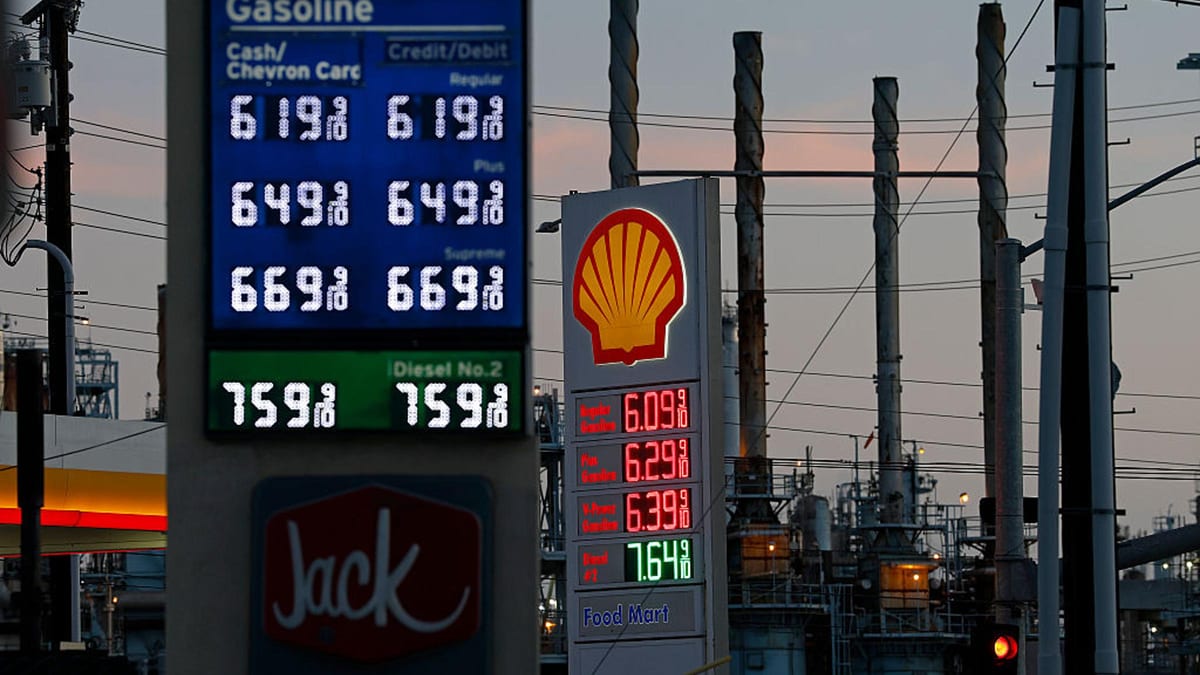
In North America, widespread formal rationing remains limited, but signs of preemptive restriction are growing. Municipal bus agencies and regional rail networks are revising timetables, consolidating off-peak services to conserve diesel. Airport fueling operators are warning airlines of tighter allocations on busy holiday weekends, particularly at coastal hubs that rely heavily on imported jet fuel. Analysts following the United States gasoline market note that some cities are now openly preparing contingency plans for maximum daily fuel purchases if wholesale supply tightens further.
Travel and Tourism Confront a New Constraint
The travel sector, which only recently recovered from pandemic era disruptions, is once again on the front line of a global shock. Airfare comparison platforms are showing sharp increases on long haul routes linking Asia, the Middle East and Europe, reflecting both higher fuel surcharges and the rerouting of flights around sensitive airspace. Airlines that previously boasted ultra long haul nonstops across the Gulf are trimming frequencies, adding technical stops or suspending services altogether when fuel availability at intermediate airports cannot be guaranteed.
In Europe, several rail and bus operators are reporting an uptick in bookings as travelers shift away from short haul flights that have become more expensive or less frequent. Domestic tourism boards are amplifying campaigns that encourage residents to “stay closer to home,” positioning nearby destinations as both cost conscious and climate friendly at a time when international trips are vulnerable to sudden schedule changes. In popular Mediterranean destinations, hoteliers are revising their pricing and energy use assumptions for the coming summer season, anticipating higher utility costs and possible diesel shortages for local transport providers.
For island and remote destinations, the stakes are even higher. Ferries, small regional airlines and supply vessels often depend on a narrow chain of fuel deliveries that leaves little margin for disruption. Reports from parts of the Indian Ocean and Pacific indicate that operators are consolidating sailings, prioritizing essential freight over discretionary passenger travel when fuel shipments arrive short of expectations. Travelers are being advised to build more flexibility into itineraries, travel with longer layovers and be prepared for last minute schedule consolidations.
Urban travelers are also feeling the effects through public transport. City authorities from Latin America to Southeast Asia are weighing whether to raise fares to cover higher fuel costs or to increase subsidies to keep systems affordable for commuters facing broader inflation. Some are opting instead to cut energy use by scaling back air conditioning on trains and buses, dimming non essential station lighting and shortening operating hours on lightly used lines.
Emergency Measures and Emerging Rationing Regimes
While formal, nationwide ration books remain rare, a patchwork of rationing style policies is already emerging across multiple regions. Published reports from energy regulators show that industrial users in several countries have been asked to accept reduced allocations, particularly in sectors where energy intensive production can be deferred or shifted to off peak periods. In some cases, large factories are bidding in auctions for limited gas supplies, leaving smaller businesses facing unplanned shutdowns.
Residential consumers are encountering new restrictions as well. In parts of Europe, incremental steps taken during past winter gas crises, such as thermostat caps and voluntary conservation appeals, are giving way to more binding rules that limit heating or cooling in public buildings and commercial spaces. Utilities in several jurisdictions are warning that rotating interruptions for non critical customers could be deployed if import shortfalls persist into late spring.
Developing economies that rely heavily on imported fuels are often on the sharpest edge of rationing. News coverage from South Asia, Africa and parts of Latin America points to recurring fuel station closures, priority queues for emergency services and public transport, and limits on sales to private vehicles. In some coastal cities, fishing fleets have been ordered to remain in port for part of the week to stretch limited diesel stocks, with direct implications for local food security and tourism related activities.
Financial institutions tracking the crisis suggest that these early rationing regimes may foreshadow more systemic changes if the Strait of Hormuz remains closed for months rather than weeks. Long discussed but repeatedly delayed projects to expand pipelines to the Red Sea, deepen storage capacity and diversify import sources are now being revisited with new urgency. Yet such infrastructure takes years to build, while the rationing measures confronting travelers and households are unfolding on the scale of days and weeks.
Rewriting the Global Energy Map
The strategic response to the Strait of Hormuz crisis is beginning to redraw the world’s energy map. Major Gulf producers are accelerating efforts to reroute exports via existing pipelines to ports on the Red Sea and the Arabian Sea, partially sidestepping the blocked chokepoint. Trade analysts note that shipments once flowing in a direct arc from the Gulf to Asia are increasingly looping through alternative terminals, adding distance, time and cost to each cargo.
Outside the Middle East, other producers are moving to capitalize on elevated prices and increased demand. North American, Brazilian and West African exporters are ramping up output where possible, though industry reports indicate that logistical constraints and previous underinvestment limit how quickly new volumes can reach market. At the same time, liquefied natural gas projects from the United States to Australia are seeing renewed interest as importers scramble to reduce reliance on Gulf based supply chains.
The crisis is also amplifying calls for faster adoption of renewable energy and electrified transport. Policymakers in Europe and parts of Asia are framing the Hormuz disruption as a stark demonstration of the risks associated with concentrated fossil fuel supply routes. Incentive programs for heat pumps, solar rooftops and electric vehicles, some of which had been slated for gradual phaseout, are being extended or expanded in the name of energy security as well as climate policy.
For travelers and the tourism industry, these structural shifts will unfold alongside the immediate rationing pressures now taking hold. If the crisis accelerates investment in cleaner, more diversified energy systems, future journeys may be less vulnerable to the fate of a single strategic strait. For the moment, however, the closure of Hormuz is a reminder that the freedom to move, explore and connect remains tightly bound to the flows of oil and gas that power the global economy.