

More news on this day
Escalating conflict around the Strait of Hormuz and rolling airspace closures across the Gulf are rippling through global aviation, causing widespread delays, cancellations and sharply higher fares on routes linking the Middle East, Europe and Asia.
Get the latest news straight to your inbox!
From Shipping Flashpoint To Aviation Chokepoint
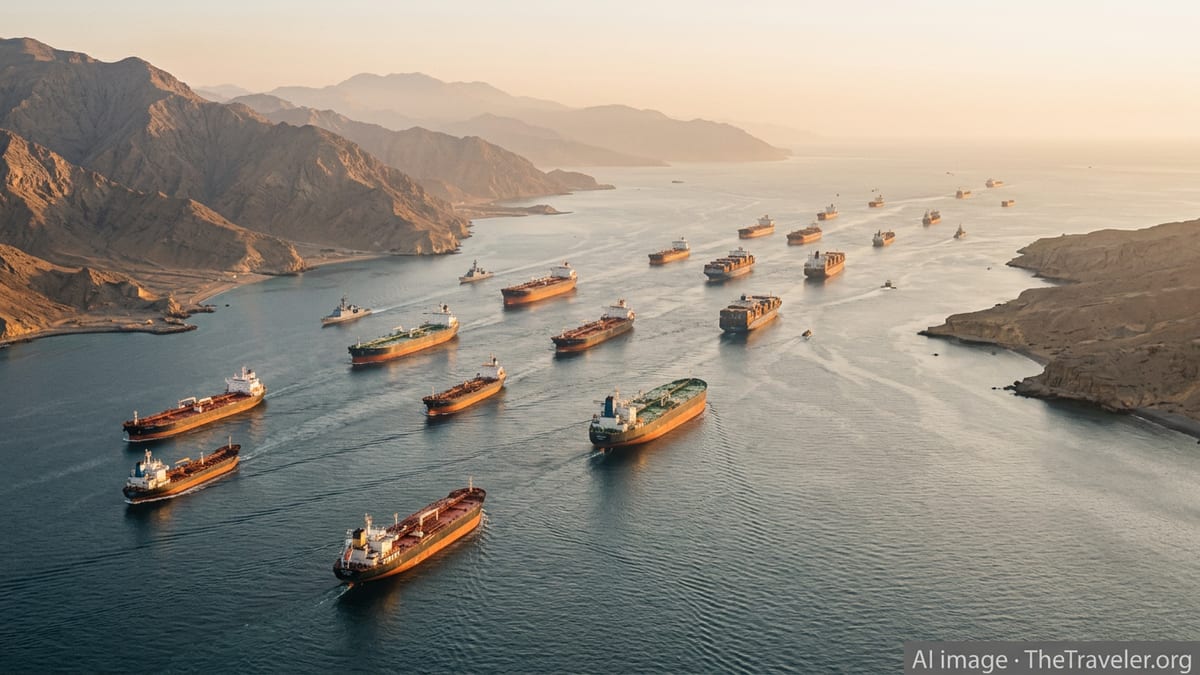
The Strait of Hormuz has long been viewed as a maritime pressure point for global energy markets. Since late February 2026, it has also become a critical fault line for international aviation as conflict involving Iran disrupts both sea lanes and skies in the wider Gulf region.
Published coverage indicates that Iran introduced a tighter, permission-based regime for vessel transits in March, while missile and drone attacks around key energy hubs and coastal infrastructure have raised risk levels for nearby air routes. Reports of tankers struck off Qatar and shipping fires in the Gulf, combined with the formal closure of the Strait to most commercial traffic, have deepened industry concerns over navigational safety.
Simultaneously, large sections of regional airspace over Iran, Iraq, Qatar, Kuwait, Syria and Israel have been closed or heavily restricted since the outbreak of hostilities at the end of February. Aviation trackers and industry analyses show that what was once one of the world’s busiest east–west flight corridors has effectively fallen silent for regular commercial traffic, forcing airlines into longer, more complex routings.
Regulatory advisories from European and other aviation safety bodies continue to urge carriers to avoid large swathes of Middle Eastern skies into April, underscoring expectations that disruption will persist at least in the short term.
Severe Disruption For Gulf Hubs In The UAE, Qatar And Saudi Arabia
The immediate impact is most visible at major Gulf transfer hubs that normally channel passengers between Europe, Africa and Asia. Publicly available airline schedules and port advisories show steep cuts in operations at airports in the United Arab Emirates and Qatar, while Saudi Arabia has absorbed a surge in overflights as some neighboring states closed their skies.
In Qatar, coverage of the conflict describes Hamad International Airport in Doha suspending most regular passenger operations after national airspace was closed on 28 February. Limited emergency and evacuation flights have continued under tight controls, but normal hub activity remains curtailed, affecting Qatar’s role as a key connecting point for travelers between Asia, Europe and the Americas.
In the UAE, Dubai International and Abu Dhabi International remain technically open, yet multiple carriers have trimmed frequencies, re-routed flights away from Iranian airspace and introduced extended block times to accommodate more southerly or northerly paths. Industry data points to thousands of flights cancelled or delayed since late February as airlines rework networks at short notice.
Saudi Arabia presents a more mixed picture. While the kingdom has experienced its own security incidents, publicly available information suggests its airspace has largely stayed open, turning it into a crucial corridor for re-routed traffic between Europe, the Indian subcontinent and Asia-Pacific. This has added congestion to certain Saudi city pairs and contributed to knock-on delays even where flights are still operating.
India, UK And China Feel The Shockwaves
Although the crisis is centered on the Gulf, its aviation impact extends far beyond the region. India, the United Kingdom and China, all heavily reliant on Middle Eastern hubs and air corridors for international connectivity, are seeing rising disruption on key routes.
For India, publicly available airline updates show suspensions of several West Asia routes, including services to Doha, Kuwait, Bahrain and other Gulf points, following the closure of Iranian and Iraqi airspace. Indian carriers have cut dozens of daily flights and shifted capacity toward more stable markets such as the UAE and Saudi Arabia, but the loss of direct links and convenient one-stop connections via Doha and other hubs has left many travelers facing longer, more circuitous journeys.
In the United Kingdom, long-haul connections to destinations in the Gulf, South Asia and Southeast Asia are being re-shaped. European regulators’ guidance to avoid Iranian and adjacent airspace has prompted UK and European carriers to route flights further north over Central Asia or further south via Egypt and the Arabian Sea. This adds hours to some journeys from London to cities such as Delhi, Bangkok and Singapore, and reduces the number of available seats as airlines trim schedules to manage aircraft and crew constraints.
China, a major importer of Gulf energy and a growing outbound tourism market, is also feeling the pinch. Airline and logistics analyses describe Chinese and other Asian carriers rerouting Europe-bound flights away from the central Gulf corridor, instead flying via Central Asia, Russia where permissions allow, or extended southern routes. These changes increase fuel burn and turnaround times, leading to tighter capacity on popular China–Europe and China–Middle East routes, and complicating travel plans for business and leisure passengers alike.
Soaring Airfares And Longer Journeys
The combined effect of closed airspace, damaged infrastructure and extended routings is now being felt in airline pricing. Industry trackers report that jet fuel prices have climbed sharply since early March amid fears of sustained disruption to oil flows through the Strait of Hormuz. At the same time, airlines are incurring higher operating costs on flights that must detour hundreds of nautical miles around restricted zones.
Analysis of schedules and fare data for March and April indicates that carriers have responded by cutting frequencies on some east–west routes and introducing additional fuel surcharges. On many Europe–Asia itineraries that previously connected through Doha, Dubai or Abu Dhabi, travelers are seeing total fares rise by double-digit percentages compared with early February, particularly in economy and premium economy cabins where demand remains resilient.
Reports focused on Asia-Pacific markets suggest that some long-haul fares have risen by around a quarter or more as airlines slash capacity and consolidate passengers onto fewer flights via alternative hubs such as Singapore, Kuala Lumpur, Bangkok and select Saudi and Emirati airports. In parallel, tighter seat supply out of Gulf hubs into India, the UK and China is pushing up prices during peak periods, even as overall passenger numbers fall.
Longer journey times are now common. Detours around closed airspace can add two to four hours to flights between Europe and South or Southeast Asia, complicating connections and increasing the likelihood of missed onward flights. Travelers are also encountering more overnight layovers as airlines adjust departure waves to accommodate revised routings.
What Travelers Need To Know Right Now
For anyone planning trips involving the UAE, Qatar, Saudi Arabia, India, the UK or China over the coming weeks, the key message from publicly available airline and regulatory updates is to expect continued volatility. Schedules are being revised frequently as the situation on the ground evolves and as governments adjust airspace restrictions.
Travelers are advised by aviation regulators and consumer groups to monitor airline communications closely before departure, as flights can shift by several hours or be cancelled outright at short notice. Where possible, booking non-stop services that avoid the most heavily affected airspace, or selecting routings via relatively stable hubs such as those in Southeast Asia, may reduce the risk of disruption, although not eliminate it.
Passengers already ticketed through Gulf hubs should review their itineraries and consider proactively rebooking if airlines are offering flexible change or refund policies. Industry analyses highlight that many carriers have expanded waiver programs for affected routes, though terms vary widely by airline and fare type. Leaving rebooking decisions until the last minute can limit options as remaining seats on alternative flights fill rapidly.
Finally, travelers should budget extra time and cost into trip planning. Longer routings, potential overnight stops and higher fares are likely to remain features of long-haul travel while the Strait of Hormuz crisis and broader Middle East conflict continue to unsettle global aviation patterns. Experts tracking airline schedules and fuel markets suggest that even if tensions ease quickly, restoring previous levels of connectivity through the Gulf’s major hubs could take months rather than weeks.