

More news on this day
The United Arab Emirates has become one of a growing number of countries caught in the widening fallout from the effective shutdown of the Strait of Hormuz, as shipping suspensions spread, aviation networks are redrawn and oil and gas prices surge across global markets.
Get the latest news straight to your inbox!
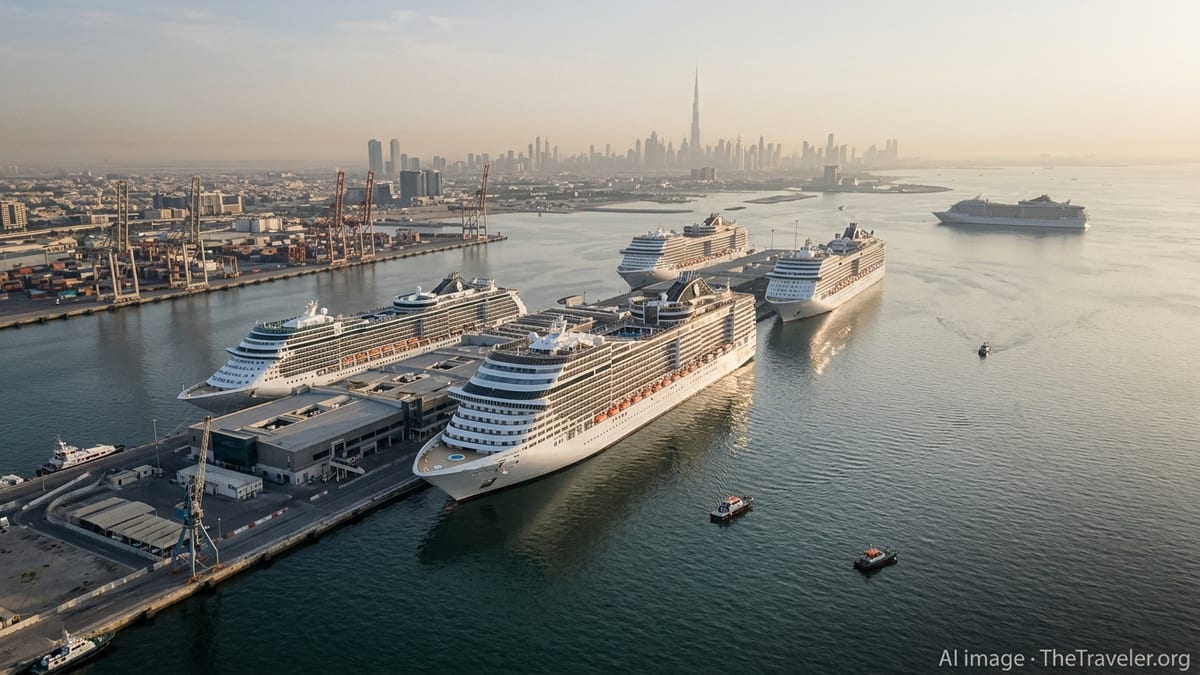
Shipping Standstill Expands From Gulf Waters to Global Trade Lanes
Published assessments indicate that the Strait of Hormuz has been heavily restricted to commercial traffic since late February 2026, following the escalation of conflict involving Iran and military strikes across the region. The waterway, which normally carries roughly a fifth of the world’s oil and a large share of liquefied natural gas exports, has seen tanker movements curtailed or rerouted as operators seek to avoid security risks.
Major container and energy carriers have responded by suspending or sharply reducing transits through the narrow channel between Iran and the Arabian Peninsula. Industry coverage notes that some lines are diverting vessels around the Cape of Good Hope or adjusting schedules to Red Sea and eastern Mediterranean hubs, adding weeks to transit times and raising costs for shippers serving Europe, Asia and the Americas.
The UAE now features prominently in these rerouting efforts. Publicly available information highlights expanded use of ports such as Fujairah and Khorfakkan outside the Gulf, as well as overland links from Saudi Arabia’s Red Sea ports into the wider Gulf region. Analysts describe this as a rapid attempt to redesign regional logistics in real time, as traditional Hormuz-dependent routes remain constrained.
Regional reporting also points to spillover effects in Lebanon, Oman and other coastal states that rely on Gulf-origin fuels, fertilizers and containerized cargo. As carriers reshuffle networks, smaller ports and feeder services are facing congestion, schedule volatility and reduced frequency, creating new bottlenecks even as operators seek to bypass the strait.
UAE, Qatar, Saudi Arabia and Oman Face Tourism and Aviation Disruptions
Countries that built their growth strategies on seamless connectivity, including the UAE, Qatar, Saudi Arabia and Oman, are now contending with overlapping shocks to both sea and air corridors. Travel trade outlets describe mounting disruption to tourism flows as cruise calls are cancelled, regional itineraries are revised and travel advisories flag heightened risks around the Gulf.
Aviation networks, long anchored by hubs in Dubai, Abu Dhabi, Doha and Muscat, have also been forced to adapt. Open-source aviation data and industry analysis indicate that carriers are cancelling or rerouting flights that would normally traverse airspace near the Strait of Hormuz or adjacent conflict zones. This is adding time to long-haul journeys between Europe, Asia and Australasia and constraining capacity on some of the world’s busiest connecting corridors.
Reports suggest that European destinations such as the United Kingdom and France are feeling the impact through delayed arrivals, higher operating costs and more complex routing for airlines that rely on Gulf stopovers. Travel agents in key source markets are adjusting itineraries, steering passengers toward alternative transit hubs or advising flexibility on dates and routings.
In Lebanon and other Eastern Mediterranean destinations, the picture is similarly mixed. While these markets are geographically removed from the chokepoint itself, the combination of higher jet fuel prices, shipping backlog and insurance premiums is feeding into airfares and package costs, raising concerns for the summer travel season and for tourism-reliant small businesses.
Oil and Gas Prices Surge as OPEC+ Seeks to Calm Markets
The closure of the Strait of Hormuz has triggered what international energy observers describe as one of the largest single supply disruptions in modern oil market history. With exports from Saudi Arabia, the UAE, Kuwait and Qatar significantly curtailed or diverted, benchmark crude prices have climbed well above earlier expectations for 2026, while liquefied natural gas prices have spiked in both Europe and Asia.
Recent coverage of OPEC+ deliberations indicates that core producers, including Saudi Arabia and the UAE, have agreed to incremental output increases for April and May. However, analysts stress that higher production targets cannot fully offset a logistics bottleneck in which millions of barrels per day remain stranded or subject to long detours. Storage constraints in some Gulf ports and onshore terminals are compounding the challenge.
In consuming nations such as the UK and France, wholesale gas and power prices have turned sharply higher, reviving concerns about energy affordability and inflation. Market analysis notes that European buyers are competing more aggressively with Asian importers for cargoes that can be sourced outside the Gulf, while some refiners dependent on Gulf grades are looking to West African, US or North Sea alternatives.
For the travel and aviation sectors, these price swings are feeding through to higher fuel surcharges and operating costs. Airlines already coping with rerouting and capacity challenges around the Gulf now face a more expensive fuel environment, which is likely to exert upward pressure on ticket prices and could slow demand on marginal routes.
Gulf States Turn to Bypass Routes and Emergency Logistics
Facing prolonged uncertainty, Gulf governments and port operators are accelerating efforts to bypass the Strait of Hormuz or lessen dependence on it. Background material on regional infrastructure highlights earlier investments such as the Habshan to Fujairah oil pipeline, which allows the UAE to export crude directly to the Gulf of Oman, as well as Saudi Arabia’s pipelines toward the Red Sea.
Logistics analysis suggests that these routes, while helpful, offer only partial relief given the volume that typically passes through Hormuz. New feeder services linking Saudi, Omani and Emirati ports via coastal shipping, and expanded use of overland trucking from Red Sea gateways into the Gulf Cooperation Council market, are being deployed to keep essential goods moving.
Humanitarian logistics briefings further indicate that agencies are monitoring supply lines for food, fuel and medical goods into vulnerable states such as Lebanon and Yemen. Higher bunker fuel prices and longer shipping distances are raising the cost of aid deliveries, while commercial operators prioritize high-value cargo and contracted energy shipments.
Within the UAE, freight market updates report tighter capacity, longer booking lead times and elevated freight rates at ports that can still connect to open ocean routes. Forwarders describe an environment of rolling schedule changes and heightened demand for multimodal solutions that blend sea, air and road to work around the Gulf bottleneck.
Travel Planning in an Era of Persistent Geopolitical Risk
For travelers and the tourism industry, the Strait of Hormuz crisis serves as a fresh reminder of how quickly geopolitical developments can reshape global mobility. The UAE and its Gulf neighbors remain key hubs, but the current disruption underlines the importance of flexible routing, robust contingency planning and clear communication along the travel value chain.
Industry observers advise that airlines, tour operators and corporate travel managers closely track evolving airspace restrictions, port conditions and fuel price trends. In markets such as the UK, France and other European states with strong outbound demand to the Gulf and Indian Ocean, dynamic pricing and schedule shifts are likely to remain a feature of booking patterns in the months ahead.
At the same time, analysts point out that the region’s role in global energy and transport networks means that developments in and around the Strait of Hormuz will continue to resonate far beyond the Middle East. From higher operating costs for cruise lines and carriers to renewed attention on supply security and diversification, the current halt is reshaping both logistics strategies and travel expectations worldwide.