

More news on this day
The United Arab Emirates has joined Qatar, Saudi Arabia, Lebanon, Oman, the United Kingdom, France and other nations grappling with fast-escalating fallout from the effective halt of commercial shipping through the Strait of Hormuz, a crisis now rippling through global travel networks, aviation routes and oil and gas markets.
Get the latest news straight to your inbox!
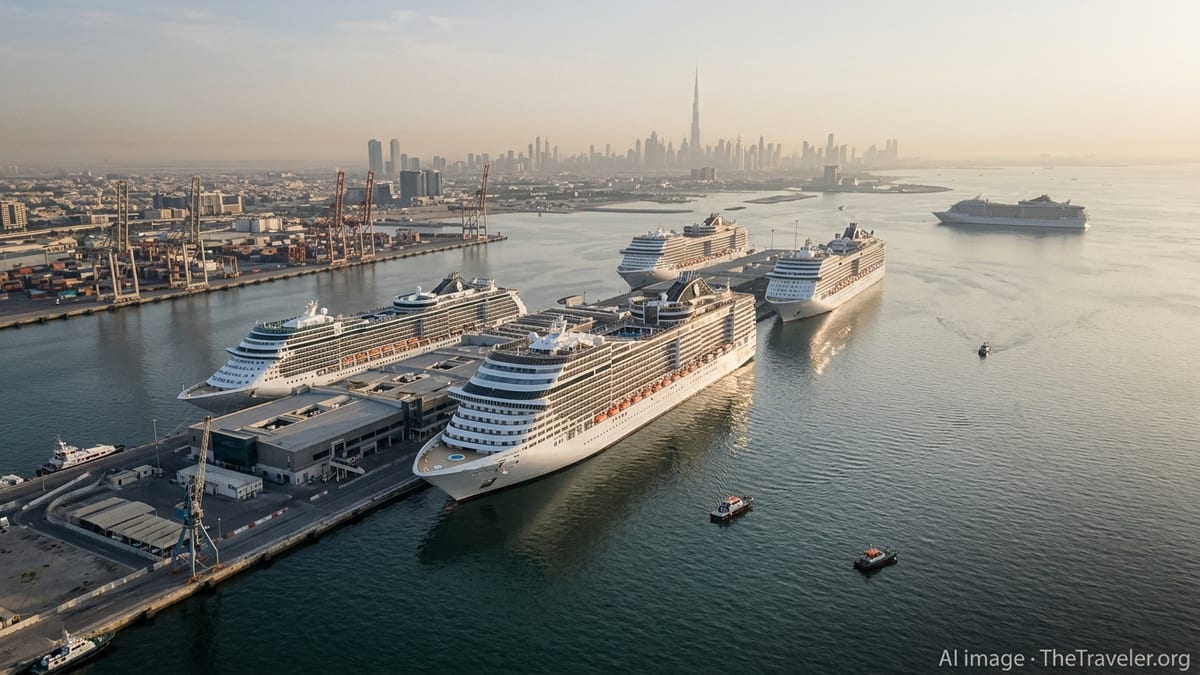
Shipping Freeze Enters Second Month As More Nations Feel the Strain
Commercial traffic through the Strait of Hormuz, one of the world’s most important energy chokepoints, has plunged after a wave of attacks and military escalation around Iran, with analysts describing the corridor as effectively closed to most foreign shipping since early March 2026. Shipping data compiled by maritime intelligence firms indicates that tanker and container movements have fallen by more than 85 percent compared with the same period a year earlier, with only a handful of Iran-linked or specially cleared vessels still transiting.
This abrupt halt has removed a significant share of global seaborne oil and liquefied natural gas from normal trade flows. Industry estimates suggest that roughly one fifth of the world’s oil supply and major volumes of LNG that would normally pass through Hormuz are now stranded or being rerouted via slower, more expensive alternatives. Cargo backlogs at key Gulf hubs and along alternative routes are building week by week.
The impact is no longer confined to the Gulf. European economies such as the UK and France, along with energy-importing nations across Asia and Africa, are now registering the secondary effects in the form of higher bunker costs for ships, longer transit times and growing uncertainty in fuel supply contracts. Market commentary points to a mounting risk that what began as a regional security crisis could translate into a prolonged global trade shock.
Regional media reports indicate that Gulf states including the UAE, Qatar, Saudi Arabia, Oman and Bahrain are simultaneously scrambling to maintain exports and manage domestic fuel needs while dealing with the sudden fragility of a corridor that has underpinned their economic models for decades.
Travel and Tourism Disrupted Across the Gulf and Beyond
The transport shock is hitting airlines and travelers almost as hard as it is hitting tankers. Port and aviation advisories issued since early March describe a patchwork of closed or restricted airspace across much of the Gulf, prompting widespread rerouting of long-haul flights that would normally overfly or serve hubs near the Strait of Hormuz. Some carriers have suspended services into high-risk zones outright, while others are operating on extended routings that can add hours to journey times.
For Gulf tourism powerhouses such as the UAE, Qatar and Saudi Arabia, the timing is especially painful. Travel and hospitality businesses that had banked on a strong spring and summer season are now confronting cancellations, weaker forward bookings and sharply higher operating costs. Reports from regional travel outlets describe tour operators reshaping itineraries away from affected ports, cruise calls being reconsidered or postponed, and airlines trimming frequencies on price-sensitive routes where fuel surcharges have become harder for passengers to absorb.
The disruption is also reverberating across the wider Middle East and Europe. Lebanon, heavily reliant on imported fuel and regional air connectivity, faces renewed pressure on ticket prices and the cost base of its tourism industry. The UK and France, both key source markets for outbound Gulf tourism and major aviation players in their own right, are seeing their carriers adjust Middle East schedules as they navigate security assessments and changing demand patterns.
Travel-industry commentary suggests that while premium and emergency travel is holding up for now, family holidays, budget trips and discretionary business travel are more vulnerable. Operators warn that if airspace constraints and elevated fuel prices persist into the peak summer period, the recovery trajectory of international tourism into and out of the Gulf could be set back by many months.
Oil and Gas Prices Climb as Supply Routes Reroute Around Hormuz
Energy markets have reacted swiftly to the shipping freeze. Benchmark crude prices have surged from pre-crisis levels as traders price in the loss or delay of millions of barrels per day of Gulf exports that would typically sail through Hormuz. Analysts tracking the 2026 Iran war and its economic impact note that the combination of halted tanker traffic and targeted infrastructure strikes has forced producers in the UAE, Saudi Arabia, Qatar, Kuwait and Iraq to shut in production or seek constrained alternative outlets.
Countries with bypass routes are working to soften the blow but cannot fully offset the chokepoint. The UAE is leaning more heavily on its pipeline network to the Arabian Sea coast and on ports such as Fujairah to continue limited exports outside the Gulf. Saudi Arabia is maximizing flows through its Red Sea terminals, routing crude and refined products toward Yanbu and other facilities away from the Gulf. Oman and Iraq, meanwhile, are exploring combinations of overland trucking and pipeline diversions, though these options are costlier and far less scalable than deepwater tanker corridors.
Natural gas and LNG markets are under similar pressure. Gulf producers that normally feed European and Asian buyers through Hormuz-linked export terminals have warned of constrained loadings and potential contractual delays. Some have reportedly declared force majeure on certain shipments, citing security and navigational risks. This has contributed to renewed volatility in European gas hubs and heightened concern among Asian importers heading into the next winter procurement cycle.
Commodity research outlets observe that the crisis is reinforcing a structural shift toward diversification of energy supply away from single-point chokepoints. However, such shifts take years to execute, leaving import-dependent economies exposed in the short term to any further deterioration in Gulf security.
From Jet Fuel to Everyday Prices: Consumer Impact Spreads
In the UAE and neighboring Gulf states, the impact of disrupted shipping and elevated energy prices is increasingly visible in consumer-facing costs. Local economic analysis shows that recent increases in regulated petrol and diesel prices have already fed into headline inflation, with transport costs emerging as a key driver. Publicly available forecasts suggest that fuel-related price rises could add more than a full percentage point to the UAE’s inflation readings in the near term.
Airlines are responding by adjusting fuel surcharges, repricing tickets and, in some cases, reducing capacity on marginal routes. Travel media coverage notes that average fares on some Middle East to Europe and Asia routes have climbed sharply within weeks, as carriers seek to recover higher fuel and insurance costs while absorbing detours around restricted airspace. This rise in ticket prices is beginning to deter cost-sensitive travelers who powered much of the post-pandemic tourism rebound.
Beyond transport, businesses across logistics, construction and retail are bracing for higher import bills as containers take longer, more expensive paths to reach Gulf ports. Supply chain advisories warn that the combined effect of shipping delays and fuel inflation is likely to push up the cost of imported food, consumer electronics and building materials over the coming months. Analysts caution that these second-round effects typically emerge with a lag, meaning households may feel the sharpest squeeze later in 2026.
Governments in the region are watching closely, balancing the need to pass through global price signals with efforts to protect vulnerable households and sustain domestic demand. Some economists argue that relatively low underlying inflation and strong fiscal positions give Gulf states room to cushion the shock through targeted support, though prolonged disruption at Hormuz would test even the most resilient budgets.
Airlines, Ports and Logistics Providers Race to Adapt
Across the aviation and maritime sectors, operators are pivoting rapidly to keep goods and passengers moving around the closed corridor. Gulf-based carriers are redrawing route maps, adding refueling stops and optimizing fleet deployment to concentrate capacity on the most resilient and profitable corridors. International airlines from Europe and Asia are similarly adjusting schedules, in many cases overflying alternate regions or rerouting via safer hubs while monitoring security notices for the Gulf.
Ports and logistics companies in Saudi Arabia, the UAE and Oman are accelerating long-planned diversification efforts. Newly emphasized road and rail corridors linking Red Sea ports to Gulf markets are gaining prominence, as are east coast gateways that avoid the most exposed waters near Hormuz. Industry reports highlight expanded feeder services connecting Gulf ports with Indian Ocean and Asian destinations, attempting to reweave trade routes disrupted by the tanker standstill.
For freight customers, this rapid reconfiguration brings both resilience and complexity. Cargo owners are being asked to accept longer transit times, higher freight rates and more intricate multimodal routings that may involve sea, rail and road legs across multiple jurisdictions. Insurance premiums and security surcharges are adding further layers of cost and documentation to shipments that were previously routine.
Logistics specialists caution that even if a diplomatic breakthrough were to trigger a phased reopening of the Strait of Hormuz, the backlog of delayed vessels, containers and cargoes would take weeks or months to clear. For the travel and tourism sectors, the message is similar: route maps, schedules and prices are likely to remain in flux well beyond the immediate security crisis, keeping travelers and industry planners on edge as the situation evolves.