

More news on this day
Recent flight disruptions in Ghana have left hundreds of travelers stranded in the early hours of the morning, exposing confusion over compensation, care obligations and the limits of passenger rights in West Africa’s fast‑growing aviation hub.
Get the latest news straight to your inbox!
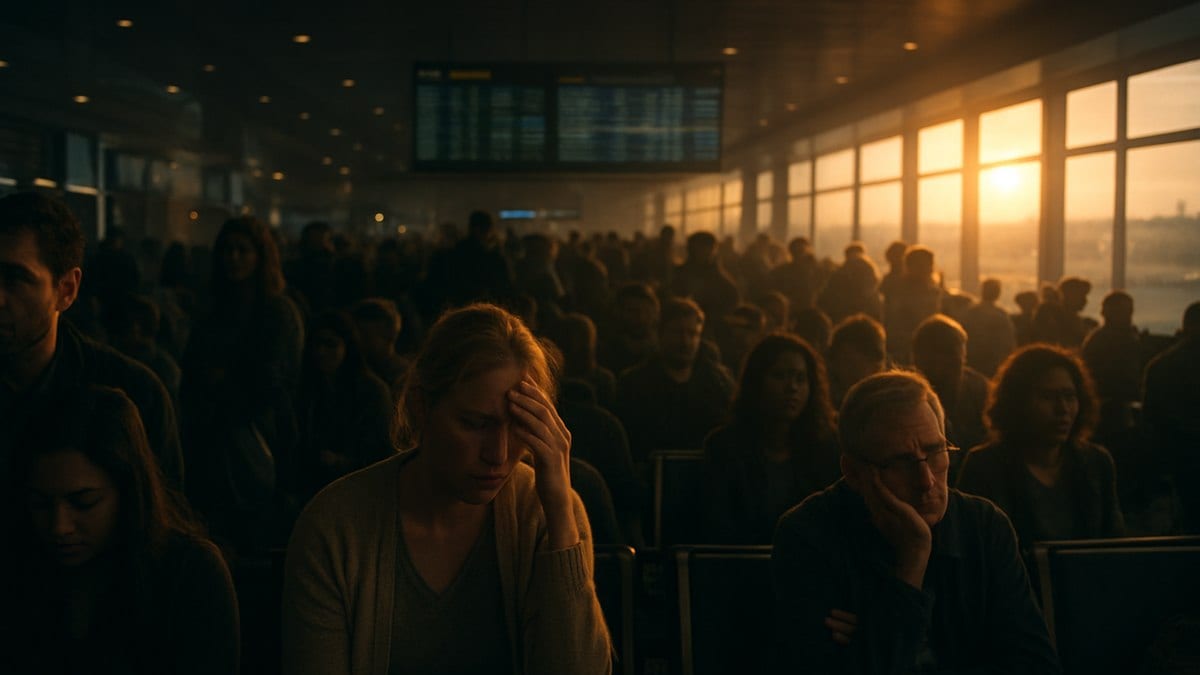
Early Morning Disruptions Leave Travelers in Limbo
Reports from Kotoka International Airport in Accra describe a familiar pattern for many travelers: departures listed as “delayed” for hours, sudden cancellations before dawn and long queues of passengers with little clarity on when, or how, they would reach their destinations. In several recent cases, domestic and regional flights were grounded at short notice, forcing passengers to sleep on terminal floors or scramble for scarce and expensive hotel rooms nearby.
The situation has drawn comparisons with earlier episodes in Ghana in which strikes, operational breakdowns or weather have abruptly halted domestic services, leaving travelers marooned between Accra, Kumasi, Tamale and other key cities. Publicly available coverage shows that such incidents tend to peak around busy holiday periods, when aircraft and crews are tightly scheduled and small disruptions cascade quickly across the network.
For many stranded travelers, the most immediate problem is not simply the delay itself but the lack of information. Accounts shared in Ghanaian media and on social platforms describe announcement boards that change without explanation, conflicting guidance at check in counters and long waits to rebook seats on later departures. Families with children, elderly passengers and travelers connecting to onward international flights can be left especially vulnerable when they receive little practical help beyond a new boarding pass.
These episodes reflect pressure points that are not unique to Ghana. Similar scenes have unfolded in Europe and North America, where weather events and airline staffing shortages have generated days of cancellations. In those regions, however, passenger protection regimes increasingly set out detailed standards for care and compensation, creating clearer expectations for both airlines and travelers.
Gaps in Ghana’s Passenger Protection Framework
Publicly available information on Ghana’s aviation framework shows that the country relies on a mix of domestic consumer law, contract terms in airline tickets and regional rules from the Economic Community of West African States. Unlike the European Union system, which is widely cited for its specific compensation levels and meal and hotel obligations, Ghana does not yet operate a detailed national statute that is widely understood by the traveling public.
As a result, passengers caught in overnight delays or dawn cancellations often report uncertainty about what they are entitled to receive. Some airlines offer food vouchers or hotel shuttles as a matter of policy, while others provide only rebooking, especially when disruptions are attributed to weather, air traffic control issues or safety concerns. Without a clear and easily accessible standard, travelers find it difficult to know when they can push for additional assistance and when an inconvenience must simply be absorbed.
Consumer advocates in the region have repeatedly argued in favor of a more explicit passenger bill of rights for air travelers, pointing to recent high profile disruption events around the world. Editorial commentary and industry analysis frequently highlight the benefits of rules that require proactive communication, automatic refunds for significant schedule changes and standardized compensation when delays are within an airline’s control.
In Ghana, proposals of this kind have not yet coalesced into a single, binding national law dedicated solely to air passenger rights. Instead, the system relies heavily on travelers to file complaints with airlines, escalate unresolved cases to regulators or seek redress through general consumer protection mechanisms and the courts. For many stranded at dawn in a crowded terminal, those pathways can feel distant and impractical.
Regional and Global Lessons on Compensation and Care
Analysts often point to the European Union’s aviation rules as a benchmark for what comprehensive passenger protection can look like. Under that regime, travelers whose flights are cancelled or heavily delayed may be entitled to fixed compensation amounts based on distance, as well as meals, refreshments and hotel accommodation when overnight stays are required. Automatic refunds are standard when a flight no longer operates, and carriers are expected to arrange alternative transport where possible.
In North America, public pressure following repeated high impact disruption events has prompted regulators to build online dashboards comparing airline customer service commitments. While policies vary by carrier, travelers can more easily see which airlines provide hotel vouchers, meal credits or rebooking at no extra charge when a delay is within the airline’s control. This transparency has been used by consumer groups to argue for binding minimum standards rather than voluntary promises.
By contrast, passengers in Ghana and many other African markets operate in a more fragmented legal environment. Some countries have begun drafting clearer aviation consumer rules, but enforcement capacity and awareness remain limited. Regional bodies have discussed harmonized standards for compensation, care and complaint handling, yet implementation has been uneven.
The effect on travelers is tangible. When a dawn flight from Accra fails to depart and hundreds of people face an unexpected night in the terminal, their experience depends largely on the policies of the airline they happen to be flying, the discretion of local staff and whether they can afford out of pocket expenses to secure food, accommodation and alternative transport.
Calls for Stronger Complaint Mechanisms and Transparency
The recurring scenes of stranded travelers in Ghana have intensified scrutiny of how airlines and regulators handle complaints. Publicly available reports note that many passengers struggle to access clear, timely guidance on how to file a grievance or track its progress, particularly when they have already left the airport or traveled onward once their flight eventually departs.
Consumer organizations and legal commentators have suggested that a centralized, user friendly complaints platform administered by the aviation regulator could help address this gap. Such a platform could allow passengers to submit documentation, receive standardized responses and, where appropriate, trigger investigations into repeated patterns of noncompliance by individual carriers or service providers.
Greater transparency around airline performance is another theme gaining traction. Regular publication of statistics on on time performance, cancellations, average response times to complaints and rates of successful compensation claims could help travelers make more informed choices when booking tickets. It could also encourage airlines to invest in better disruption management, including clearer communication protocols during major operational breakdowns.
For Ghana, which positions itself as a regional transit hub, these reforms would serve both consumer protection and competitiveness goals. As more travelers in West Africa gain access to air travel, expectations around reliability and accountability are likely to rise, making robust passenger rights a strategic asset rather than a regulatory burden.
What Stranded Travelers Can Do Now
While policy discussions continue, individual travelers facing disruption in Ghana can take practical steps to protect themselves. Travel specialists commonly advise passengers to document events as they unfold, keeping boarding passes, photographs of departure boards and receipts for meals, transport and accommodation. These records can support later claims with airlines or travel insurers, particularly when delays stretch overnight or lead to missed connections.
Checking ticket conditions before departure can also be critical. Some fares, particularly the lowest priced options, may provide limited flexibility or exclude certain forms of compensation. Others purchased through full service carriers or reputable travel agencies might include additional protections, such as automatic rebooking on partner airlines when flights are cancelled.
Travel insurance remains another important tool, though coverage varies significantly between policies. Passengers are often encouraged by consumer advocates to read the fine print on delay, missed connection and trip interruption benefits, ensuring that policy limits and documentation requirements are understood before boarding.
Ultimately, the recurring image of travelers stranded at dawn in Ghana’s airports has become a visible symbol of broader questions around aviation consumer protection. As more residents and visitors rely on air travel, pressure is likely to grow on airlines, regulators and policymakers to transform the current patchwork of obligations into a clearer, more predictable framework that places passengers at its center.