

More news on this day
Australians stranded across the Middle East are finally beginning to make their way home on a patchwork of commercial and repatriation flights, even as the Albanese government faces mounting criticism that its response to the fast-moving crisis was slow and flat footed.
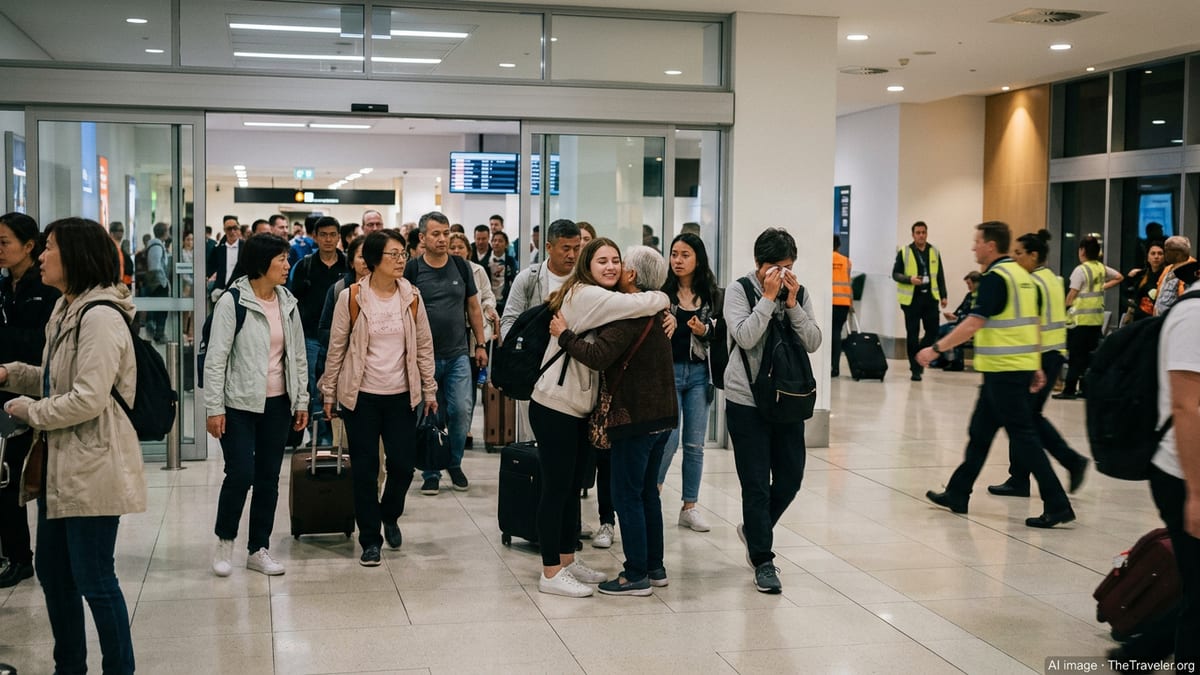
First Flights Touch Down After Days of Uncertainty
After days of airport shutdowns and cascading cancellations, the first flights carrying Australians from the Gulf have begun touching down in Sydney, offering rare scenes of relief amid an escalating regional conflict. An Emirates service from Dubai and a limited number of Etihad and other commercial flights have marked the first significant movements since Iranian missile and drone strikes prompted widespread airspace closures.
Passengers arriving from Dubai described a journey that began with nights sleeping in terminals, rapidly changing departure boards and the constant background of news flashes about missile barrages and diplomatic standoffs. Many had been transiting through the United Arab Emirates en route to Europe, Lebanon or beyond when the conflict flared, cutting them off from both their destinations and their way home.
Despite the arrival of the first planeloads of returnees, officials estimate that more than 115,000 Australians are still scattered across the wider Middle East and Gulf, from the United Arab Emirates and Qatar to Saudi Arabia and Jordan. For them, the resumption of even a handful of flights offers a sliver of hope, but the path home remains complicated, expensive and far from guaranteed.
Travel agencies in Australia report a scramble for any available seats that skirt the conflict zone, with some travellers rebooked on itineraries that detour thousands of kilometres via Southeast Asia. Those with confirmed tickets are clinging to them, while others join waitlists that stretch through the coming weeks.
Government Deploys Crisis Teams and Military Aircraft
Under pressure to show it is actively assisting citizens, the federal government has dispatched six crisis response teams to key hubs in the region, including the United Arab Emirates and Qatar. Foreign Minister Penny Wong said the teams would bolster overburdened consular posts, help Australians navigate patchy commercial options and coordinate with local authorities as airspace restrictions shift day to day.
Canberra has also quietly positioned two Royal Australian Air Force aircraft in the region, a transport plane and a refuelling tanker, as part of a contingency plan to support evacuations if the security or commercial outlook deteriorates further. Officials stress that, for now, these assets are not running mass evacuation flights but could be used to support targeted operations or to move crisis staff and vulnerable citizens.
Even with the military presence, the government’s core message has been that commercial services will remain the primary way out for most Australians. Wong has repeatedly urged travellers to take any safe flight they can secure rather than waiting for government-organised evacuation missions that may never arrive or may reach only a fraction of those seeking to leave.
The scale of the task is daunting. Before the conflict, Australia-bound passengers flowed daily through Gulf super-hubs on Qantas, Emirates, Qatar Airways and Etihad. With Gulf air corridors still constrained and schedules slashed, capacity is a fraction of normal levels. Officials concede privately that many Australians may face days or weeks of delays before they can board a flight home.
Labor Accused of Being ‘Flat Footed’
As flights resume in fits and starts, the political fallout in Canberra is intensifying. Opposition figures have accused the Labor government of being caught flat footed by the speed and severity of the Middle East crisis, arguing that other countries moved more quickly to charter aircraft and deploy military planes explicitly for evacuations.
Critics point to the timing of Australia’s upgraded travel warnings for the region and question why advice to leave was not issued earlier, when the risk of a broader confrontation first became clear. They also note that the United States, United Kingdom, Canada and New Zealand signalled dedicated evacuation flights days before Australia confirmed its own contingency deployments.
Labor ministers reject the suggestion they were slow, insisting that decisions have been guided by security assessments and coordination with allies and regional partners. They argue that rushing to announce large scale airlifts into volatile airspace could have placed both crews and passengers at greater risk, and that supporting the reopening of commercial routes was always going to be the most effective way to move tens of thousands of people.
Nonetheless, the perception of hesitancy is proving politically potent. For many Australians stranded abroad, memories of the long wait for repatriation flights during the pandemic remain raw, and social media has filled with comparisons between the current response and earlier crises in which citizens felt abandoned.
Human Toll at Gulf Transit Hubs
Beyond the politics, the humanitarian and emotional cost of the disruption is playing out in real time at airports across the Gulf. In Dubai, Abu Dhabi and Doha, passengers have described terminal floors lined with improvised beds, families rationing food vouchers and young travellers juggling work calls at all hours as they wait for news of a seat out.
Some Australians were heading to visit family in Lebanon or Iran when the conflict flared, and now find themselves stuck in expensive hotels or stretched across multiple short term bookings near airports. Others were in the region on business trips or holiday stopovers, suddenly facing extended absences from work and school back home.
For those who have made it onto early flights, the mood on board has been a mixture of exhaustion and relief. Passengers arriving in Sydney on the first services spoke of spontaneous applause as aircraft touched down and of quiet, emotional scenes as people called loved ones to confirm they were safe.
Travel insurers and airlines are bracing for a wave of claims and complaints as passengers seek compensation for disrupted itineraries and mounting costs. Many policies exclude coverage for war and civil unrest, leaving travellers reliant on airline goodwill or government pressure to recoup even a portion of their expenses.
What Returning Travellers Can Expect
For those Australians now plotting a route home, travel industry experts advise flexibility and patience. With traditional Europe and Middle East corridors constrained, many itineraries are being re-routed through Singapore, Bangkok, Kuala Lumpur or other Southeast Asian hubs before turning south to Australia. These journeys can add hours in the air and longer layovers, but they avoid the most sensitive airspace over the Gulf and Levant.
Airlines serving these alternative routes are rapidly adjusting capacity, with extra seats added where possible and larger aircraft swapped onto high demand legs. Fares have surged in the near term, reflecting both strong demand and limited supply, but some carriers are offering capped fares or flexibility credits for those whose original itineraries were disrupted by the conflict.
On arrival in Australia, returning travellers can expect heightened questioning at the border about their recent movements, but no special quarantine regime beyond standard health and security checks. Airports are preparing for uneven surges in arrivals as sporadic flights land, with state governments coordinating welfare support for those who arrive without accommodation plans after long, unplanned stays abroad.
For now, officials in Canberra and consular staff across the Middle East say their immediate focus remains on stabilising travel routes, securing more commercial seats and identifying the most vulnerable Australians still stranded. How quickly those efforts bear fruit will shape not only individual journeys home, but also the political reckoning awaiting the government once the current crisis eases.