

More news on this day
Travellers moving through Europe’s biggest airports this weekend are facing a renewed wave of cancellations and missed connections, as overlapping strikes, weather disruptions and chronic staffing issues ripple across the continent’s main hubs.
Get the latest news straight to your inbox!
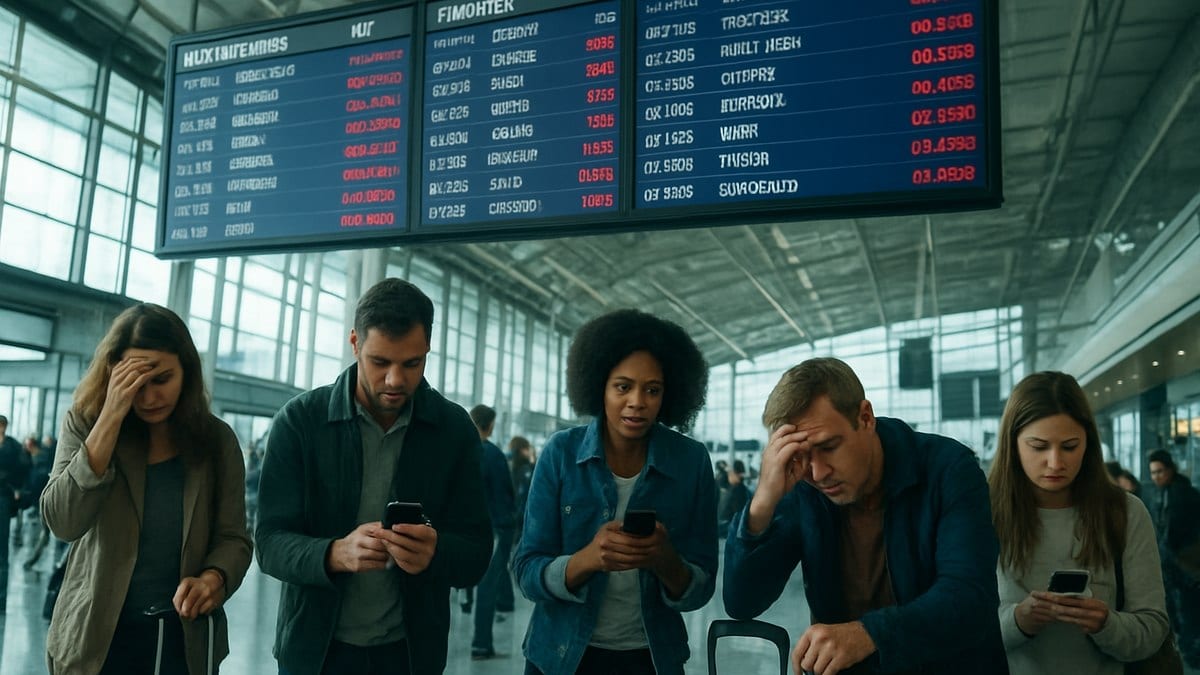
Lufthansa Strike Threatens New Disruptions in Germany
Germany is at the centre of the latest turmoil, with fresh industrial action threatening to paralyse two of Europe’s most important hubs. Publicly available information shows that Lufthansa and its affiliates are bracing for a pilots’ walkout scheduled for April 13 and 14, affecting services from Frankfurt and Munich just as airlines attempt to clear backlogs from earlier disruptions.
According to published coverage, the strike is expected to ground or heavily disrupt a large share of departures from the two airports, with tens of thousands of passengers likely to face cancellations or extensive delays. Frankfurt and Munich function as key connecting points for long haul and intra European itineraries, meaning missed onward flights for travellers heading to Asia, Africa and the Americas.
The planned action follows a four hour nationwide air traffic control stoppage in Italy on April 10 and a separate Germany wide airport strike on April 8, leaving many travellers already part way through disrupted journeys. With crews and aircraft out of position, airlines are still working through a backlog of rebookings, compounding the impact of any new schedule cuts.
Consumer advocates note that under European passenger rights rules, many travellers affected by strike related cancellations on network carriers may qualify for compensation and care such as meals and accommodation, depending on the nature of the dispute and the timing of notifications.
Storm Systems and Congested Skies Magnify Knock On Delays
Weather has added another layer of strain to an already fragile system. Reports from travel rights organisations and aviation data providers indicate that a series of Atlantic storms since late winter has repeatedly reduced airport capacity across parts of the United Kingdom, France, Spain and Portugal, forcing flight restrictions and diversions.
Low visibility, strong crosswinds and heavy rain have been highlighted in recent weeks at London Heathrow and other northern European hubs, pushing air traffic managers to slow operations and prioritise safety. Even short periods of reduced arrivals and departures can quickly cascade into missed slots and rolling delays, particularly at airports that already operate close to maximum capacity.
Eurocontrol’s latest analysis of performance across the region points to so called reactionary delays as the dominant driver of late running flights, where a single problem early in the day multiplies across the network as aircraft and crews miss their next scheduled legs. The agency’s data shows that around one in three flights in the European system now departs late, with average delays in the mid teens of minutes and far higher figures on peak days.
For stranded passengers, this means disruption often persists long after the original trigger has cleared. Travellers whose early morning flights were cancelled by storms or strikes are reporting missed evening departures from entirely different hubs, illustrating how tightly interlinked the continent’s aviation flows have become.
Strikes and Staffing Shortfalls Spread Beyond Germany and Italy
Industrial disputes are not limited to Germany’s cockpit crews or Italy’s air traffic controllers. Recent coverage across European media highlights rolling or threatened actions involving ground handlers, security staff and support workers in Spain, Portugal and other markets, contributing to a patchwork of localised disruption.
In Spain, baggage and ground handling issues at Madrid, Barcelona and Palma in early April have been cited as a factor in widespread delays and congestion, leaving some passengers separated from luggage or forced to queue for hours to recheck bags and clear security. Travel industry reports suggest that while headline cancellations may remain limited on some days, reduced staffing can slow every stage of the airport experience.
In Portugal, a public transport strike affecting access routes to Lisbon Airport on April 12 has made it harder for passengers to reach flights on time, even where services operate normally. Travellers transiting between railway stations and terminals have faced cancellations of metro and bus links, increasing the risk of missed check in and boarding deadlines.
These actions come on top of longer running disputes at ground handling companies in several countries, where unions have raised concerns about staffing levels, pay and working conditions. Even when full walkouts are suspended for talks, partial slowdowns and the threat of renewed strikes can encourage airlines to pare schedules or build in wider buffers, adding to the sense of uncertainty for travellers.
Major Hubs Under Pressure as Traffic Returns to Pre Pandemic Levels
The current wave of disruption is unfolding against a backdrop of near record traffic levels across Europe’s airports. According to data shared by Eurocontrol, overall flight volumes in the region have edged above pre pandemic figures, while capacity, staffing and infrastructure have not grown at the same pace in many locations.
Recent rankings of Europe’s most delay prone airports show that several large hubs, including Frankfurt, Munich and London Heathrow, continue to struggle with punctuality despite operational improvements introduced after earlier crises. Strong demand from both leisure and corporate travellers is straining check in, security screening and baggage systems that were scaled back during the downturn.
Airport operators and airlines have invested in new self service kiosks, automation at border control and more dynamic scheduling tools to smooth peaks. However, reports indicate that bottlenecks persist when traffic builds faster than expected, or when bad weather and labour disputes collide with busy travel days such as spring holidays and trade fairs.
With the northern summer season approaching, aviation analysts are warning that the combination of high load factors, constrained staffing and unresolved labour negotiations could leave little slack in the system. In practice, this means even minor incidents at one hub may continue to strand passengers far beyond the borders of the affected country.
What Travellers Can Expect in the Coming Days
For travellers with imminent flights through European hubs, the immediate outlook remains unsettled. The planned Lufthansa pilot strike for April 13 and 14 sits alongside continuing after effects from the April 8 German airport walkout and the April 10 Italian air traffic control stoppage, forming a chain of events that is still working its way through schedules.
Publicly available travel advisories recommend that passengers with departures over the next week monitor airline notifications closely and verify the status of both outbound and connecting flights before heading to the airport. Same day rebooking options are likely to be limited on popular routes, as remaining seats are already heavily booked.
Passenger rights organisations are reminding travellers that flights departing from European Union and many associated airports fall under EU Regulation 261, which can provide rights to rerouting, refunds and in some circumstances financial compensation. However, eligibility depends on the specific cause of the disruption and whether it is classified as within the carrier’s control or as an extraordinary circumstance.
For now, scenes of stranded passengers bedding down on terminal floors in Frankfurt, Munich, Rome and other key gateways are once again highlighting the vulnerability of Europe’s interconnected aviation network. With storms still rolling across the Atlantic and several labour disputes unresolved, many in the industry expect intermittent turbulence for travellers to persist well beyond this week.