

More news on this day
Europe’s primary budget airlines are entering 2026 with record passenger numbers, shifting networks and fresh regulatory pressure, reshaping how price conscious travelers plan and book flights across the European Union.
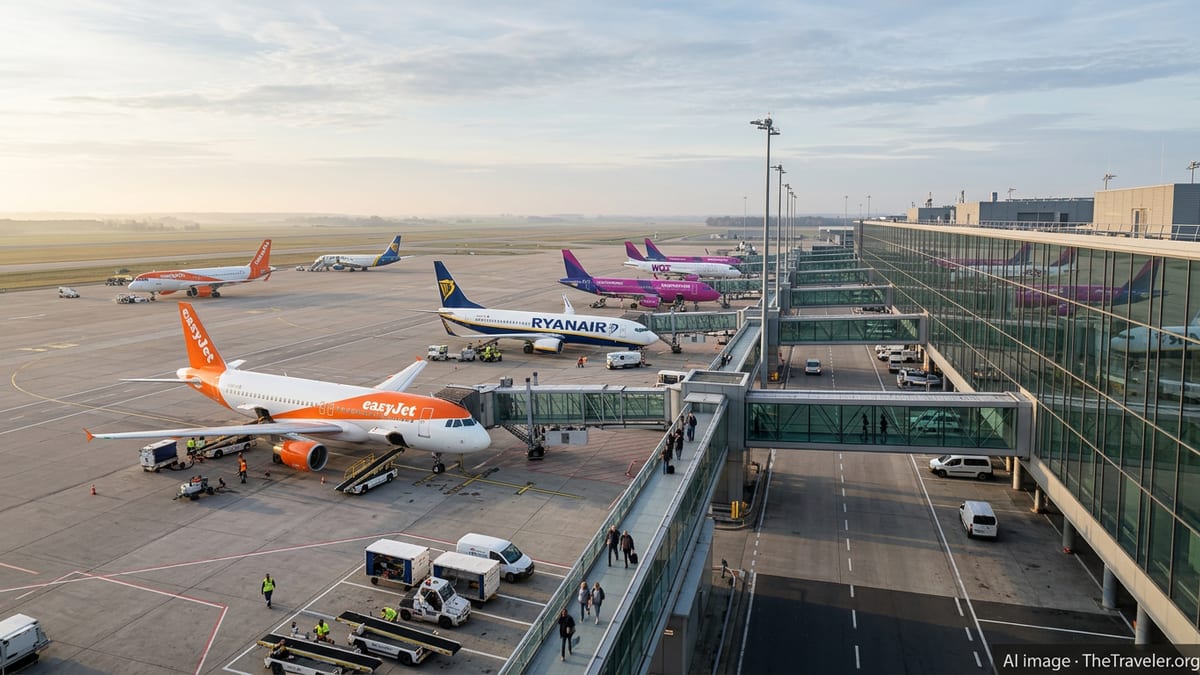
From Aggressive Growth to Targeted Capacity
After a decade defined by breakneck expansion, leading budget carriers such as Ryanair, easyJet and Wizz Air are entering a more selective growth phase across the European Union in 2026. Instead of simply adding volume, these airlines are reallocating aircraft toward the most profitable city pairs and trimming weaker routes, creating a sharper divide between well served leisure corridors and thinner regional links.
Ryanair, which operated more than 3,100 daily flights in 2025, signaled this change by announcing cuts of around one million seats and about 20 routes from its Brussels area winter schedules for 2026 and 2027, citing airport charges and aircraft delivery delays. Similar capacity adjustments have appeared in parts of Spain and other secondary markets, where the airline is reducing presence at airports it considers too expensive or less strategic.
In parallel, rivals are stepping into the gaps. Wizz Air has been expanding aggressively in Spain, adding dozens of new routes from mid sized and leisure focused airports and lifting its Spanish seat offer by double digits between 2024 and 2026. Iberia Express, Volotea and other challengers are also building out point to point networks between regional cities, turning former Ryanair strongholds into more fragmented, competitive arenas rather than single carrier fiefdoms.
For travelers, the result is a patchwork of intense competition on certain cross border routes, particularly from northern Europe to Mediterranean destinations, and fewer ultra cheap frequencies in some regional hubs. Strategic trip planning in 2026 increasingly means checking alternate departure airports and being flexible on days of travel to capture remaining fare bargains.
Secondary Airports, New Hubs and Shifting Geographies
One of the defining features of Europe’s low cost revolution has been the use of secondary airports. That trend is intensifying in 2026 as operators try to sidestep higher fees at flagship hubs while still staying within reach of major cities. Ryanair continues to anchor operations at lower cost fields from Charleroi to Bergamo, but is also trimming exposure where local charges are rising faster than yields.
Wizz Air, by contrast, is using the environment to strengthen its position in both central and southern Europe. The carrier is targeting around 20 percent capacity growth into the financial year ending in early 2026, focusing on maturing markets and airports where fees remain competitive. Its model leans on high aircraft utilization, young A321neo jets and a continued preference for airports that can offer fast turns and low operating costs.
easyJet is pursuing a different geographic strategy, consolidating around primary airports where it believes its brand and schedule depth will support slightly higher fares. Recent annual results highlight modest capacity growth coupled with rising contributions from its holiday arm, an integrated approach that encourages passengers to book flights, hotels and transfers in a single transaction. This is turning traditional low cost point to point flying into a hybrid model more akin to a tour operator.
These diverging approaches mean that in 2026, routes between smaller regional airports are often the domain of ultra low cost specialists, while the largest city airports see a mix of budget and legacy carriers competing for time pressed and higher yielding travelers. Passengers weighing convenience against cost need to consider not just ticket prices, but transfer times from secondary airports into city centers and the resilience of thinner routes to schedule changes.
Price, Ancillaries and the New Definition of “Low Cost”
Headline fares across Europe’s budget sector remain attractive, but the definition of low cost is evolving. With fuel, labor and airport fees all higher than a few years ago, airlines are relying even more heavily on ancillary revenue from extras such as seat selection, priority boarding and cabin bags to maintain margins while advertising minimal base fares.
Ryanair and Wizz Air continue to push unbundled pricing to the limit, with strict cabin baggage rules and a la carte fees that can quickly multiply the total cost of a journey. Consumer investigations in some EU markets into hand luggage charges have so far done little to blunt this strategy, and passengers who do not read fare conditions carefully still risk expensive surprises at the gate.
easyJet, meanwhile, is leaning into packaged products. Its holiday business generated substantial profit in 2025 and is expected to contribute even more in 2026, giving the airline flexibility to hold or even lower entry level fares on certain routes while earning more from hotel and ground products. For travelers willing to consider bundled trips, this can create good value on popular sunshine routes where competition is intense.
The practical implication for 2026 is that comparing flights on price alone is more complex. Strategic flyers need to factor in checked or cabin bag costs, seat fees and payment charges, and weigh them against emerging perks such as bundled transfers or more flexible change policies. The cheapest ticket in the search results is rarely the cheapest overall once these elements are added.
Green Rules, Fleet Renewal and What They Mean for Fares
New European Union climate rules are starting to shape airline strategies more visibly in 2026. Under the RefuelEU Aviation legislation, carriers and fuel suppliers must begin blending minimum shares of sustainable aviation fuel from the middle of the decade, rising in stages toward 2030 and beyond. While current blending mandates are still low, they add cost to a sector built on tight margins and efficiency.
Budget carriers are responding with accelerated fleet renewal and upgauging. Wizz Air is working toward an all A321neo fleet within the decade, which promises lower fuel burn per seat and reduced emissions intensity. Ryanair is pressing ahead with high density Boeing 737 aircraft that increase seats per flight, spreading fuel and airport costs over more passengers. easyJet is phasing out smaller Airbus jets in favor of larger models that deliver similar gains.
In the short term, these investments are helping operators keep unit costs in check even as environmental compliance expenses rise. Over the longer term, analysts expect upward pressure on average fares as sustainable fuel mandates tighten and kerosene taxation debates resurface within the European Union. For 2026 travelers, this creates an incentive to book early on busy routes and to remain flexible, as last minute rock bottom deals may become less common than in the pre pandemic era.
At the same time, the greener fleet profiles of major low cost carriers could strengthen their political hand as they negotiate airport charges and future regulation. Airlines that can demonstrate lower emissions per passenger are likely to argue for preferential treatment, from slots to incentives, which could in turn influence which airports and routes see the most growth in the second half of the decade.
How Travelers Can Fly Strategically in 2026
For passengers, the evolving strategies of Europe’s primary budget airlines are not just industry headlines; they are a playbook for smarter travel decisions. With capacity, pricing and regulation all in flux, 2026 rewards those who understand how low cost models are changing and adjust their planning accordingly.
One clear shift is the importance of airport choice. With some carriers trimming seats at higher cost hubs while expanding at secondary airports nearby, checking departures from alternative fields within reasonable train or bus reach can unlock better fares and schedules. Travelers willing to fly from secondary airports in Belgium, Spain, Italy or Germany, for example, may find more options from Wizz Air, Volotea or Vueling where Ryanair has pulled back.
Another factor is timing. As airlines become more disciplined about capacity, ultra cheap fares are increasingly concentrated in off peak periods and on newly launched routes where carriers are eager to stimulate demand. Monitoring airline announcements for new base openings or seasonal additions can help travelers secure limited introductory prices before routes mature and pricing tightens.
Finally, passengers should look at the full trip value rather than airfare alone. The rise of bundled holidays at easyJet, the dense low fare point to point networks at Ryanair and Wizz Air, and the growing role of sustainability rules all affect reliability, comfort and long term pricing. In 2026, the most strategic flyers in Europe are those who match their own priorities to the distinct strategies of each airline, turning a changing market into an advantage rather than a complication.