

More news on this day
Air travel across Europe has been thrown into fresh turmoil as a wave of strikes, staff shortages and knock-on operational issues forced 219 flight delays and 309 cancellations in a single day, disrupting major hubs from Munich to Brussels and rippling out across Belgium, Denmark, Switzerland and neighbouring countries.
Get the latest news straight to your inbox!
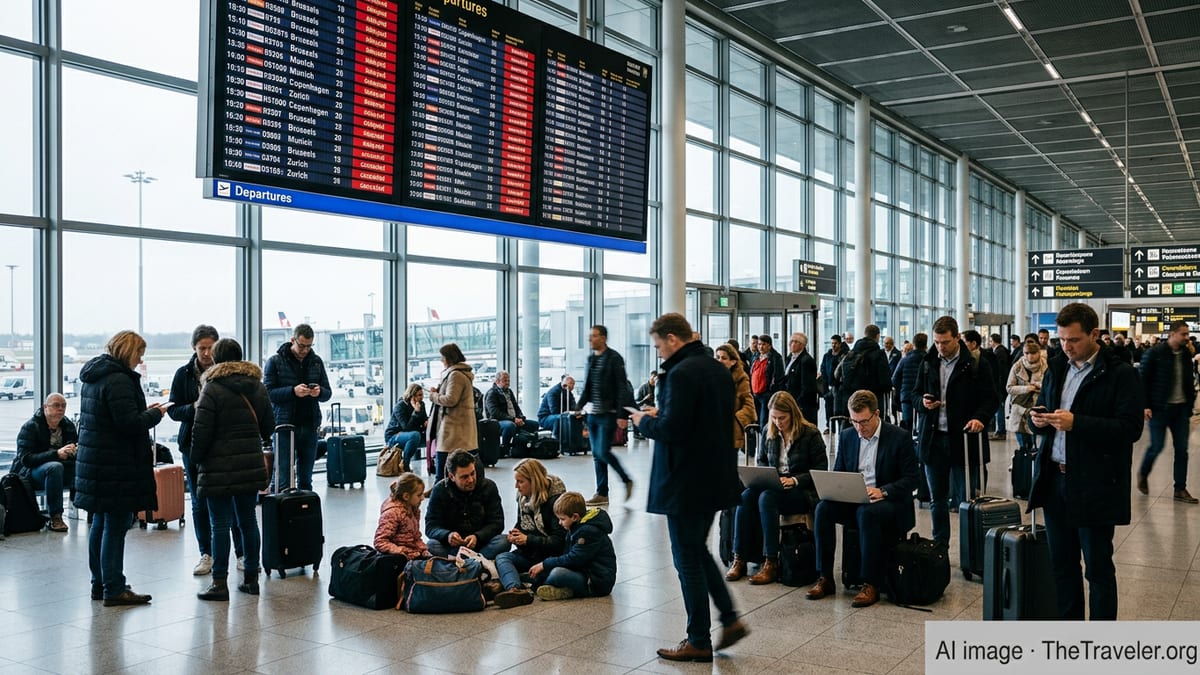
Brussels Departures Halted as Belgian Strike Bites
Belgium found itself at the epicentre of the latest disruption as a 24-hour national strike on Thursday, 12 March 2026 led authorities to halt all departing passenger flights from Brussels Airport. The country’s second-largest gateway, Brussels South Charleroi Airport, was fully closed to commercial traffic, forcing thousands of travellers to abandon or radically rework their plans at short notice.
Inside the terminals, departure boards quickly turned red with cancellations, while arriving flights were trimmed or rerouted as airlines struggled to reposition aircraft. Travellers reported long queues at ticket counters as ground staff attempted to rebook disrupted passengers on the limited services still operating into Belgium from nearby hubs.
The shutdown in Brussels added strain across the wider network. Airlines used alternative airports in neighbouring countries to keep connections alive, funnelling passengers through Amsterdam, Paris, Frankfurt and Zurich and creating new bottlenecks on already heavily booked services.
For many travellers, the timing could not have been worse. The strike coincided with late-winter city breaks and business travel peaks, leaving visitors stranded mid-journey and forcing some to abandon weekend trips altogether as onward connections disappeared.
Germany’s Hubs Struggle as Lufthansa and Partners Cut Schedules
In Germany, operational stresses centred on Frankfurt, Berlin Brandenburg and Munich, where a mix of knock-on delays and targeted cancellations hit some of Europe’s busiest hubs. Lufthansa, already under pressure after a series of industrial actions earlier in the year, trimmed dozens of departures and warned customers to expect last-minute changes.
Munich in particular saw a wave of early-morning cancellations cascade through the day’s schedule. Passengers reported abruptly scrubbed flights to Scandinavian and Central European cities, triggering missed connections for long-haul services and lengthy queues at rebooking desks as airline staff attempted to consolidate passengers onto remaining flights.
The German disruptions compounded the impact of the Belgian strike. With Brussels effectively off the map for outbound traffic, airlines leaned more heavily on Munich and Frankfurt to absorb rerouted passengers, only to find those hubs themselves hampered by crew and aircraft availability issues after weeks of irregular operations.
Carriers urged passengers not to travel to the airport without confirmed, operating bookings and advised those with flexible itineraries to postpone non-essential trips. Nonetheless, by midday, terminals were crowded with travellers seeking alternatives, many facing overnight stays in airport hotels.
Ripple Effects Felt in Denmark, Switzerland and Across the Nordics
Further north, knock-on disruption spread into Denmark and Switzerland as carriers reworked intra-European rotations. Copenhagen Airport handled a rising number of diverted or retimed flights as airlines sought to bypass constrained hubs, leading to boarding delays, gate changes and sporadic cancellations on short-haul routes.
In Zurich and Geneva, Swiss and partner airlines battled to keep schedules intact amid aircraft and crew displacements created by events in Germany and Belgium. While the Swiss airspace and airports remained open, passengers experienced rolling delays as inbound aircraft arrived late from disrupted sectors, particularly those linked to Munich, Brussels and major UK airports.
Regional connections across Scandinavia and the Alpine region proved especially vulnerable. Short turnaround times left little room for recovery once morning services slipped, resulting in a chain reaction where late arrivals forced airlines to cancel or combine later departures to reset operations for the following day.
Travellers reported missed ski transfers, cancelled meetings and disrupted family visits as relatively modest schedule changes in one country translated into missed links two or three flights further along their journeys.
British Airways, Ryanair and Other Carriers Juggle Delays
Alongside Lufthansa and its partners, other major European airlines found themselves on the front line of the turmoil. British Airways, Ryanair, KLM, Air France, Swiss and several low-cost carriers all logged significant numbers of delayed services as they navigated congested airspace and reduced capacity at key hubs.
In the United Kingdom, airports including London Heathrow, Manchester and Edinburgh saw a spike in delays linked to revised routings and crew availability. British Airways implemented tactical cancellations and warned customers that even flights listed as operating could be subject to substantial departure time changes.
Ryanair, which relies heavily on rapid turnarounds at secondary airports, faced particular challenges keeping aircraft on time when upstream sectors were held on the ground or forced into longer flight paths. Passengers on popular city-pair routes such as London to Copenhagen or Brussels to Milan reported delays stretching well beyond the three-hour threshold recognised under European compensation rules.
While many flights did eventually operate, the compressed recovery window meant crowding at boarding gates and long waits at baggage carousels, as ground handling teams worked through backlogs created by hours of earlier disruption.
What Travellers Can Expect in the Coming Days
Operational experts caution that the effects of the latest wave of delays and cancellations are unlikely to disappear overnight. With aircraft and crew scattered across the continent and airport slots tightly controlled, airlines may need several days to fully restore normal patterns on affected routes.
Passengers booked to travel through Brussels, Munich, Frankfurt, Copenhagen, Zurich or major UK hubs in the next 48 hours are being encouraged to monitor their flight status closely and sign up for airline notifications. Many carriers are offering fee-free rebooking or travel vouchers for those willing to shift to quieter days or alternative routes.
Consumer advocates are also reminding travellers of their rights under European regulations, which in many cases entitle passengers to care such as meals and accommodation during long delays, and in some circumstances financial compensation when disruptions are within the airline’s control.
For now, Europe’s aviation network is working to catch up after yet another turbulent day, as airlines, airports and air traffic managers attempt to balance stretched resources with growing passenger demand at the tail end of the winter travel season.