

More news on this day
Thousands of passengers were stranded at Abu Dhabi International Airport on Saturday after a sudden partial closure of UAE airspace, following coordinated US and Israeli strikes on Iran that triggered sweeping flight cancellations and an abrupt halt to many departures.
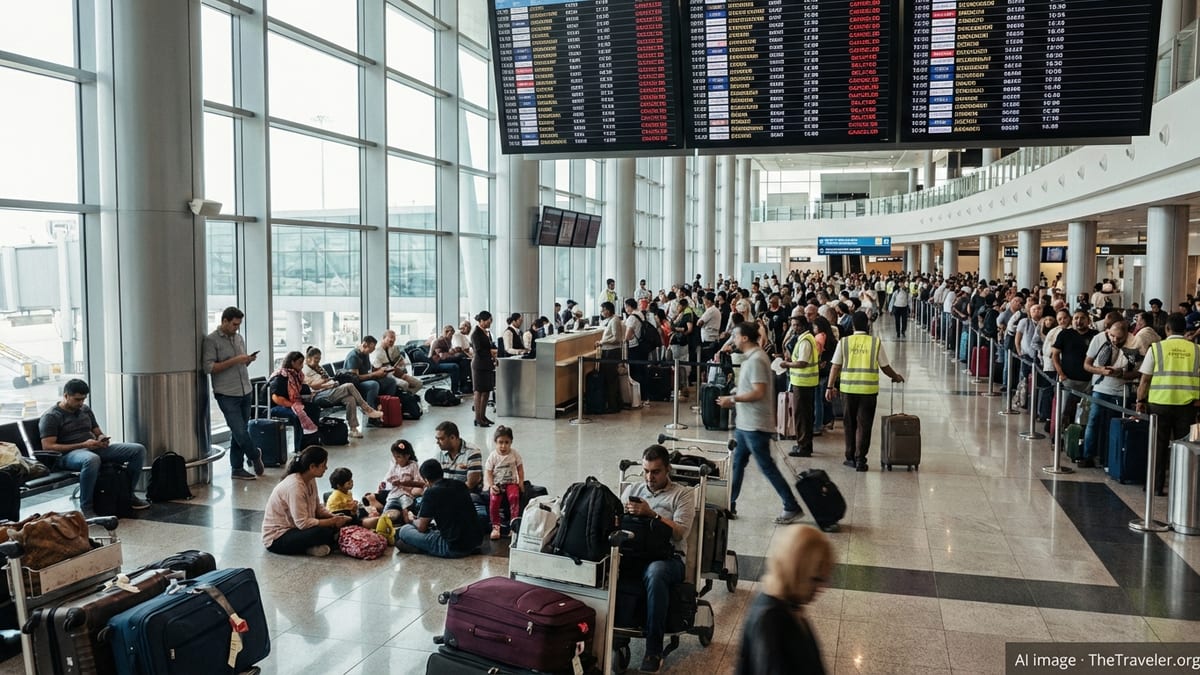
Airspace Closure Freezes Departures From Key Gulf Hub
The UAE’s General Civil Aviation Authority announced a temporary and partial closure of national airspace on February 28 after the United States and Israel launched strikes on targets inside Iran, a move that rapidly rippled through one of the world’s busiest aviation corridors. While officials described the measure as precautionary, aircraft movements in and out of Abu Dhabi fell sharply within hours, leaving departure boards dominated by cancellations and indefinite delays.
Abu Dhabi International, a major transfer hub linking Europe, Asia and the Americas, saw outbound services to Iran and Israel halted, with additional long-haul routes disrupted as airlines reassessed flight paths to avoid newly restricted skies. Airport staff said operations were technically ongoing, but that the effective closure of key airspace corridors meant many flights could not safely depart on schedule, creating scenes of congestion in departure halls and at transfer desks.
Local authorities stressed that the airspace restrictions were introduced following a security and risk assessment carried out with international partners, underscoring that passenger and crew safety outweighed the economic cost of grounding aircraft. Officials indicated the measures would be reviewed regularly, though they offered no precise timeline for a full reopening, contributing to uncertainty for travelers attempting to leave the country or connect onward.
Inside the terminals, the impact was immediate and visible: snaking queues at airline counters, crowds forming around flight information displays, and tired families reclining on luggage trolleys as they waited for clarity on when, or if, they would be able to move on. Many transit passengers, caught mid-journey between continents, expressed frustration at being stranded with little advance warning.
Airlines Cancel, Reroute and Suspend Routes
Regional and international carriers scrambled to respond as news of the strikes and subsequent airspace closures spread across the Middle East. Abu Dhabi-based and regional airlines canceled services to multiple Iranian cities and to Tel Aviv, while curtailing or rerouting other routes that would normally transit affected airspace. Several carriers introduced extended flight times via alternative corridors, adding hours to journeys and further stretching already strained schedules.
European low-cost carrier Wizz Air said it had suspended flights to and from Abu Dhabi, Dubai, Israel and Jordan until early March, citing the evolving security situation and the need to protect passengers and crew. Germany’s Lufthansa group halted operations to Tel Aviv and several other regional destinations and paused flights to Dubai for the weekend, adding to the sense of a network in disarray for travelers relying on Gulf hubs as key waypoints.
Airport websites across the UAE reflected a rolling wave of cancellations through Saturday, including departures that had been scheduled well into the evening. Some aircraft already en route to Abu Dhabi were diverted to alternative airports or ordered to return to their points of origin as restrictions took effect, leaving passengers facing unexpected overnight stays in cities they had not planned to visit.
Aviation analysts warned that the knock-on effects of the closures could persist for several days even if restrictions are eased quickly, as airlines battle to reposition aircraft and crew while clearing backlogs of stranded travelers. Longer diversions around closed airspace will also push up fuel costs and complicate scheduling for long-haul operations connecting Europe and Asia.
Scenes of Confusion and Long Waits for Stranded Travellers
Inside Abu Dhabi International’s Terminal 1 and Terminal A, passengers described a day of confusion as departure times slipped repeatedly before flights were finally marked as canceled. With hotels across the capital quickly filling up, many travelers resigned themselves to spending the night on benches, gate seats and terminal floors as they waited for rebooking options to materialize.
Families traveling with young children were among the hardest hit, as meal vouchers and hotel arrangements took time to organize amid the sudden surge in demand. Some visitors reported difficulty obtaining clear information in the early hours of the disruption, saying hotline wait times stretched for more than an hour as thousands sought answers from airline call centers at once.
Airport staff distributed water and snacks in some gate areas as lines grew at customer service desks. Volunteers and ground-handling teams worked through the afternoon, attempting to prioritize elderly passengers and those with medical needs for hotel transfers or earlier rebooking. Despite those efforts, many travelers said they braced for delays extending well beyond 24 hours given the volume of cancellations.
With major airports around the region simultaneously affected by airspace shutdowns or restrictions, options for rerouting via nearby hubs such as Doha, Muscat or Riyadh were limited. Travel agents in the city reported that alternative itineraries, where available, often involved lengthy detours through Europe, Central Asia or Africa, and higher last-minute fares.
Passenger Rights, Refunds and What Travellers Can Expect
Legal experts noted that while airlines may be exempt from paying compensation for disruptions caused by extraordinary security events or conflict, passengers are still generally entitled to care and assistance, including meals, reasonable accommodation and transportation between the airport and hotels while they await new flights. Refunds or rebooking on the next available service should also be offered to those whose journeys have been canceled entirely.
In practice, how quickly stranded travelers receive that support depends on each airline’s contingency planning and local capacity. Carriers with a large presence in Abu Dhabi typically have standing agreements with nearby hotels and transport providers, enabling them to move passengers out of terminals more quickly. Smaller or foreign airlines may need longer to put arrangements in place, particularly during high-demand periods when hotel rooms are scarce.
Travel advisers urged passengers to retain all receipts for out-of-pocket expenses such as meals, local transport and emergency accommodation, as these may be reimbursable depending on the airline’s policies and the applicable aviation regulations. They also recommended that travelers keep boarding passes and booking confirmations, which can be needed when filing claims later.
With the situation described by authorities as fluid, passengers scheduled to depart the UAE in the coming days were advised to monitor their flight status frequently, ensure their contact details are updated in airline booking systems, and avoid heading to the airport until their departures are confirmed as operating. Many airlines have activated flexible waiver policies, allowing free date changes or, in some cases, full refunds.
Regional Tensions Cast a Shadow Over Gulf Connectivity
The disruption at Abu Dhabi International comes as part of a broader shock to Middle East aviation, with Israel, Iran and several neighboring states imposing temporary airspace closures or severe restrictions after the strikes. For years, Gulf hubs have marketed themselves as politically stable, high-connectivity gateways between East and West; Saturday’s events underscored how quickly that connectivity can be tested when regional tensions escalate.
Travel and tourism experts warned that if the confrontation between Iran, Israel and the United States drags on, it could dampen demand for leisure and business travel across the wider region, particularly for visitors uneasy about transiting near potential flashpoints. Tour operators reported a spike in calls from clients seeking to reroute upcoming holidays away from the Middle East or to delay travel until the situation becomes clearer.
At the same time, industry figures stressed that the Gulf’s aviation sector has repeatedly demonstrated resilience in the face of geopolitical shocks, from earlier regional conflicts to health crises. Once airspace fully reopens and military activity recedes, they expect airlines to move quickly to restore schedules and reconnect disrupted city pairs, though rebuilding passenger confidence could take longer.
For now, thousands of travelers in Abu Dhabi and beyond remain in limbo, watching departure boards and phone notifications for signs that flights are beginning to move again. Until regional skies are fully declared safe, many journeys through one of the world’s most important air crossroads are likely to remain on hold.