

More news on this day
Rail passengers using the Wolverhampton–Stafford corridor are facing significant disruption after strong winds and wider weather warnings across the UK prompted timetable changes, reduced services and renewed calls for travelers to review their plans.
Get the latest news straight to your inbox!
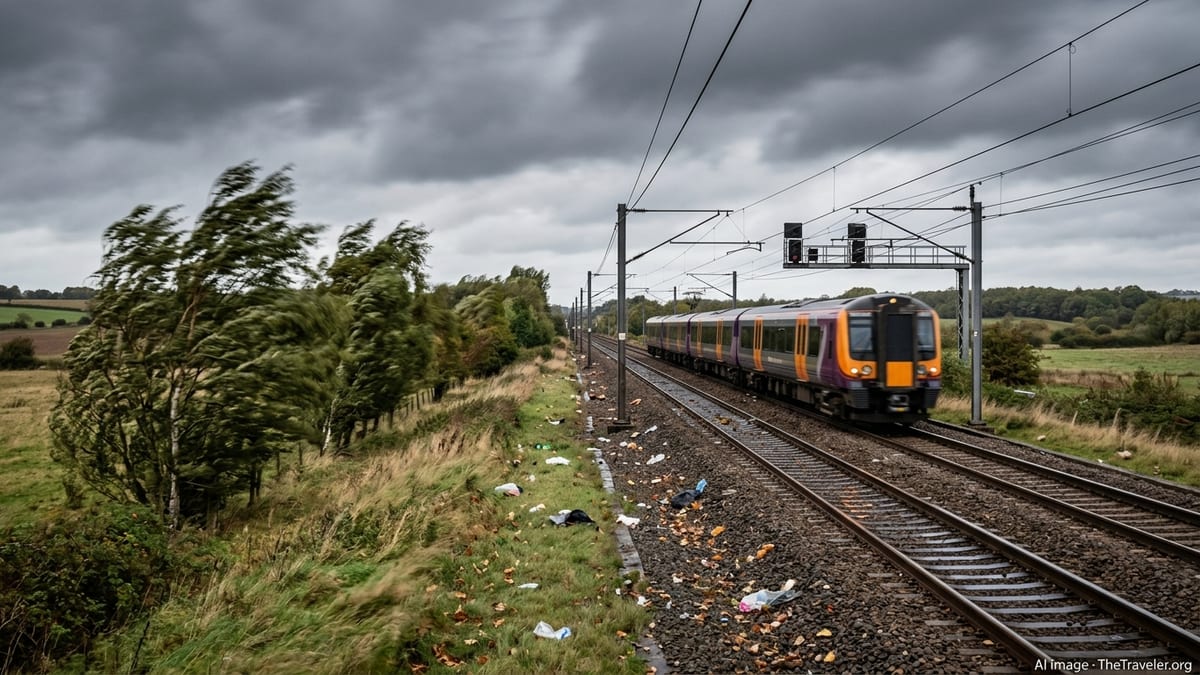
Weather Warnings and Impact on the West Midlands Corridor
Recent bouts of unsettled weather across the United Kingdom have brought strong winds to the West Midlands, coinciding with national yellow wind alerts that extend across parts of northern England, the Midlands, north Wales and sections of Scotland. Publicly available information from meteorological services and media coverage indicates that gusty conditions have increased the risk of debris on the tracks and short-notice speed restrictions on exposed sections of railway.
Although the Wolverhampton–Stafford route is relatively short, it forms part of the busy north–south spine linking Birmingham with the wider West Coast Main Line. Strong crosswinds and passing showers over open stretches north of Wolverhampton have heightened concerns about line-side vegetation, overhead line stability and the potential for fallen branches. Network-wide resilience documents highlight strong winds among the top three weather-related risks for this part of the network, underlining the vulnerability of both overhead equipment and older trees bordering the line.
Weather summaries for early 2026 describe an active Atlantic pattern associated with a succession of low-pressure systems, including named storms that have already triggered high-impact wind warnings elsewhere in the country. These systems have periodically pushed bands of strong winds across central England, bringing conditions that can force rail operators to introduce precautionary speed limits or temporarily suspend services when gusts exceed safe operating thresholds.
The combination of gusty winds, saturated ground and intermittent showers has also increased the likelihood of minor flooding on approach tracks and within cutting sections, especially where drainage is already under pressure from a wet winter. Such factors, while sometimes localised, can have knock-on effects along the Wolverhampton–Stafford corridor as trains are re-routed, delayed or turned short to keep the wider timetable moving.
Service Changes and Cancellations Along the Wolverhampton–Stafford Route
Passengers on the Wolverhampton–Stafford route are encountering a mix of planned engineering alterations and weather-sensitive adjustments, which together are shaping a more fragile service pattern. Timetable documents for March 2026, published by long-distance operators, include revised schedules that list altered calling patterns through Wolverhampton and Stafford, reflecting both infrastructure works and the need for greater operational flexibility during periods of adverse weather.
One operator’s updated timetable for mid-March shows modified departure times and occasional omissions of Wolverhampton or Stafford stops on some services, with notes indicating that passengers may need to use alternative trains or routes at short notice. Separate communications on planned changes refer to days when trains will not call at Wolverhampton or when connections between Wolverhampton and Stafford are reduced, limiting options for those relying on frequent local services.
Cross-industry travel information indicates that, during strong wind events, rail companies increasingly adopt a conservative approach to operations across the West Midlands and wider North West and Central regions. This can include running fewer trains to reduce congestion, imposing lower speed limits through vulnerable sections, and occasionally suspending services during the peak of a storm to allow safety checks on tracks and overhead lines.
In practice, the effect for travelers between Wolverhampton and Stafford can range from slightly extended journey times to full cancellations of particular services. When strong winds coincide with ongoing track or signalling works, replacement bus services may be used for all or part of the journey. However, high-sided road vehicles can also be affected by the same wind conditions, which limits the reliability of road-based alternatives and underscores the challenge of maintaining robust connectivity along this corridor.
Advice for Travelers Facing Disruption
With the weather pattern remaining changeable, travelers using the Wolverhampton–Stafford route are being urged, through publicly available travel updates and operator notices, to plan carefully and allow extra time. Journey planners and operator timetables are being updated frequently to reflect short-notice changes, and passengers are encouraged to check for the latest information immediately before departing for the station.
Rail industry guidance for periods of strong wind recommends that passengers remain alert to platform announcements and onboard information screens, which may advise of altered stopping patterns, platform changes or instructions to use alternative services. Travelers making connections at Wolverhampton or Stafford, particularly to longer-distance services toward London, Manchester or Scotland, are advised to consider earlier departures where possible to preserve connection times if delays occur.
Public messaging also highlights the importance of preparing for longer waits on platforms or at intermediate stations if services are disrupted. This includes carrying water, warm clothing and any essential medications, especially during early morning or late evening journeys when temperatures can be lower and replacement transport may take longer to arrange. Those with reduced mobility or additional accessibility needs are advised to contact rail assistance services in advance on days when adverse weather and known engineering work are expected to coincide.
Passengers holding advance tickets for affected services may be able to use other trains at similar times or request delay compensation under existing rail industry schemes. However, arrangements can vary between operators, so travelers are encouraged to review the specific terms published by the companies running trains between Wolverhampton and Stafford, as well as any cross-acceptance agreements that may be in place during significant disruption.
Infrastructure Vulnerabilities and Long-Term Resilience Efforts
The disruption on the Wolverhampton–Stafford route comes against a wider backdrop of concern over how increasingly volatile weather patterns are affecting the UK’s rail network. Strategic resilience plans for the region emphasise that strong winds, intense rainfall and higher peak temperatures are placing additional strain on infrastructure designed for a more stable climate, prompting an acceleration of adaptation initiatives.
Within the West Midlands and the broader North West and Central region, publicly available planning documents outline a programme of works that includes strengthening overhead line equipment, improving vegetation management along trackside corridors and investing in more sophisticated monitoring of weather impacts. These measures aim to reduce the frequency of unplanned line blockages caused by fallen trees or damaged equipment during wind events, particularly on busy radial routes around Birmingham and along key main line sections.
Engineering work that affects the Wolverhampton–Stafford corridor, including track renewals and signalling upgrades listed in future timetable change notices, is often scheduled to improve reliability and capacity in the long term. However, such projects can temporarily reduce operational flexibility, making the line more susceptible to disruption when adverse weather coincides with possessions or partial closures.
Industry analyses suggest that better integration between real-time weather data and rail operations could help limit disruption by allowing more targeted speed restrictions and more precise decisions on when to pause or resume services. Over time, the expectation is that investment in technology, combined with physical upgrades to infrastructure, will give routes such as Wolverhampton–Stafford greater resilience to the kind of strong wind events currently affecting passengers.
Regional Connectivity at Stake as Weather Patterns Evolve
The Wolverhampton–Stafford link plays a significant role in regional connectivity, serving commuters travelling into Birmingham, linking local communities with intercity services, and providing a diversionary path when other sections of the West Coast Main Line are under pressure. As strong winds and unsettled conditions become a more common feature of the seasonal forecast, the reliability of this corridor has direct implications for both daily travel and the broader regional economy.
Published regional adaptation material for the West Midlands notes that previous episodes of severe wind and rain have already caused substantial disruption, with multiple lines temporarily out of action and extensive use of ticket acceptance across operators. These experiences are shaping current contingency planning for future storms, including how and when to introduce pre-emptive service reductions to keep passengers and staff safe while limiting wider system breakdowns.
For travelers, the immediate reality is a period of heightened uncertainty on the Wolverhampton–Stafford route whenever strong winds are forecast. While the current phase of disruption is closely tied to specific weather systems moving across the UK, the underlying trend suggests that rail passengers may need to become more accustomed to dynamic timetables and short-notice changes, particularly during the stormier months of the year.
As operators, infrastructure managers and local authorities refine their response to weather-related risks, the focus is increasingly on maintaining essential connectivity even when services cannot operate exactly as planned. For the Wolverhampton–Stafford corridor, that means striking a balance between caution in the face of strong winds and the need to keep one of the West Midlands’ key rail arteries functioning for the many passengers who depend on it each day.