

More news on this day
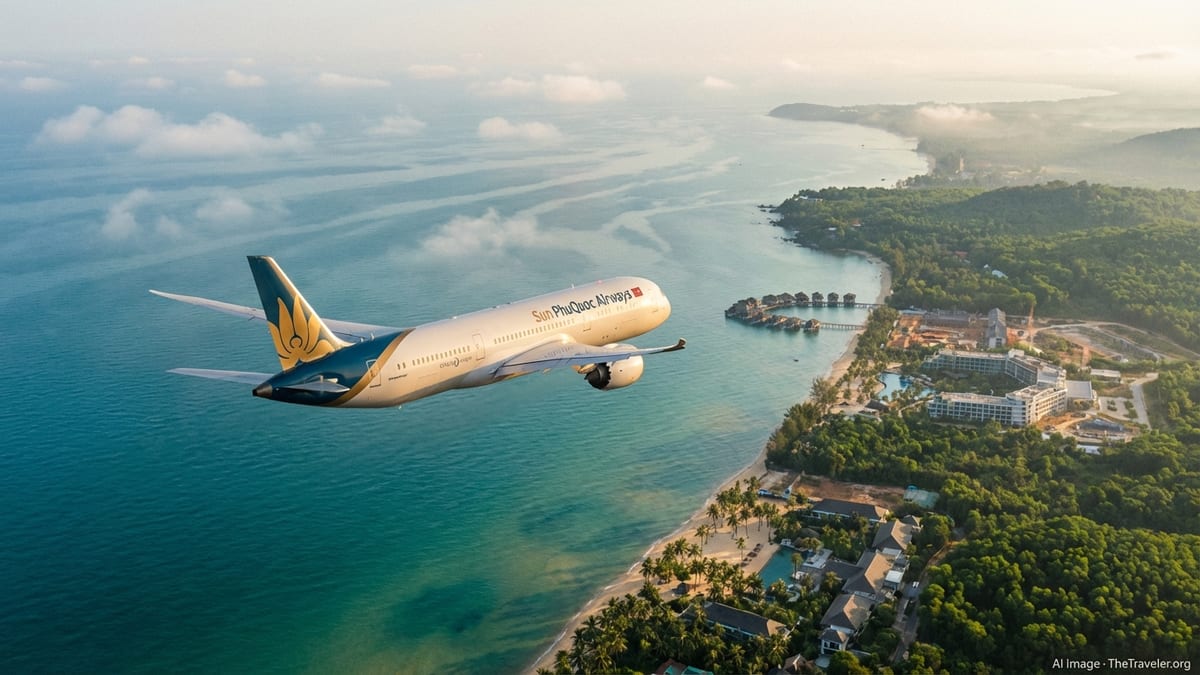
Sun PhuQuoc Airways has unveiled a sweeping widebody expansion built around a new fleet of Boeing 787 Dreamliners, a move designed to transform Vietnam’s Phu Quoc Island from an emerging beach escape into a long-haul hub for high-end resort travel.
A Landmark Dreamliner Deal for Vietnam’s Resort Airline
The young Vietnamese carrier announced this week that it has placed an order for up to 40 Boeing 787-9 Dreamliners, its first direct purchase of long-haul jets and one of the largest widebody commitments ever made by a startup airline in Southeast Asia. Signed in Washington on February 18, the agreement will see the ultra-efficient twin-aisle jets form the backbone of Sun PhuQuoc Airways’ future long-haul network, complementing the airline’s current narrowbody Airbus fleet.
The Boeing 787 family has become a workhorse of modern long-haul travel, prized for its lower fuel burn and ability to operate nonstop services on routes that were previously uneconomical. Sun PhuQuoc Airways is banking on these characteristics to open direct links between Phu Quoc and major tourism and economic centers around the world, while keeping operating costs and environmental impact in check.
While delivery schedules have not been disclosed, aviation analysts note that such a sizable widebody order so early in the airline’s life underlines the ambition of both Sun PhuQuoc Airways and its parent company, Sun Group. It is a strong signal that Vietnam’s aviation and tourism sectors are ready to compete more aggressively for international travelers in the decade ahead.
From Island Startup to Long-Haul Contender
Sun PhuQuoc Airways is still a newcomer to the skies. Backed by Sun Group, one of Vietnam’s most prominent tourism and real estate conglomerates, the airline received its air operator’s certificate in 2025 and launched commercial flights later that year. Its initial focus has been on connecting Phu Quoc with key Vietnamese cities such as Hanoi, Ho Chi Minh City and Da Nang, using a modest fleet of Airbus A320 and A321 aircraft.
That domestic network is gradually expanding across the region. The airline has announced new international links from Phu Quoc to Taipei and Seoul, reflecting growing demand from Northeast Asian travelers for warm-weather getaways in Vietnam. These early international routes are being used to test the “resort aviation” concept that underpins the carrier’s strategy: positioning the flight itself as part of a seamless, premium holiday experience linked to Sun Group’s hotels, resorts and attractions on the island.
Against this backdrop, the 787 deal marks a step change in scale. Instead of remaining a niche domestic or regional operator, Sun PhuQuoc Airways is signaling its intent to become a fully fledged long-haul player, using widebody aircraft and nonstop intercontinental routes to put Phu Quoc on the same map as better-known resort hubs in Thailand, the Maldives or the Mediterranean.
Bringing Phu Quoc to the World, and the World to Phu Quoc
The Dreamliner order is closely tied to a broader vision for Phu Quoc itself. Often called the “Pearl Island,” Vietnam’s largest island has spent the past decade climbing the regional tourism ranks, fueled by new five-star resorts, theme parks and entertainment complexes, many developed by Sun Group. Yet up to now, most international visitors have had to connect through Hanoi or Ho Chi Minh City, adding time and complexity to their journeys.
By deploying the 787-9 on long-haul routes, Sun PhuQuoc Airways aims to change that equation. The airline has flagged plans for nonstop services from Phu Quoc to Europe, North America and Northeast Asia, targeting travelers who are willing to pay a premium for direct flights that deliver them straight to a resort destination. In effect, Phu Quoc would become both the origin and the centerpiece of the journey, similar to how some carriers in the Gulf use their home cities as gateways to broader tourism ecosystems.
Industry observers point out that this strategy could reshape travel patterns to Vietnam. Instead of visiting multiple cities on a single trip, more travelers may opt for week-long or two-week resort stays anchored entirely on the island, supported by packaged offerings that bundle flights, accommodation, transfers and on-island experiences. For Phu Quoc’s hotels, restaurants and attractions, that could mean more predictable and higher-spending international arrivals.
What the Dreamliner Experience Means for Travelers
The Boeing 787 Dreamliner has earned a reputation among frequent flyers for its passenger-friendly design, and Sun PhuQuoc Airways will be keen to leverage those features as part of its brand promise. The aircraft’s composite fuselage allows for higher cabin humidity and lower cabin altitude, which can reduce the fatigue and dehydration often associated with long-haul flights. Larger windows with electronic dimming, quieter engines and smoother ride technology together deliver a noticeably more comfortable experience on overnight and ultra-long segments.
As a premium leisure-focused airline, Sun PhuQuoc Airways is expected to configure its Dreamliners with a strong emphasis on comfort and service. Although final cabin layouts have not been revealed, aviation and hospitality insiders anticipate a competitive lie-flat business class product targeted at honeymooners, families and affluent travelers heading directly to beachfront villas and luxury resorts. A spacious premium economy cabin, enhanced inflight dining and carefully curated entertainment aligned with resort themes are also likely to feature.
This “resort in the sky” concept builds on the airline’s existing approach on narrowbody flights, where it has already experimented with upgraded catering, branded pastries from international bakery partners and occasional live in-cabin performances on special services. Extending such touches to a widebody fleet could help differentiate the carrier in a market where many competitors emphasize low fares over onboard experience.
Airport Upgrades Pave the Way for Widebody Growth
The rapid expansion of Sun PhuQuoc Airways would not be possible without a parallel transformation on the ground. Phu Quoc International Airport is undergoing a multi-year upgrade that includes a new passenger terminal and runway extensions designed specifically to accommodate larger aircraft such as the Boeing 787 and Airbus A350. Once the works are completed, the airport is expected to meet international standards for widebody operations, increasing its capacity and improving the flow of passengers during peak tourist seasons.
Infrastructure investments of this scale are critical for an island that aspires to manage both environmental pressures and visitor volumes responsibly. Additional gates, modern baggage systems and expanded immigration facilities are intended to cut connection times and bottlenecks, while new taxiways and runway improvements can reduce delays and improve safety. For travelers arriving on long-haul flights from Europe or North America, that should translate into shorter queues and faster transfers to resort areas on the island.
Local authorities and planners are also weighing how to integrate the airport’s growth with sustainable transport options on Phu Quoc. Improved road links to resort clusters, shuttle services tied to flight schedules and potential enhancements to public transportation will all influence how easily visitors can move from the aircraft door to the beach, and how the island copes with rising tourist numbers in the years ahead.
Phu Quoc’s Rise in the Competitive Asia-Pacific Tourism Market
The order for up to 40 Dreamliners comes at a time when Southeast Asia is projected to post some of the fastest air travel growth rates in the world. Vietnam in particular has been identified by industry forecasters as one of the region’s standout markets through 2030, with strong demand driven by a rising middle class, increased disposable income and growing global interest in its landscapes and culture.
Phu Quoc’s evolution from a relatively quiet island to a high-profile beach destination mirrors this broader trend. New luxury properties, international brand partnerships and large-scale attractions have helped the island attract visitors who might previously have chosen Phuket, Bali or other established resort hotspots. By adding a long-haul airline dimension on top of this tourism base, Sun PhuQuoc Airways and its Dreamliner fleet could help cement the island’s status as a standalone, globally recognized getaway.
Competition will be intense. Regional carriers are rebuilding networks and adding capacity, while long-haul airlines from Europe and the Middle East continue to court sun-seeking travelers across Asia. Sun PhuQuoc Airways is betting that an integrated model, where flights, resorts and experiences are closely aligned under the Sun Group umbrella, will give it an edge in offering tailored, hassle-free holidays centered on one destination.
Implications for Sustainability and Local Communities
Any rapid expansion of air services raises questions about environmental impact, particularly to fragile island ecosystems. The 787 Dreamliner’s lightweight structure and modern engines typically deliver lower emissions per seat than many older widebody aircraft, a factor Sun PhuQuoc Airways is expected to highlight as it markets itself to sustainability-conscious travelers. Efficient aircraft alone, however, will not resolve the complex balance between tourism growth and environmental stewardship.
Authorities and operators on Phu Quoc have increasingly emphasized the need to protect coral reefs, marine life and coastal habitats from the pressures of development. As more long-haul visitors arrive directly on the island, local planning decisions on waste management, water use, protected areas and responsible construction will take on even greater significance. Partnerships between the airline, resorts and conservation organizations could play a role in promoting eco-friendly activities and supporting preservation initiatives.
For local communities, the Dreamliner deal is likely to bring both opportunities and challenges. Expanded air connectivity usually translates into more jobs across aviation, hospitality and services, as well as new training and career pathways for residents. At the same time, managing housing costs, preserving local culture and ensuring that tourism revenues are widely shared will remain central questions as Phu Quoc moves further into the global spotlight.
A New Chapter for Island-Hub Aviation
By committing to a substantial Dreamliner fleet less than a year after taking to the skies, Sun PhuQuoc Airways is staking out an ambitious position in Asia’s evolving aviation landscape. Its strategy blends elements of classic hub-and-spoke airline design with a single-minded focus on one resort destination, supported by extensive hospitality and leisure assets on the ground.
If the plan succeeds, future travelers may come to see Phu Quoc not just as a side trip from Hanoi or Ho Chi Minh City, but as a primary holiday goal with seamless, long-haul access from major cities around the world. The arrival of the first 787s in airline colors will mark more than a fleet upgrade; it will symbolize the emergence of a new kind of island-hub model, built around the idea that a vacation can begin the moment passengers step on board.