

More news on this day
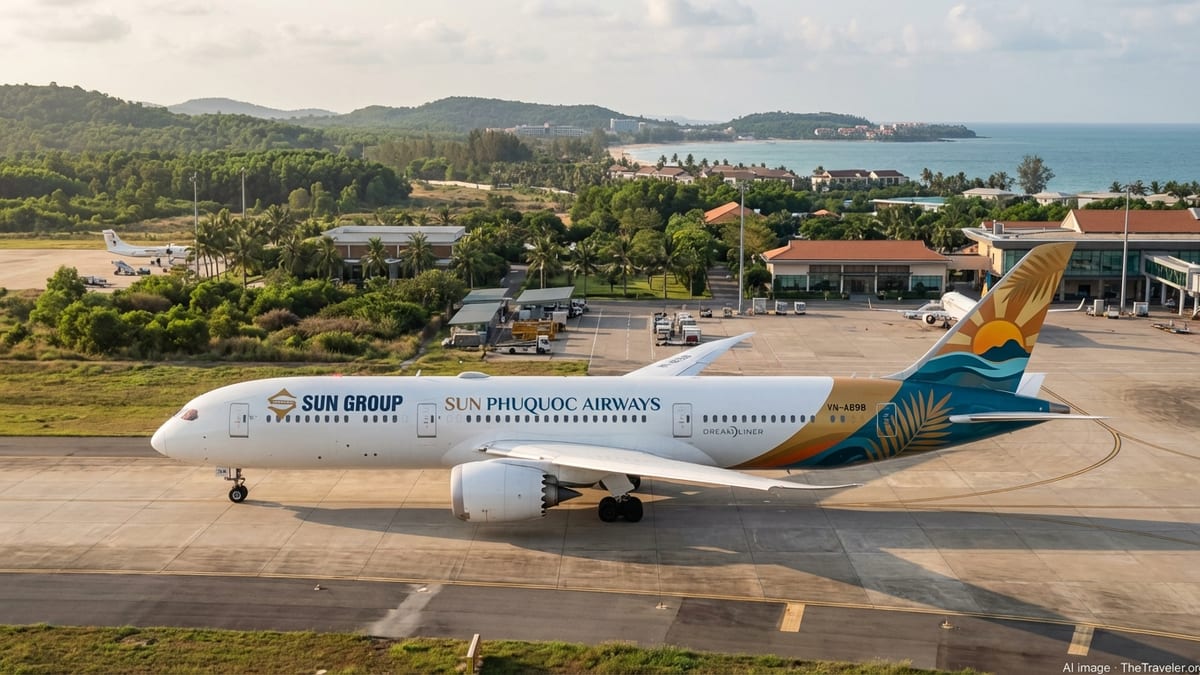
Vietnam’s newest carrier, Sun PhuQuoc Airways, has stunned the aviation world with a landmark agreement for up to 40 Boeing 787-9 Dreamliners, a record widebody order for a Vietnamese airline that signals the island-based startup’s ambition to become a global player in long-haul leisure travel.
A Record-Shattering Widebody Deal for Vietnam
The agreement, announced on February 18, 2026 in Washington, D.C., positions Sun PhuQuoc Airways as one of the fastest-moving newcomers in global aviation. Less than a year after launching operations, the carrier has committed to a fleet of up to 40 Boeing 787-9 Dreamliners, with a headline value of about 22.5 billion dollars at list prices. The deal is the largest Boeing widebody order ever placed by a Vietnamese airline and elevates Phu Quoc Island from regional beach destination to the center of a long-haul aviation strategy.
Boeing confirmed that the Dreamliners will form the backbone of Sun PhuQuoc Airways’ future widebody fleet, supporting its vision of turning Phu Quoc International Airport into a primary hub for long-range tourism traffic. For Boeing, the order reinforces its foothold in one of Asia’s fastest-growing aviation markets and comes alongside separate agreements with Vietnam Airlines and Vietjet for narrowbody aircraft, signaling a deepening aerospace partnership between the United States and Vietnam.
While the manufacturer describes the deal as covering “up to” 40 aircraft, Sun PhuQuoc Airways has presented the signing as a firm commitment for 40 jets. Neither side has publicly disclosed delivery timing, but the scale of the order underscores the confidence both the airline and its parent, Sun Group, have in Vietnam’s long-term tourism and air travel demand.
From Island Startup to Long-Haul Contender
Sun PhuQuoc Airways is a relative newcomer to Vietnam’s crowded aviation market. It launched commercial services on November 1, 2025, initially flying a narrowbody Airbus fleet on domestic routes between Phu Quoc, Ho Chi Minh City, Hanoi and Da Nang. The airline is the first in Vietnam to be named after an island and was conceived as part of a broader strategy to integrate air transport with the resorts, theme parks and real estate developments built by Sun Group on Phu Quoc.
In January 2026 the carrier announced its first scheduled international route, a direct service from Phu Quoc to Taipei due to begin on March 29. That step alone signaled a move beyond purely domestic leisure flows. The 787 deal takes that evolution dramatically further, catapulting the startup into the ranks of airlines planning non-stop intercontinental services from day one of their widebody operations.
According to fleet data, Sun PhuQuoc Airways currently operates a handful of Airbus A320 and A321 family aircraft. The shift to adding dozens of long-range Boeing widebodies within a few years would represent one of the most aggressive growth trajectories attempted by a Southeast Asian leisure carrier. It also reflects a growing trend in the region: pairing tourism-led infrastructure development with bespoke airlines designed to funnel international travelers directly to resort destinations, bypassing traditional mega-hubs.
Dreamliner Capabilities to Open Nonstop Intercontinental Routes
The Boeing 787-9 Dreamliner selected by Sun PhuQuoc Airways is a long-range, twin-aisle aircraft designed for fuel-efficient operations over distances of more than 7,500 nautical miles. The type’s range would allow Sun PhuQuoc to operate non-stop from its island hub to major cities in Northeast Asia, Western Europe and even North America, a key part of the airline’s stated strategy. Routes under consideration include links to major tourism and economic centers across Asia, as well as long-haul services to markets such as France, Germany, the United Kingdom and potential gateways in the United States and Canada.
The aircraft’s operating economics are central to the business case. Compared with many earlier-generation widebodies, the 787-9 offers double-digit reductions in fuel burn and emissions per seat, a crucial factor for a carrier planning to sustain year-round service between a leisure island and distant source markets. Lower fuel consumption helps reduce operating costs, while improved environmental performance is increasingly important for destinations positioning themselves as sustainable tourism hotspots.
Passenger experience is another pillar of the strategy. The 787 family features larger windows than other widebodies, improved cabin pressurization, higher humidity and advanced noise reduction technologies. Sun PhuQuoc Airways intends to capitalize on these features to market a premium long-haul product that dovetails with Sun Group’s upscale resorts and entertainment complexes on Phu Quoc, creating a seamless experience from aircraft cabin to beachfront villa.
Phu Quoc’s Airport Expansion Targets Global Hub Status
The ambitious aircraft order is closely tied to ongoing expansion at Phu Quoc International Airport. Authorities are pursuing a multi-phase upgrade that includes construction of a second passenger terminal, extension of the existing runway and development of a second runway. Once completed, the airport is expected to meet the standards needed to handle frequent operations by large widebody types such as the Boeing 787 and Airbus A350, transforming what was once a mainly domestic gateway into a full-fledged international hub.
Plans call for the runway to be extended to approximately 3,500 meters, with a secondary 3,300 meter strip to follow, enabling fully loaded long-haul aircraft to operate even in challenging weather and high-demand periods. The new terminal is being designed to handle a significant increase in passenger throughput, with an eye toward processing waves of arrivals from Europe and North Asia timed to resort check-in and excursion schedules.
Government and industry projections suggest Phu Quoc’s visitor numbers could surge as new air links come online. The airport expansion is being framed as both an economic catalyst for the island and a strategic move in Vietnam’s broader plan to distribute tourism flows beyond established urban gateways such as Hanoi and Ho Chi Minh City. If the project proceeds as planned, Phu Quoc could join a small but growing list of resort-centric airports that function as long-haul entry points in their own right.
Resort Aviation: Integrating Skies, Hotels and Experiences
At the heart of Sun PhuQuoc Airways’ strategy is what its parent group describes as a “resort aviation” model. Rather than operating as a stand-alone airline chasing yield across a wide network, the carrier is being built as a core component of Sun Group’s integrated tourism ecosystem on Phu Quoc. That ecosystem spans luxury hotels, villas, theme parks, cable cars, golf courses and entertainment districts spread across the island’s beaches and hills.
By controlling both lift and lodging, Sun Group hopes to better manage seasonality, create bundled products and deliver a consistent premium experience from booking to return flight. Sun PhuQuoc Airways can tailor schedules to match resort check-in times, time flights to connect with events and attractions, and coordinate marketing campaigns that sell the island as a complete packaged experience to overseas tour operators and high-spending independent travelers.
This vertically integrated approach is not entirely new in global tourism, but it remains relatively rare at the scale envisioned in Vietnam. Success will depend on the airline’s ability to maintain competitive fares and service levels while leveraging synergies with Sun Group’s non-aviation assets. It will also require careful coordination with local authorities to ensure that growth in visitor arrivals does not outpace the island’s environmental and infrastructure capacity.
Vietnam’s Aviation Boom and Strategic Ties With the United States
The Sun PhuQuoc Airways order is part of a broader wave of aircraft purchases by Vietnamese carriers. Alongside the 787-9 deal, Vietnam Airlines has finalized an agreement for 50 Boeing 737-8 jets and Vietjet has secured financing for additional 737 aircraft. In total, recent announcements cover around 90 new Boeing jets, highlighting both the rapid expansion of Vietnam’s aviation sector and strengthening commercial ties between Hanoi and Washington.
The contracts were signed during a high-profile visit to the United States by Vietnam’s Communist Party leader To Lam, underscoring the political and economic significance of the transactions. For Vietnam, large-scale aircraft purchases support long-term plans to transform the country into a regional aviation hub and tourism powerhouse. For the United States, they reinforce Boeing’s industrial footprint in Southeast Asia and complement broader trade and investment discussions between the two nations.
Forecasts from industry analysts consistently rank Vietnam among the world’s fastest-growing aviation markets, with annual passenger growth expected to outpace global averages through the next decade. Rising middle-class incomes, a strong outbound travel appetite and Vietnam’s appeal as a tourism destination all contribute to the bullish outlook. The Sun PhuQuoc 787 deal aligns with that narrative, but also raises questions about how capacity growth will be balanced across infrastructure, workforce and regulatory oversight.
Opportunities and Risks for a High-Stakes Growth Plan
Ordering up to 40 widebody aircraft is a bold move for any airline, particularly one that is barely a year into commercial operations. For Sun PhuQuoc Airways, the opportunity lies in securing long-haul capacity early, before competitor networks solidify and prime routes are fully locked in. By the time all its Dreamliners are delivered, the carrier hopes to have established brand recognition and a loyal customer base among travelers seeking direct, resort-oriented flights to Vietnam’s largest island.
However, the scale of the order also entails significant risk. Long-haul leisure traffic can be highly sensitive to economic cycles, exchange rates and geopolitical developments. Filling dozens of widebody aircraft year-round will demand careful market selection, flexible scheduling and strong partnerships with tour operators and global distribution systems. The airline will also need to build up a cadre of experienced pilots, engineers and managers capable of running a complex twin-aisle operation to international safety and reliability standards.
Competition is another factor. Vietnam Airlines, Vietjet and other regional carriers are all vying for a share of the same long-haul and connecting traffic. While Sun PhuQuoc can differentiate itself through its resort aviation model and direct island access, it will face pricing pressure on overlapping routes and must convince travelers that flying directly to Phu Quoc offers superior value compared with more traditional city gateways.
What the Order Signals for Global Leisure Travel
Beyond Vietnam, the Sun PhuQuoc Boeing 787 order speaks to wider trends in global air travel and tourism. As long-range, fuel-efficient jets become more common, smaller cities and resort islands are increasingly able to sustain direct intercontinental flights that once required connections through mega-hubs. Airlines and tourism groups are experimenting with new models that tie flight schedules directly to destination experiences, blurring the lines between transportation provider and travel curator.
If Sun PhuQuoc Airways successfully executes its plan, Phu Quoc could emerge as a case study in how an integrated aviation and resort strategy can reshape travel flows. Sun Group envisions the island as both a standalone holiday destination and a gateway for exploring other parts of Vietnam, supported by a hub-and-spoke network radiating from the island to major domestic and regional cities.
For travelers, the promise is straightforward: board a Dreamliner in a distant city, arrive rested after a long-haul flight, and step almost directly into a curated resort environment engineered for convenience and leisure. For Vietnam and its partners, the stakes are considerably higher, involving billions of dollars in aircraft, infrastructure and tourism investment aimed at securing a lasting place on the world’s long-haul leisure map.