

More news on this day
Sun PhuQuoc Airways, Vietnam’s first airline named after an island, has unveiled the country’s most ambitious fleet expansion plan yet, anchored by a landmark order for up to 40 Boeing 787 Dreamliners and a long-term strategy to build a 100‑aircraft fleet that can funnel waves of long-haul tourists directly to Phu Quoc.
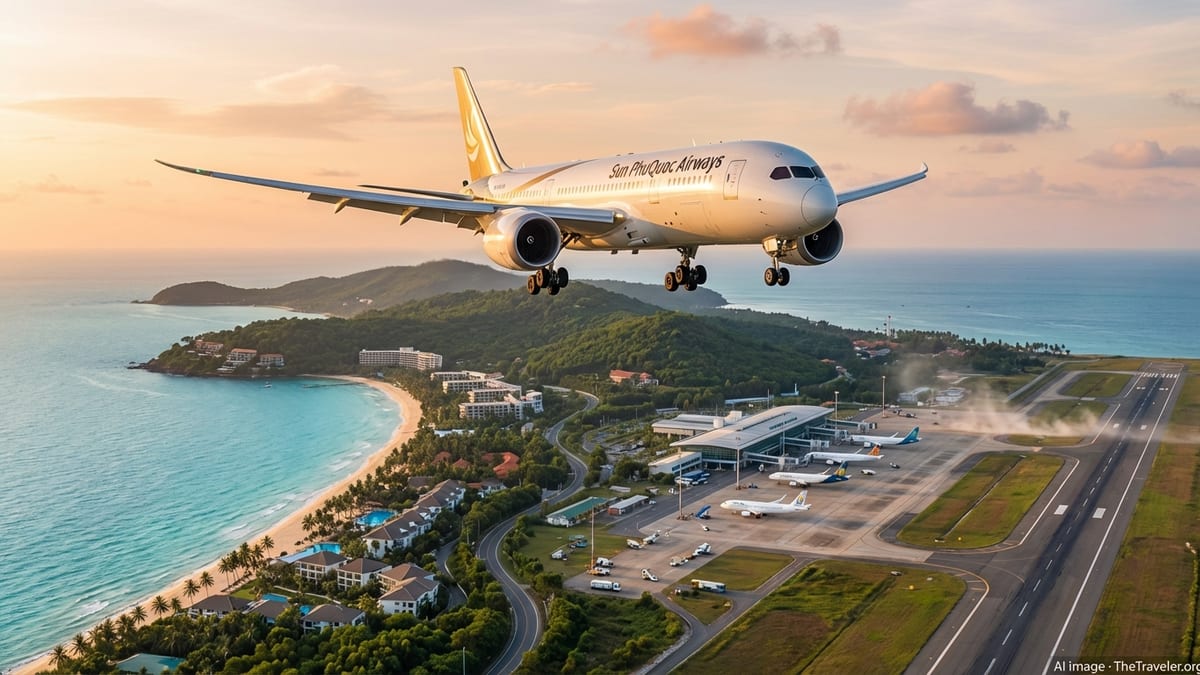
A Record Boeing Deal Signals Vietnam’s New Long-Haul Player
Announced on February 18, 2026 in Washington, D.C., Sun PhuQuoc Airways’ agreement for up to 40 Boeing 787 Dreamliners is being hailed as Vietnam’s largest widebody aircraft commitment to date. Valued at an estimated 22.5 billion USD at current list prices, the deal instantly catapults the start-up resort carrier into the front rank of Asia’s long-haul aspirants and sends a clear signal about its international ambitions.
The carrier has selected the 787-9 as the backbone of its future long-range fleet, citing the type’s combination of fuel efficiency, range and passenger comfort. With the ability to fly more than 14,000 kilometers, the jets are expected to open nonstop routes from Phu Quoc to major destinations across Asia, Europe and North America, enabling the island to compete more directly with regional heavyweights such as Phuket and Bali.
The contract signing was witnessed by senior Vietnamese and United States officials, underscoring the political and economic significance of the order. For Boeing, the agreement expands its footprint in one of Asia’s fastest-growing aviation markets. For Vietnam, it represents a bet that air connectivity anchored around a single resort island can unlock higher-spending tourism and new trade links.
Industry analysts note that for a carrier that only began commercial operations in late 2025 with narrowbody aircraft, the scale and timing of the Dreamliner order is unusually bold. It effectively accelerates Sun PhuQuoc Airways’ transition from a domestic leisure airline into a long-haul network operator in less than a decade.
From Island Namesake to Resort Airline Pioneer
Formally launched by tourism conglomerate Sun Group in October 2025, Sun PhuQuoc Airways is the first Vietnamese airline to be named after an island. The branding underlines its mission: to serve as the aviation gateway to Phu Quoc, Vietnam’s so-called Pearl Island, where Sun Group has invested heavily in hotels, resorts, theme parks and entertainment complexes.
The airline’s model is described as “resort aviation,” designed to integrate flights with ground experiences in a single, seamless tourism ecosystem. Rather than dispersing capacity evenly across the country, the network strategy concentrates traffic through Phu Quoc, supported by a hub-and-spoke system that connects the island to key domestic and international cities.
Sun PhuQuoc Airways secured its Air Operator Certificate in 2025 and quickly followed with approvals as an Approved Training Organization and an Approved Maintenance Organization. Within months of its first aircraft delivery in August 2025, the carrier ramped up a young fleet of Airbus A321 variants, launching dense domestic routes that linked Phu Quoc with Hanoi and Ho Chi Minh City before expanding to Da Nang and Nha Trang.
The narrowbody phase is giving the airline a domestic foundation, operational know-how and brand recognition, but management has always framed it as a stepping stone. The widebody 787 order formalizes the next chapter: a pivot from serving primarily Vietnamese holidaymakers to attracting affluent global visitors on long-haul itineraries tailored around Sun Group’s resort portfolio.
Building Toward a 100-Aircraft Fleet by 2030
The Dreamliner deal is just one element of a sweeping fleet roadmap that industry observers describe as the most aggressive by any Vietnamese airline to date. Sun PhuQuoc Airways has outlined plans to operate around 100 aircraft by 2030, including both single-aisle and twin-aisle jets, in order to match Vietnam’s rising tourism demand and Phu Quoc’s transformation into a high-end resort destination.
In the near term, the airline expects to reach around nine aircraft by early 2026, predominantly A321neo-family jets, and to grow that narrowbody fleet through the latter half of the decade. These aircraft will be tasked with feeding the Phu Quoc hub from domestic and regional markets, ensuring a steady pipeline of passengers to fill future long-haul services.
The 787-9s, by contrast, are being positioned as the flagship of a premium long-haul offering. Sun PhuQuoc Airways has indicated that cabin layouts will feature lie-flat or near-lie-flat seats in business class, enhanced inflight entertainment and upgraded service standards aimed at discerning holidaymakers and connecting passengers. The widebody fleet is expected to enter service progressively once deliveries begin and long-haul route approvals are in place.
Reaching a 100‑aircraft fleet within four years will require sustained investment, careful capacity management and a strong focus on operational performance. Early signs are encouraging: the airline has reported one of the highest on-time performance rates in Vietnam’s domestic market and is steadily building internal training and maintenance capabilities to reduce reliance on third parties as it scales.
Phu Quoc’s Bid to Become the Next Global Island Hub
Phu Quoc, located in the Gulf of Thailand off Vietnam’s southwest coast, has evolved over the past decade from a relatively low-profile beach destination into one of the country’s fastest-growing resort islands. With new luxury developments, upgraded infrastructure and international branding campaigns, Vietnam’s planners now talk openly about positioning the island as a peer to Phuket in Thailand or Bali in Indonesia.
Sun PhuQuoc Airways is a core part of that strategy. By basing its long-haul fleet on the island and designing its network around direct international access, the airline aims to remove a key friction point that has historically limited Vietnam’s ability to attract high-value tourists: the need to connect via Hanoi or Ho Chi Minh City and then transfer to domestic flights.
With long-range 787-9s, Phu Quoc could eventually see nonstop services to cities such as Seoul, Tokyo, Singapore, Dubai, Frankfurt, London or even West Coast hubs in North America, depending on market demand and bilateral air service agreements. In parallel, the airline is already preparing to launch its first international route to Taipei in March 2026, using narrowbody aircraft as a bridge toward longer-haul flying.
The broader ecosystem includes a planned upgrade of Phu Quoc International Airport and ongoing investment in hotels, convention facilities and attractions. Sun Group executives argue that the synergy between aviation and resorts will enable the island to capture not only leisure traffic but also business events, high-end weddings and wellness tourism, extending stays and increasing average visitor spend.
Surfing Vietnam’s Tourism and Aviation Boom
Vietnam has emerged as one of Asia’s tourism success stories in the post-pandemic period, recording rapid rebounds in visitor arrivals and strong growth in domestic travel. Forecasts by international aviation bodies suggest that Vietnam could be Southeast Asia’s fastest-growing passenger market through 2030, thanks to rising incomes, liberalizing visa policies and expanding air connectivity.
Existing Vietnamese carriers have already been adding capacity, with new domestic routes and regional links to Northeast and Southeast Asia. However, much of the country’s long-haul traffic still flows through foreign hubs, leaving room for a home-grown player to capture a greater share of intercontinental demand. Sun PhuQuoc Airways appears intent on filling that gap, albeit with a niche focus centered on one island rather than a nationwide network.
The airline’s timing may prove advantageous. As tour operators, hotel chains and online travel agencies look for fresh products in Asia, a dedicated resort carrier with guaranteed airlift into a fully developed island destination could provide a compelling alternative to established sun-and-sand markets. The long-haul Dreamliner fleet also offers potential for seasonal adjustments, shifting capacity between Europe, North Asia and possibly North America depending on demand patterns.
Yet the strategy is not without risk. Vietnam’s aviation sector is highly competitive, with low-cost and full-service airlines alike vying for market share and slot access at key airports. Sun PhuQuoc Airways will have to differentiate through product quality, schedule reliability and integrated packages while keeping costs under control amid fluctuating fuel prices and currency movements.
Network Expansion: From Domestic Trunk Routes to Global Links
In its first year of operations, Sun PhuQuoc Airways has focused on building frequency on Vietnam’s key domestic corridors. Multiple daily services now link Phu Quoc with Hanoi and Ho Chi Minh City, while new routes to Da Nang and Nha Trang strengthen the carrier’s multi-destination offering for travelers who want to combine beach stays with cultural or urban experiences.
The next milestone comes on March 29, 2026, when the airline inaugurates its first international route from Phu Quoc to Taipei. Operating several times per week, the service will test demand for direct flights from the island to major Northeast Asian markets and provide a template for future regional expansion to destinations such as South Korea, Thailand, Singapore, Hong Kong and India.
As the 787-9s begin arriving later in the decade, attention is expected to shift to longer sectors that can sustain a widebody product. Potential candidates include large source markets for Vietnam such as Europe, Australia and North America, particularly cities with strong outbound leisure demand and growing interest in Southeast Asian beach holidays.
A key question will be how Sun PhuQuoc Airways structures its partnerships. Interline or codeshare agreements with foreign airlines could help feed long-haul flights at both ends, while alliances with regional carriers may provide additional connectivity beyond the first point of entry. The airline’s parent, Sun Group, is also likely to leverage its relationships with global tour wholesalers to bundle flights and accommodation in a single offering.
Premium Tourism Focus and the Passenger Experience
Central to the Sun PhuQuoc Airways proposition is a focus on premium leisure travel rather than purely price-driven volume. Executives have repeatedly signaled that cabin design, onboard service and the end-to-end journey from airport to resort will be tailored to guests willing to pay more for comfort and convenience.
On narrowbody routes, this translates into refreshed cabin interiors, modern inflight entertainment options on longer sectors and ancillary services such as gourmet onboard dining and flexible baggage packages. On the future Dreamliner fleet, the airline is expected to introduce differentiated cabins, including a full-service business class, premium economy and an economy product positioned for families and groups heading to beach resorts.
Beyond the aircraft, the carrier is investing in digital tools to streamline booking, check-in and ground transfers, with an emphasis on packages that combine flights, hotels and attractions under a single reservation. For international visitors, the promise is a frictionless arrival: step off a long-haul flight, clear immigration and be at a beachfront resort in a relatively short time.
This focus on service is underpinned by in-house training through the airline’s approved training organization. By controlling recruitment and instruction standards, Sun PhuQuoc Airways aims to cultivate a consistent service culture aligned with Sun Group’s broader hospitality businesses and the expectations of international travelers.
Challenges Ahead for Vietnam’s Most Ambitious Fleet Plan
While the scale of Sun PhuQuoc Airways’ fleet plan has drawn attention, the execution phase will be decisive. Managing the arrival of dozens of new aircraft, integrating a new widebody type and opening intercontinental routes will place significant demands on management, pilots, engineers and ground staff.
Financing such a rapid build-up also requires careful balance-sheet management. Although the airline benefits from the backing of a large tourism group and support from domestic lenders, long-term profitability will depend on achieving high aircraft utilization, strong load factors and disciplined yield management on both domestic and international routes.
Regulatory considerations add another layer of complexity. Bilateral air service agreements will shape which long-haul destinations can be served nonstop from Phu Quoc, while slot constraints at major foreign airports may limit growth or push the airline toward secondary cities in its early long-haul phase.
Despite these hurdles, the order for 40 Dreamliners and the stated goal of building a 100‑strong fleet by 2030 underscore a broader shift in Vietnam’s aviation landscape. Where previous waves of expansion focused on connecting Hanoi and Ho Chi Minh City to the world, the next phase may be defined by specialized carriers using modern aircraft to elevate emerging destinations like Phu Quoc onto the global tourism map.