

More news on this day
Nigeria’s hospitality sector is bracing for what observers describe as a tourism shockwave after the Supreme Court cleared the reportedly N22 billion sale of Lagos Continental Hotel, a landmark high-rise on Victoria Island, in a judgment that is expected to reshape investment, competition and visitor experiences in one of Lagos’ most important travel districts.
Get the latest news straight to your inbox!
Landmark Ruling Ends Protracted Ownership Battle
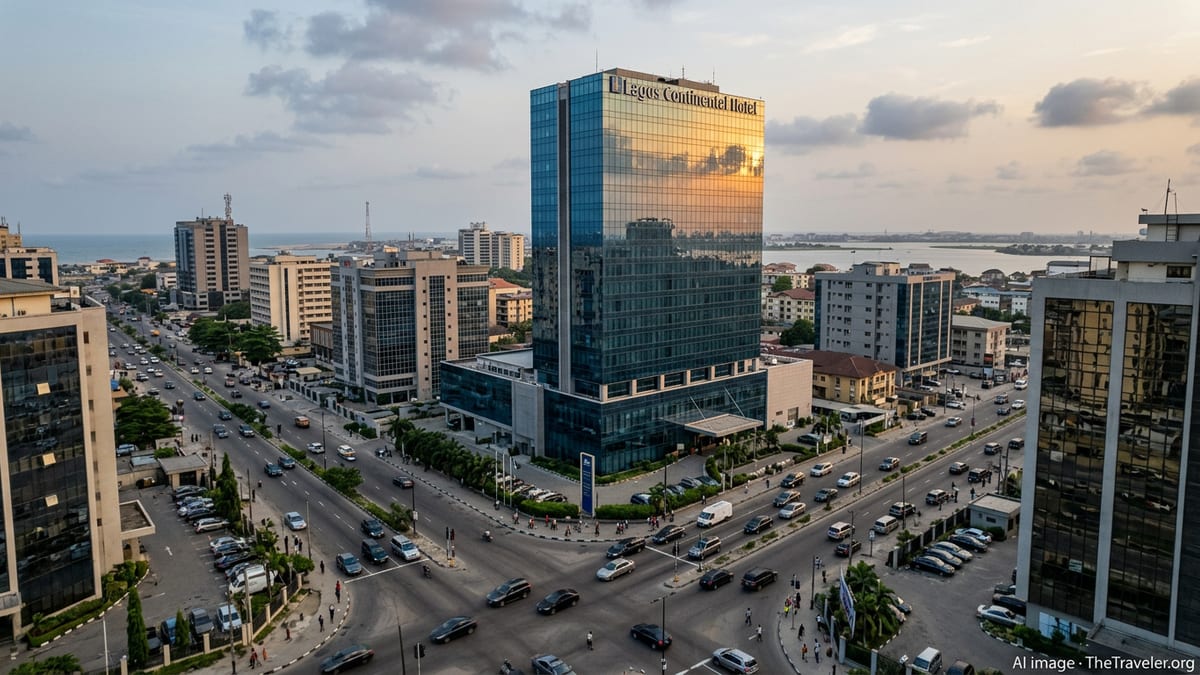
Publicly available legal and business reporting indicates that the Supreme Court has now given final backing to the transfer of Lagos Continental Hotel to new owners in a transaction valued at about N22 billion, ending a prolonged dispute over the fate of one of Nigeria’s best known city hotels. The property, a soaring glass tower overlooking the Atlantic and Lagos Lagoon, has long been a reference point for business travellers and upscale leisure guests on Victoria Island.
The court decision brings closure to years of competing claims, interim injunctions and lower-court rulings surrounding the hotel’s acquisition and financing structure. According to published coverage, earlier challenges had focused on whether the sale process and valuation met statutory requirements, as well as on the rights of creditors and previous investors. The Supreme Court’s position now gives legal certainty to the transaction and effectively unlocks the asset for new capital expenditure and repositioning.
Analysts following Nigeria’s commercial real estate market note that apex court clarity is rare in high-profile hospitality disputes and typically sets a strong precedent for how distressed or state-linked hotel assets can be resolved. In this case, the green light for the N22 billion deal is being interpreted as a signal that complex legacy transactions in prime Lagos neighbourhoods can be conclusively tidied up, even if the process is lengthy.
For the travel industry, the most immediate impact is psychological. Tour operators and corporate travel managers often watch legal battles around flagship properties with concern. The end of uncertainty at Lagos Continental Hotel is likely to restore confidence among partners who rely on large room blocks and premium meeting spaces in the Victoria Island corridor.
Victoria Island’s Hotel Landscape Poised for Shake-Up
Lagos Continental Hotel occupies one of the most prominent positions on Victoria Island, competing with an array of established international and local brands clustered around Ozumba Mbadiwe, Ahmadu Bello and adjoining commercial arteries. These properties collectively shape first impressions for inbound business travellers and conference delegates, many of whom rarely venture beyond the island’s secure business and entertainment bubble.
With new owners now able to act decisively, travel-sector observers expect a strategy refresh at the property, potentially including renovations, new food and beverage concepts, upgraded wellness facilities and more aggressive participation in the meetings, incentives, conferences and exhibitions segment. Such moves could intensify competition with nearby five star hotels that have recently invested in modern ballrooms, rooftop venues and branded restaurant partnerships to defend their share of the lucrative corporate market.
Published commentary on Lagos’ hotel sector points to an emerging divergence between older, under-invested towers and a crop of recently upgraded properties that better meet the expectations of globally mobile guests. A repositioned Lagos Continental Hotel, backed by fresh balance sheet strength and a clarified legal status, would likely join the latter category, raising the bar on service standards and physical product on Victoria Island.
There are also implications for pricing. If the hotel reopens fully energised and able to sustain higher occupancy, market watchers say room rates across the island could face renewed upward pressure during peak periods, especially when major oil, finance and technology conferences converge on Lagos. At the same time, more robust competition may help travellers secure better value in shoulder seasons as properties vie for a broader mix of guests.
Signals for Investors Eyeing Nigerian Hospitality
Beyond the fate of a single tower, the Supreme Court approval of the N22 billion sale is being read as an important signal to investors weighing exposure to Nigerian hospitality and mixed use real estate. Over the past decade, several high profile hotel projects in Lagos and Abuja have become entangled in debt restructuring, regulatory disputes or ownership wrangles, dampening enthusiasm among some foreign capital providers.
According to financial and legal analysis carried in Nigerian business media, the Lagos Continental case illustrates both the risks and rewards of operating at the top end of the country’s hotel market. Construction and financing costs are high, foreign currency volatility is constant and regulatory interpretations can shift. However, demand from multinational companies, international organisations and a growing domestic affluent class remains resilient, particularly in Lagos where air connectivity and corporate headquarters are concentrated.
Clarity from the apex court is therefore being interpreted as a modest but meaningful step toward improving the predictability of outcomes in large-ticket property disputes. While it does not remove exchange rate or security concerns, it suggests that well-structured transactions ultimately have a path to enforcement, even when contested. For private equity firms and regional hotel groups scanning West Africa for opportunities, such examples can tilt internal calculations in favour of Lagos rather than rival hubs.
At the same time, the N22 billion headline figure is likely to serve as a reference point for valuing comparable high-rise hospitality assets in Victoria Island, Ikoyi and Lekki. Valuers and lenders may refer to the transaction when benchmarking loan-to-value ratios or exit expectations, potentially catalysing a new wave of refinancing and portfolio reshuffling in the city’s core districts.
Impacts on Travelers, Meetings and Urban Experience
For travellers, the most tangible consequences of the ruling will be felt in the guest experience over the coming months and years. As ownership consolidates and investment decisions are executed, visitors may encounter refurbished rooms, updated digital infrastructure, enhanced security technology and refreshed public spaces designed to compete with newer regional properties in cities such as Accra and Nairobi.
In the crucial meetings and events segment, Victoria Island stands to benefit from a reinvigorated large-capacity venue that can host multinational board meetings, trade expos and high level government or industry dialogues. Published tourism planning documents consistently highlight a shortage of flexible, modern convention space in Lagos relative to its population and economic size. A fully activated Lagos Continental Hotel would help relieve some of that pressure and make the city more competitive when bidding for international gatherings.
The ruling may also influence the broader urban experience on Victoria Island, where traffic congestion, infrastructure gaps and pockets of construction remain everyday realities. A revitalised hotel often catalyses improvements in streetscape, lighting and retail tenancy in its immediate vicinity as landlords and small businesses respond to increased footfall. Visitors could see new cafes, galleries and service businesses emerging around the property, subtly reshaping the way both tourists and residents move through the district.
For now, travel planners are watching for concrete timelines on any renovation programme, brand repositioning or reflagging that the new owners may pursue. Until those details become clear, the Supreme Court’s decision primarily functions as a reset button, replacing legal stalemate with a sense of momentum in one of Lagos’ most visible hospitality assets.
What the Ruling Means for Lagos as a Gateway City
Lagos has long marketed itself as West Africa’s commercial gateway, relying heavily on the appeal of Victoria Island and neighbouring districts to offset persistent narratives about congestion and uneven infrastructure. High profile hotels such as Lagos Continental play an outsized role in that branding effort, serving as the backdrop for trade missions, investment forums and cultural showcases that generate international media imagery.
By removing uncertainty around the hotel’s ownership, the Supreme Court has helped protect an important piece of that gateway architecture. A functioning, confidently financed flagship property projects stability to prospective investors, who often judge cities on the quality and reliability of their top tier accommodation and event facilities. It also strengthens Lagos’ hand as the state pursues broader tourism strategies that include waterfront activation, creative industry festivals and improved connectivity between the island and mainland.
Travel industry stakeholders note that infrastructure and policy challenges remain significant, from airport transfer times to road maintenance and urban flooding risks during the rainy season. Nonetheless, the decisive legal outcome around a major Victoria Island asset adds a positive data point to Lagos’ narrative at a time when global competition for business events and high yielding visitors is intensifying.
As airlines, tour operators and corporate travel desks update their Lagos playbooks, Lagos Continental Hotel is likely to reappear more prominently in itineraries and venue shortlists. Whether the N22 billion deal ultimately delivers the promised tourism shockwave will depend on execution, but the path has been cleared for the property to once again anchor the city’s ambitions as a modern, globally connected travel hub.