

More news on this day
Global airline traffic is on track to more than double by mid-century, with long-term projections pointing to around 21 trillion revenue passenger kilometres by 2050. That growth trajectory, highlighted in recent industry outlooks, is set to intensify pressure on hotel markets in global gateway cities such as Paris, Tokyo, New York and Berlin, where aviation capacity and room supply already strain to keep pace with demand peaks.
Get the latest news straight to your inbox!
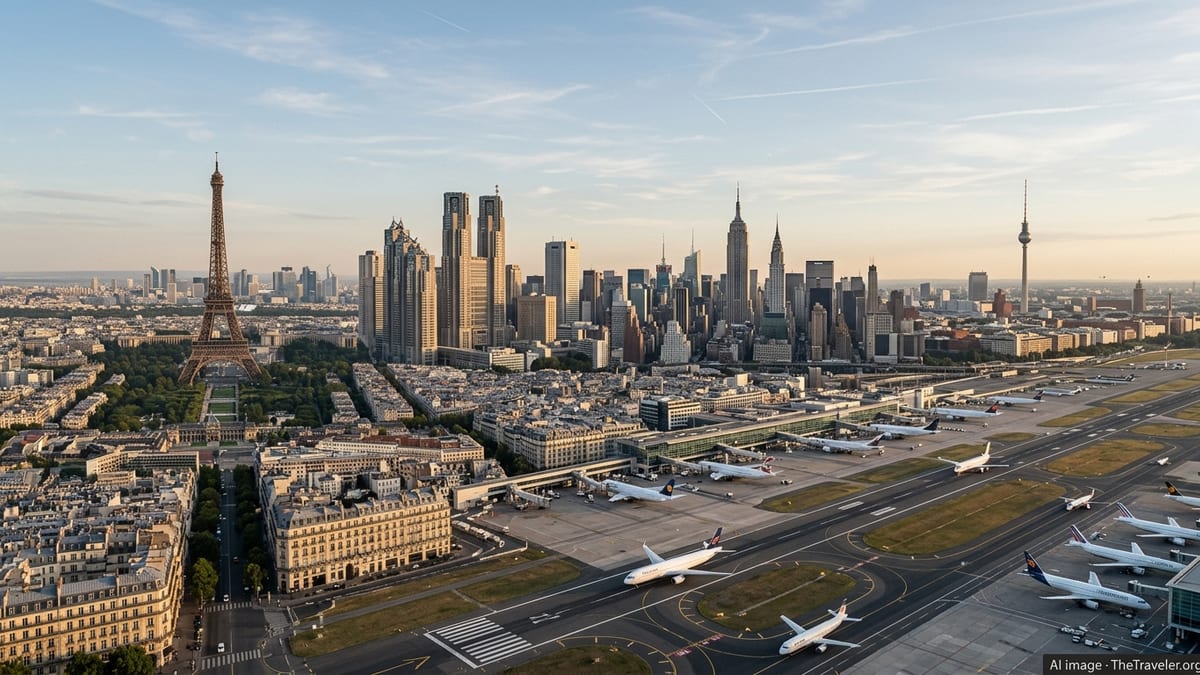
From 9 Trillion to 21 Trillion: The Scale of the Aviation Wave
Long-term forecasts from aviation bodies and independent researchers indicate that global air traffic, measured in revenue passenger kilometres, could rise from around 9 to 10 trillion today to roughly 20 to 22 trillion by 2050 under baseline growth scenarios. That implies average annual growth in the range of 2.5 to 3.5 percent, even after accounting for economic cycles, carbon constraints and shifts in traveler behavior.
Recent outlooks from industry groups frame 21 trillion RPKs as a realistic mid-range scenario rather than an extreme case. Analysts point to continued expansion of middle-class travel in Asia, enduring appetite for long-haul tourism, and the resilience of business travel on key intercontinental corridors as structural drivers. While higher fuel costs, climate policies and alternative transport modes may temper growth in some regions, the global picture remains one of steady expansion.
For global network carriers such as Air France, Singapore Airlines, United Airlines and Lufthansa, this means decades of incremental capacity additions, fleet renewal and hub development. For hoteliers in their core gateway cities, the same demand curve translates into sustained pressure on room supply, rising land and construction costs, and sharper volatility between peak and off-peak travel periods.
Paris and Tokyo: Hub-Airport Growth Meets Constrained Hotel Supply
In Paris, publicly available financial and traffic data from Groupe ADP and Air France-KLM show passenger volumes at Charles de Gaulle and Orly now exceeding pre-pandemic levels, with forecasts pointing to continued growth through the 2030s. At the same time, reports on infrastructure bottlenecks at Charles de Gaulle, including gate constraints and apron congestion, suggest that airport capacity is already tight during peak waves. When air traffic grows faster than terminal expansion, arrival and departure banks tend to concentrate guest arrivals into compressed windows, amplifying pressure on nearby hotels.
For Paris hoteliers, this pattern could mean more frequent periods of sold-out nights around major events, trade fairs and school holidays, along with heightened reliance on dynamic pricing. Development of new hotel supply is complicated by zoning limits, heritage protections and high construction costs in central arrondissements. As airlines increase long-haul capacity to North America, Asia and Africa over the next two decades, analysts expect the airport hotel segment and well-connected suburban properties along rail corridors to capture a growing share of aviation-driven stays.
Tokyo faces a different but equally complex set of dynamics. Forecasts for Asia-Pacific point to the region as the largest contributor to incremental RPK growth through 2050, with Japan serving as both a high-yield destination market and a key stop on trans-Pacific and intra-Asian networks. Haneda and Narita have progressively added international slots, and carriers such as All Nippon Airways and Japan Airlines have rebuilt and expanded their long-haul networks, while partners like Singapore Airlines and United grow connecting flows.
The hotel sector in Tokyo has seen a pipeline of new openings ahead of and after the pandemic-era Olympics delay, yet land scarcity in central districts keeps prime room supply structurally tight. As more long-haul capacity feeds into the city, particularly from Europe and North America, analysts expect higher compression in business districts during weekdays, more pronounced rate spikes around global conferences, and rising demand for branded limited-service properties that can absorb surges of price-sensitive leisure travelers.
New York and Berlin: Transatlantic Demand and the Climate Policy Overlay
On the North Atlantic, publicly available data from IATA and airline earnings reports show that traffic between North America and Europe remains one of the most lucrative long-haul markets, with strong premium-cabin demand. United Airlines has been adding capacity from its East Coast hubs to both traditional and secondary European cities, while joint ventures involving Lufthansa and other European partners continue to deepen coordination on pricing and schedules.
New York, as a primary gateway for both United and several European network carriers, stands at the center of this growth. Hotel performance data for Manhattan and the wider metropolitan area in recent years has shown a rapid recovery in occupancy and average daily rate, supported in part by inbound international demand. If global RPKs move toward the 21 trillion mark by 2050, analysts expect New York to retain its role as a high-RevPAR market, with persistent tension between community concerns over over-tourism, regulatory caps on short-term rentals, and investor appetite for new hotel projects.
Berlin occupies a different position in the transatlantic system but is increasingly visible in forecasts for European city tourism. The opening of the consolidated Berlin Brandenburg Airport created room for long-term growth in passenger numbers, including new long-haul and low-cost services. Lufthansa and its partners have focused much of their intercontinental capacity on hubs such as Frankfurt and Munich, yet Berlin benefits from growing intra-European feed that channels visitors from across the continent into the German capital.
At the same time, Berlin is at the forefront of European climate and transport debates, with environmental groups and policymakers emphasizing rail alternatives for short- and medium-haul trips. Research on demand reduction notes that stronger rail networks and distance-based taxes could moderate aviation growth on some intra-European routes. For Berlin’s hotel market, that could mean a slower shift in short-haul air arrivals but continued growth in long-haul tourism, particularly from North America and Asia, where substitution to rail is not realistic.
Strategic Choices for Airlines and Hoteliers as Demand Climbs
The prospect of 21 trillion RPKs by 2050 underscores the interdependence between aviation and hospitality. Airlines such as Air France, Singapore Airlines, United and Lufthansa are investing in new-generation aircraft, digital retailing and joint ventures to capture a larger share of future traffic. Hoteliers in Paris, Tokyo, New York and Berlin are simultaneously rethinking network strategies, brand positioning and asset allocation to stay aligned with shifting origin-and-destination patterns.
Global hotel investment reports highlight several structural themes likely to shape decisions in these cities. First, the rise of blended travel is blurring lines between corporate and leisure demand, driving interest in flexible room products and co-working spaces near major hubs. Second, investors are increasingly factoring in climate risk, energy efficiency and local regulatory changes, from emissions-based aviation levies to restrictions on short-term rentals, when underwriting new projects.
As aviation demand grows, some analysts expect more pronounced seasonality and day-of-week swings, especially in markets tied closely to school holidays and major events. Hotels that can adjust operations quickly, deploy sophisticated revenue management tools and leverage partnerships with airlines and travel intermediaries may be better positioned to smooth occupancy and protect margins. Conversely, properties heavily dependent on a narrow set of feeder markets or legacy corporate contracts could face more volatility as capacity and fare structures evolve.
What Rising RPKs Mean on the Ground in Four Global Gateways
For Paris, Tokyo, New York and Berlin, the headline figure of 21 trillion RPKs by 2050 translates into very local questions. How many additional hotel rooms can realistically be built near airports and in historic cores. What mix of luxury, lifestyle and limited-service brands will best capture the next wave of international travelers. How quickly can transport links between terminals and city centers be upgraded to handle heavier daily flows.
Urban planners and tourism boards in these cities are already weighing the trade-offs. In Paris, airport rail expansions and plans for new hotel clusters in the broader Île-de-France region aim to disperse visitor pressure beyond the most touristed districts. In Tokyo, redevelopment around key stations and mixed-use projects is reshaping how visitors experience the city beyond traditional business zones. In New York, ongoing debates over zoning, labor costs and short-term rental regulation continue to influence where new hotel projects can proceed. In Berlin, discussions around sustainable tourism and neighborhood livability frame decisions about capacity growth.
For travelers, the projected surge in global air traffic may bring more route options, more competitive fares and greater connectivity between secondary cities. For airlines and hoteliers, however, it represents a multi-decade planning puzzle. Balancing capacity growth with environmental commitments, community expectations and financial returns will be central to how Paris, Tokyo, New York and Berlin absorb their share of the forecast 21 trillion RPKs by 2050.