

More news on this day
New survey data for 2026 indicates that many travelers expect to take more trips next year, with a growing share turning to artificial intelligence tools to research destinations, shape itineraries and stretch travel budgets.
Get the latest news straight to your inbox!
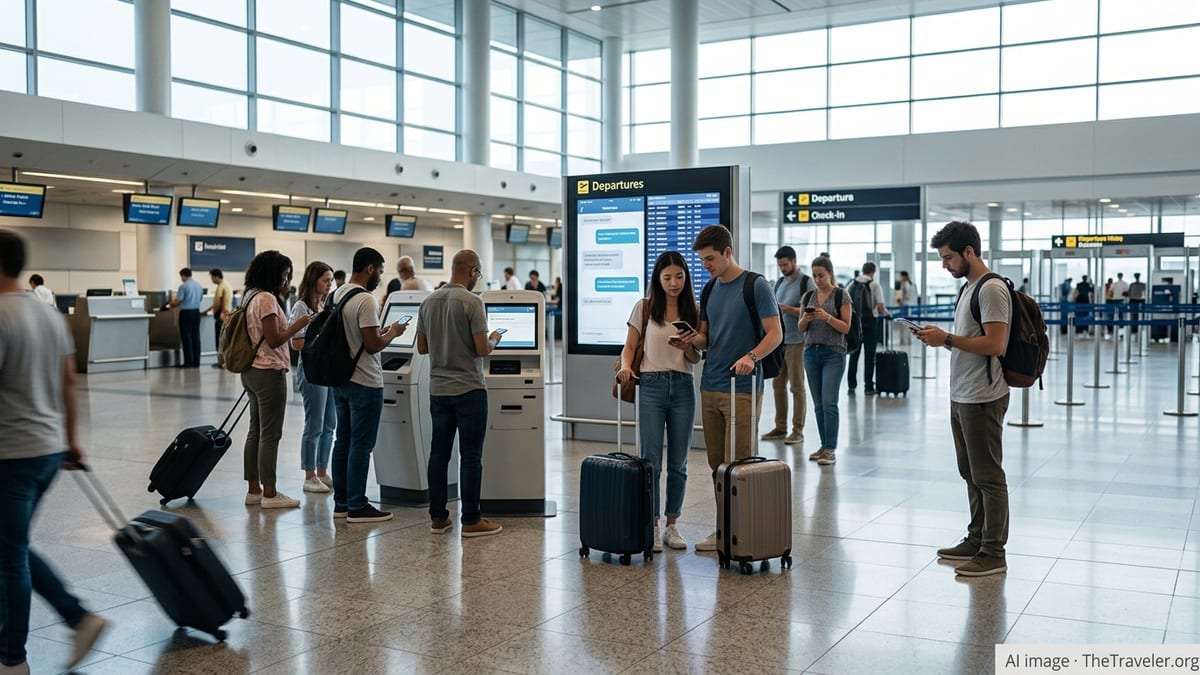
Sentiment for 2026 Travel Remains Resilient
Recent traveler sentiment studies point to steady or rising intent to travel in 2026, despite lingering concerns about prices and economic uncertainty. Consumer research on North American travel patterns for 2025 and 2026 shows that many households expect to maintain or increase their trip volume, supported by strong demand for leisure travel and a continued shift toward experiences over goods.
American travel sentiment tracking released in early 2026 suggests that a significant share of U.S. leisure travelers plan to take the same or more trips next year, with some reporting greater financial flexibility for travel compared with the previous year. While higher airfares and accommodation costs remain a concern, respondents indicate they are more likely to adjust trip length, destination type or travel dates than to cancel travel altogether.
Industry outlook reports from major consultancies describe a similar picture. A 2025 travel industry outlook from Deloitte highlighted that intent to travel in the coming 12 months remains robust across income groups, with many respondents prioritizing at least one major leisure trip per year and additional shorter breaks where budgets allow. That pattern appears to be carrying into 2026, with early-season surveys showing continued appetite for both domestic and international travel.
Analysts note that forward bookings and search volumes for 2026 suggest travelers are planning earlier and locking in itineraries further in advance. This is being interpreted as a sign of confidence in future travel, even as consumers remain price sensitive and selective about where and how they spend.
AI Moves From Experiment to Everyday Planning Tool
Alongside rising travel intent, multiple surveys show that use of AI tools in trip planning has accelerated over the past two years. A 2024 study of 1,000 travelers by Matador Network reported that nearly 23 percent had already used artificial intelligence to plan or assist with travel, representing more than a 40 percent increase compared with the previous year. Additional analysis of that survey indicated that roughly one third of respondents intended to use AI for upcoming trips.
Subsequent research has reinforced the upward trend. A 2025 travel safety and behavior survey by Global Rescue found that about 14 percent of respondents were using AI for travel planning at that time, while a 2025 summer travel survey summarized by Hotel News Resource cited Deloitte data indicating that 15 percent of Americans had incorporated generative AI into trip planning, up from 10 percent a year earlier. Separate analysis of a June 2025 Skift survey, referenced in a McKinsey report on AI in travel, suggested that more than half of U.S. travelers had used some form of AI-based planning tool.
In March 2026, McKinsey published new findings stating that respondents were not only adopting AI tools for travel planning but also reporting high levels of satisfaction with the recommendations and time savings those tools provide. The research highlighted the breadth of use cases, noting that travelers increasingly rely on AI for early-stage trip inspiration, local discovery, and help comparing complex options such as multi-city itineraries.
Travel brands have responded by integrating generative AI into their consumer-facing platforms at speed. Booking.com, Expedia Group and a range of niche travel providers have rolled out conversational assistants, AI trip planners and dynamic guides that aim to simplify decision-making. Publicly available information from these companies’ trend reports and product announcements indicates that they see AI as a central component of future booking journeys rather than an experimental add-on.
How Travelers Use AI: From Inspiration to Itineraries
Survey data and industry reporting suggest that travelers are using AI at multiple points in the planning process. According to Adobe’s analysis of consumer behavior, traffic to U.S. travel sites originating from generative AI tools has risen sharply, while a majority of those who have tried AI for travel say they use it to research attractions, restaurants and local experiences. These users frequently ask AI systems for hidden gems, neighborhood recommendations and guidance on the best times to visit specific sights.
Other studies, including research summarized by YouGov and Beach.com, highlight strong interest in using AI for core planning tasks such as flight searches, hotel comparisons and building day-by-day itineraries. Respondents often cite convenience and speed as primary benefits, noting that natural language prompts make it easier to explore options than traditional search filters alone. Some travelers also report using AI to translate content, understand local customs and identify safer neighborhoods or transport options.
At the same time, overall adoption remains uneven. Beach.com’s 2025 survey of frequent U.S. travelers found that curiosity about AI planners is high but trust is more cautious, with many respondents preferring to cross-check AI suggestions against review sites or official tourism information. Younger travelers tend to be more comfortable letting AI handle larger parts of the planning process, while older travelers are more likely to treat it as a supplemental research tool.
Researchers studying AI in tourism note that these behaviors align with broader patterns in consumer technology use. Academic work on AI-powered itinerary tools and travel assistants published in 2025 and 2026 describes strong user interest in personalized, conversational planning interfaces, but also emphasizes the continued importance of transparency, accuracy and the ability for travelers to adjust or override machine-generated plans.
Budget Pressures Push Travelers Toward Smarter Tools
Economic factors appear to be reinforcing the appeal of AI in travel planning. Recent trend reports indicate that many travelers expect to face continued high prices for flights, hotels and in-destination spending through 2026. As a result, they are looking for ways to find better-value options without spending significantly more time on research.
Studies cited in industry outlooks from Deloitte, RVshare and other travel platforms suggest that travelers increasingly believe AI planning tools can help them save money, particularly by surfacing off-peak travel dates, alternative airports, bundled deals and less obvious destinations that still meet their preferences. Some respondents also say they use AI to test different budget scenarios, such as comparing a shorter long-haul trip with a longer regional stay, before committing.
McKinsey’s recent analysis of AI in travel argues that “agentic” AI systems, which can take a series of planning actions on a traveler’s behalf, may further strengthen this trend. These systems can iterate on itineraries, check multiple sources for availability and pricing, and adjust recommendations based on user feedback, all of which could make it easier for travelers to optimize trips within strict budget constraints.
However, surveys also show that cost-conscious travelers remain wary of overreliance on automated suggestions. Many continue to value human recommendations, independent reviews and direct price checks with airlines and hotels, especially for complex or high-cost trips. This suggests that AI is more likely to augment rather than replace traditional planning behaviors as travelers map out their 2026 itineraries.
Industry Prepares for a More AI-Driven Travel Year
As travelers signal plans for more trips in 2026 and demonstrate growing comfort with AI-enabled planning, travel companies are accelerating investments in digital tools. Recent financial disclosures and executive interviews from major online travel agencies and hospitality brands describe AI as a central pillar of product roadmaps, from dynamic pricing and customer service to personalized marketing and loyalty programs.
Consulting firms tracking the sector note that travel providers are increasingly embedding AI across the customer journey. That includes conversational search interfaces for early inspiration, recommendation engines that tailor hotel or experience suggestions, and post-booking assistants that help with itinerary changes, disruption management and in-destination support. Surveys of corporate technology leaders by organizations such as MIT Sloan Management Review and Boston Consulting Group further indicate that many travel and hospitality companies plan to expand their use of AI agents in the near term.
For travelers planning 2026 trips, these changes are likely to translate into more AI touchpoints, even when they are not explicitly labeled as such. Price alerts, smart filters, automatically generated trip summaries and context-aware notifications are increasingly powered by machine learning models behind the scenes. As adoption grows, analysts expect the line between traditional online booking and AI-guided planning to blur.
Available survey data suggests that the coming year will test how far travelers are willing to let algorithms guide their choices. With intent to travel holding up and more consumers experimenting with digital assistants, 2026 is shaping up to be a key moment in the integration of artificial intelligence into mainstream trip planning.