

More news on this day
Bangkok’s Suvarnabhumi Airport has surged to 36th place in the 2026 World’s Best Airports rankings compiled by UK-based consultancy Skytrax, a notable rise that highlights recent investments in passenger services, operational efficiency, and overall travel experience at Thailand’s main international gateway.
Get the latest news straight to your inbox!
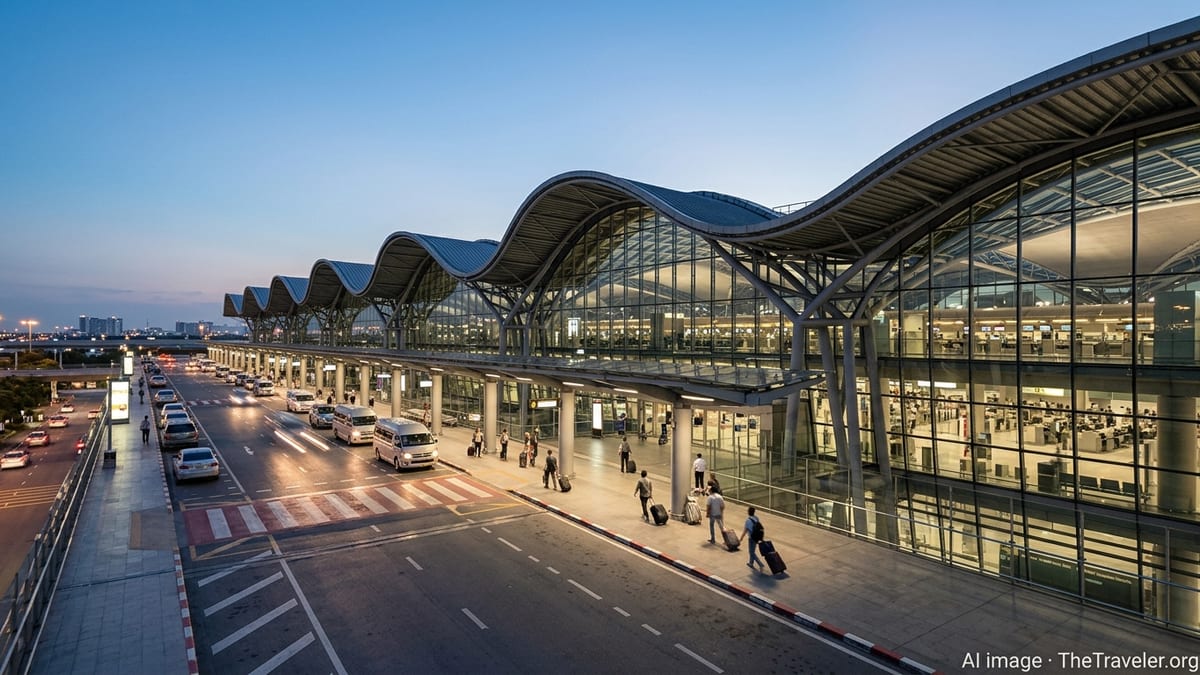
Stronger Global Standing for Thailand’s Primary Gateway
The latest Skytrax World Airport Awards place Suvarnabhumi Airport in 36th position worldwide for 2026, a marked improvement from its standing in earlier years and a continuation of an upward trajectory seen since the early 2020s. Publicly available Skytrax data for 2022 to 2024 showed Suvarnabhumi gradually climbing from the high 70s into the global top 60, signalling a steady recovery in both service quality and passenger perception following the pandemic period.
The 36th-place finish moves Suvarnabhumi further into the upper tier of major global hubs, reinforcing Thailand’s role as a leading aviation and tourism centre in Asia. The recognition also aligns with Airports of Thailand’s stated ambition to lift Suvarnabhumi into the ranks of the world’s top airports through large-scale infrastructure programmes and a multi-year service improvement strategy.
Industry observers note that Suvarnabhumi’s higher ranking comes at a time of intensifying competition among regional hubs in Singapore, South Korea, Japan, the Middle East, and China. A stronger performance in an international survey watched closely by airlines, travel planners, and frequent flyers is expected to support Thailand’s efforts to attract new routes and increase connectivity.
Service Upgrades Drive Higher Passenger Satisfaction
Multiple published reports since 2023 indicate that Suvarnabhumi’s ascent in the Skytrax rankings has been underpinned by a broad package of service upgrades, from check-in and security to wayfinding and amenities. The airport’s elevation to a four-star rating by Skytrax in 2025 followed improvements such as modernised check-in counters, expanded self-service options, clearer terminal signage, upgraded restrooms, more plentiful charging points, and faster public Wi-Fi, all of which directly influence passenger satisfaction scores.
Feedback collected in industry surveys has pointed to smoother passenger flows at peak periods, supported by additional staffing, more automated passport control lanes, and refinements to queue management. These steps responded to earlier criticism over long waits at immigration and security, issues that had weighed on the airport’s reputation and were widely discussed in regional media and traveller forums in 2023 and 2024.
Inside the terminal, the opening of additional retail and dining options, along with the refurbishment of existing seating and waiting areas, has ensured that higher passenger volumes are accommodated without a commensurate rise in overcrowding. Airport operators have also focused on small but visible touchpoints, such as improved cleanliness and more frequent facility maintenance, which contribute significantly to comfort scores in international benchmarking surveys.
Infrastructure Expansion Boosts Capacity and Efficiency
Suvarnabhumi’s improved global standing is closely linked to major physical expansion projects designed to relieve congestion and raise handling capacity. The Midfield Satellite 1 (SAT-1) building, opened in late 2023, added capacity for around 15 million additional passengers per year and was connected to the main terminal by an automated people mover. This concourse expansion, integrated with new contact gates and updated aircraft handling systems, has been cited in recent industry coverage as a key factor in the airport’s ability to manage growing traffic while maintaining service quality.
Runway and airside enhancements have further supported on-time performance, an important metric for Skytrax assessments and airline decision-making. The progressive deployment of a third runway, together with upgraded air traffic management and collaborative decision-making systems, has increased the number of movements the airport can handle per hour, reducing bottlenecks during peak travel seasons.
Strategic documents and public briefings from Airports of Thailand describe a longer-term master plan that aims to lift Suvarnabhumi’s annual capacity well beyond 100 million passengers through terminal expansions to the east of the existing building. These projects are framed not only as capacity increases but also as opportunities to embed new design standards for passenger circulation, natural light, acoustics, and environmental performance, aligning the airport with next-generation hub facilities elsewhere in the region.
Digital Transformation and “Smart Airport” Initiatives
Parallel to bricks-and-mortar expansion, Suvarnabhumi has pursued an intensive digital transformation agenda that appears to have had a direct impact on perceived efficiency and convenience. Airports of Thailand has highlighted the rollout of common-use passenger processing systems, integrated self-service kiosks, automated bag drops, and self-boarding gates, designed to shorten transaction times and reduce queues at both departures and arrivals.
Back-end systems, including airport collaborative decision-making platforms and real-time operations monitoring, have been introduced or upgraded to streamline coordination between ground handlers, airlines, and air traffic control. Industry analyses note that these systems help improve turn-around times for aircraft, reduce delays, and make better use of constrained runway and gate resources, resulting in a more predictable passenger journey.
Digital tools aimed at travellers themselves, such as enhanced airport mobile applications, clearer digital signage, and more accurate live updates on queues and boarding times, have also contributed to higher satisfaction scores. With more international passengers transferring between regional and long-haul flights through Bangkok, reliable information and intuitive navigation are increasingly critical components of the overall experience evaluated in international surveys.
Passenger Growth Underscores Strategic Importance
The ranking upgrade arrives as Suvarnabhumi prepares for another period of strong traffic growth. Airports of Thailand has projected that the airport could handle close to 67 million passengers in its 2026 fiscal year, up from more than 58 million in fiscal 2025. The recovery of long-haul demand, additional services from North America and Europe, and expanded regional connectivity through Thai and foreign carriers are all expected to contribute to these volumes.
Suvarnabhumi’s performance also carries national significance. As Thailand targets higher-value tourism and seeks to position itself as a regional aviation hub, international benchmarks such as the Skytrax World’s Best Airports rankings are seen by analysts as an important indicator of competitiveness. A position in the mid-30s globally supports marketing efforts by tourism bodies and provides a reference point for airlines evaluating Bangkok as a transfer or destination hub.
Industry commentary suggests that maintaining and improving on the 36th-place ranking will require continued investment in both infrastructure and service culture. With passenger numbers rising and other Asian hubs also pushing forward with new terminals and technologies, Suvarnabhumi’s challenge will be to sustain operational reliability and comfort levels even as traffic intensifies. For travellers, the latest Skytrax results signal that recent changes at Bangkok’s flagship airport are beginning to close the gap with some of the world’s best-known hubs, while leaving room for further gains in the years ahead.